What Should Kids Learn When AI Does the Work?
Hi, this is AIB.
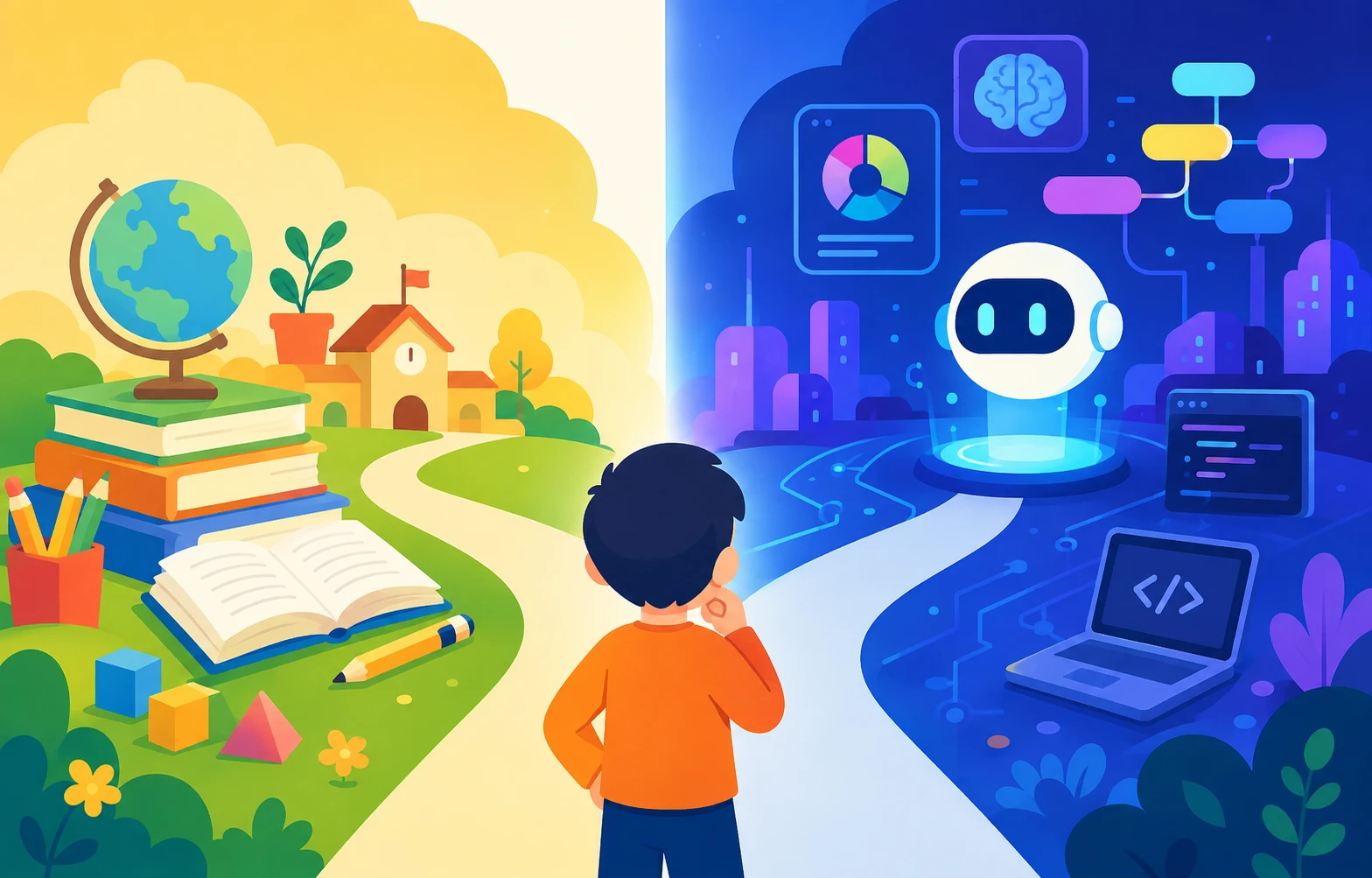
Should my kid learn to code?
Should they spend more time on English?
As long as their grades are good, will they be fine?
If you're raising kids, you've probably asked yourself questions like these at least once.
Now that AI is starting to do work humans used to do,
will the things our kids are learning still be useful in the future?
What will the world look like 15 years from now, when today's kids start their careers?
Let's imagine the 2040s together, based on early signs of change that are already showing up, along with statistics and expert forecasts.
Not a shortage of jobs, but a shortage of people
 First, there's one thing we can say about the future with relative confidence.
It's the working-age population.
Population projections tend to be more accurate than economic or technology forecasts. The reason is simple: the people who will be working in the future have already been born. Birth rates and immigration can shift the numbers a little, but since everyone gets one year older every year, the big trend is hard to reverse.
Someone who turns 40 in 2040 was born in 2000. In South Korea, for example, Statistics Korea projects that by 2040 the working-age population (ages 15–64) will shrink to 58% of the total, while people 65 and older will grow to 34.3%.
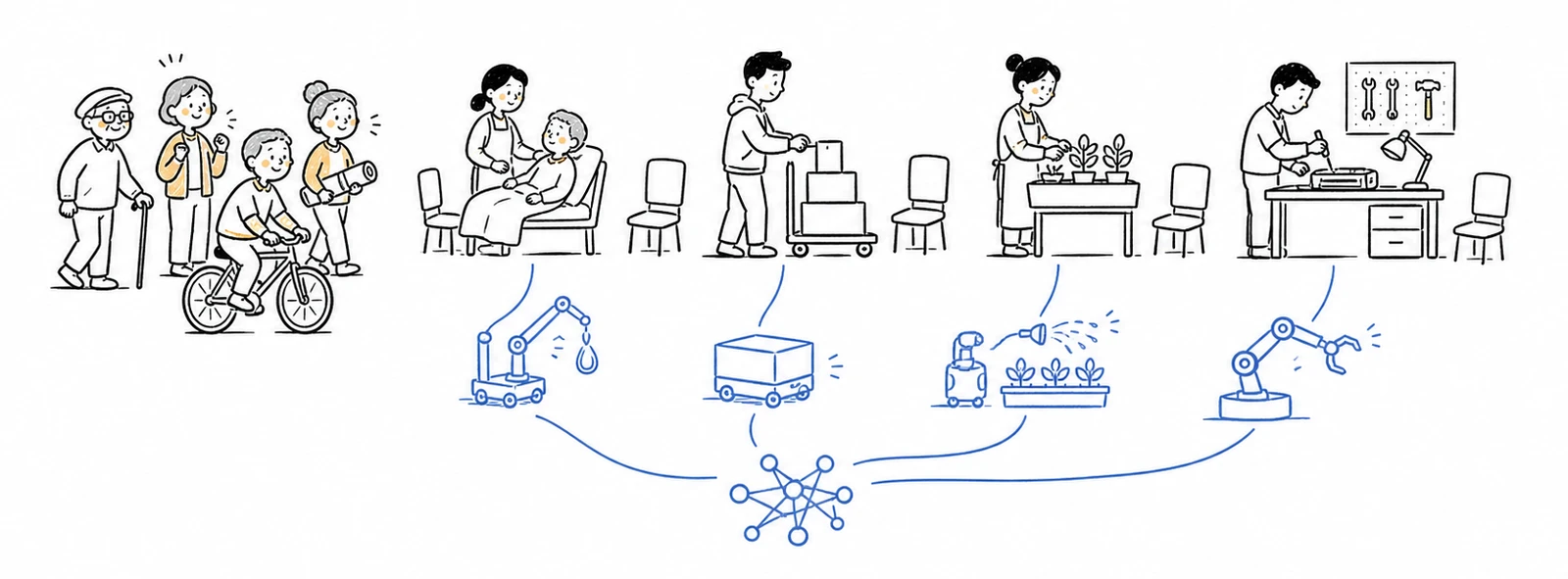
In rapidly aging societies like this, the future is far more likely to bring “not enough workers” than “not enough jobs.”
So before worrying, “What if AI takes all our jobs?”, maybe we should first worry, “What if there are so few people that we can't find anyone to do the work?” We might even end up grateful that AI is there to fill the labor gap.
Not what you know, but how you judge
 That said, we can't be blindly optimistic about the future job market.
When Stanford's Digital Economy Lab analyzed US payroll data, it found that as of mid-2026, employment among 22- to 25-year-olds in the jobs most exposed to AI was 19% lower than among their peers in less-exposed jobs. In other words, companies are hiring fewer new graduates.
So are experienced veterans safe?
For now, veterans do seem to have the edge over newcomers, but that may well be a temporary phase of early AI adoption. Future AI is likely to take on far more complex judgment and work than it does today, and research has found that AI boosts the productivity of beginners more than that of experts. In a large field study of 5,172 customer support agents, introducing generative AI raised overall productivity by 15%. The least experienced agents improved by more than 34%, while the most skilled agents saw only minimal gains.
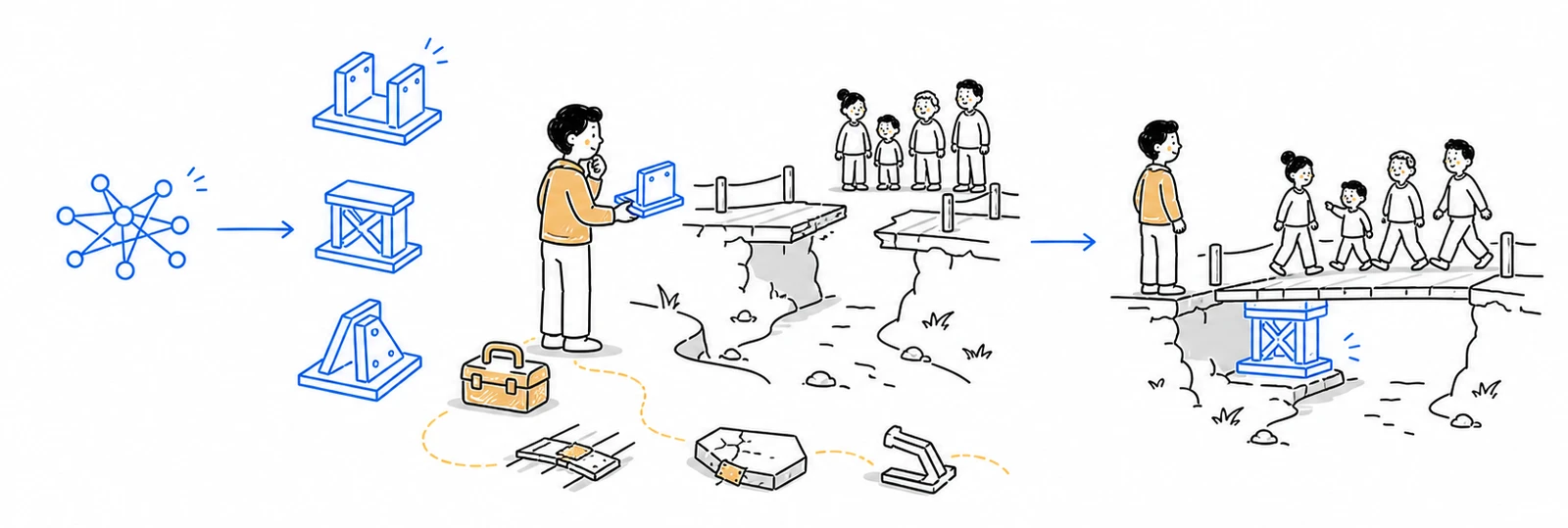
If AI quickly levels out the knowledge, skills, and average job performance that anyone can learn, what will matter more is the unique experiences a person has had, what they've seen and felt, and what kind of judgment they can make based on those experiences. Judgment in particular is likely to stay with humans for a relatively long time, no matter how advanced AI becomes, because it requires weighing an organization's specific situation, social context, and responsibility for the outcome.
AI can get us to the right answer much faster. But if we let it handle the whole process, we may lose the trial and error we need to build judgment of our own.
It's not the answer itself, but the process of getting there, that creates a person's own experience.
Not which job to choose, but how to keep changing
 A 2024–2034 outlook from the Korea Employment Information Service, for example, projects that care and health service jobs, health professionals, and engineering and IT professionals will grow, while retail sales and machine operation jobs will structurally decline.
But unlike forecasting the size of the workforce, predicting the jobs of the future is extremely difficult.
In 2013, Oxford's Frey and Osborne estimated that 47% of US jobs could be at risk of automation within the next 10 to 20 years. Actual changes in employment since then haven't necessarily matched those risk estimates, and follow-up studies have found it hard to say the forecast was very accurate.
That's why the nature of work matters more than the type of job.
As we saw earlier, the faster AI picks up knowledge and skills, the more important it may become for people to judge those results in context and take responsibility for them. And there's one more thing that matters.
The ability to understand and work with people.
What's especially important is that even these abilities aren't tied to one job or role.
Even before AI arrived, the idea of a job for life was already a thing of the past, and today it's not unusual to change not just companies but entire careers. The World Economic Forum (WEF) also expects about 40% of today's core job skills to change or become outdated within the next five years.
By 2040, when our kids are working, there may be jobs that don't exist today, and the skills they're learning now may have changed several times over.
So instead of asking, “Which job will keep my child safe?”,
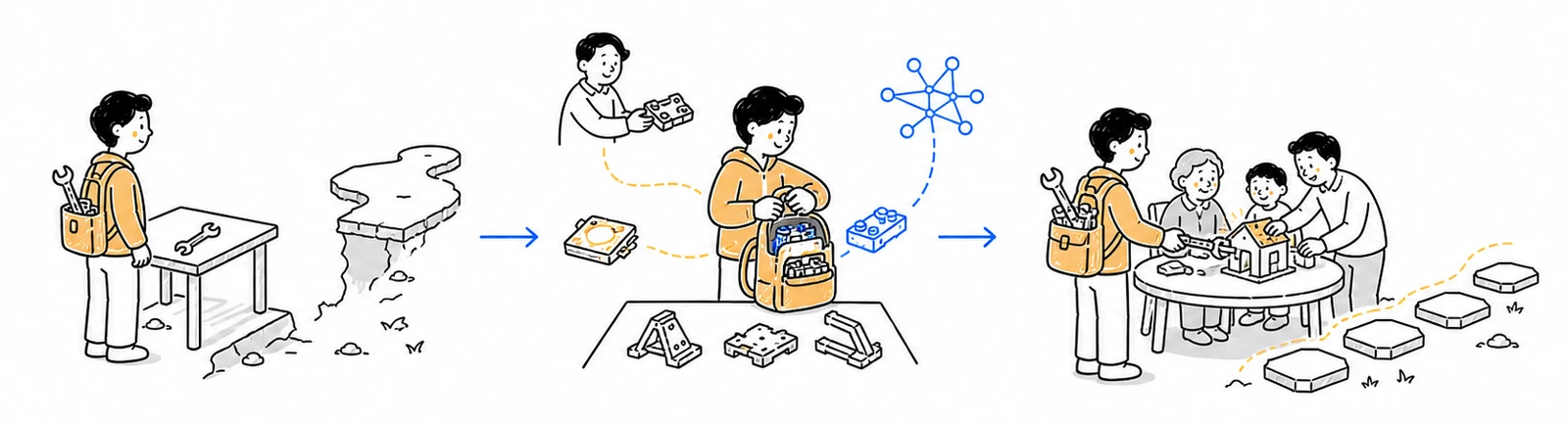
let's ask, “How can we build the ability to handle a future we can't predict?”
In an age when AI can quickly fill gaps in specialized knowledge and skills, “generalists” become more valuable than people who know only one field: people who use their own expertise and experience to learn new fields, connect different kinds of knowledge and people, and make the final call. How well you learn new things matters more than what you've learned, and how well you adapt to change matters more than which job you chose.
In the end, isn't what kids need not a list of “future-proof” jobs, but the strength to keep learning and reinventing themselves as the world changes?
Give kids the experience of judging, not just answers
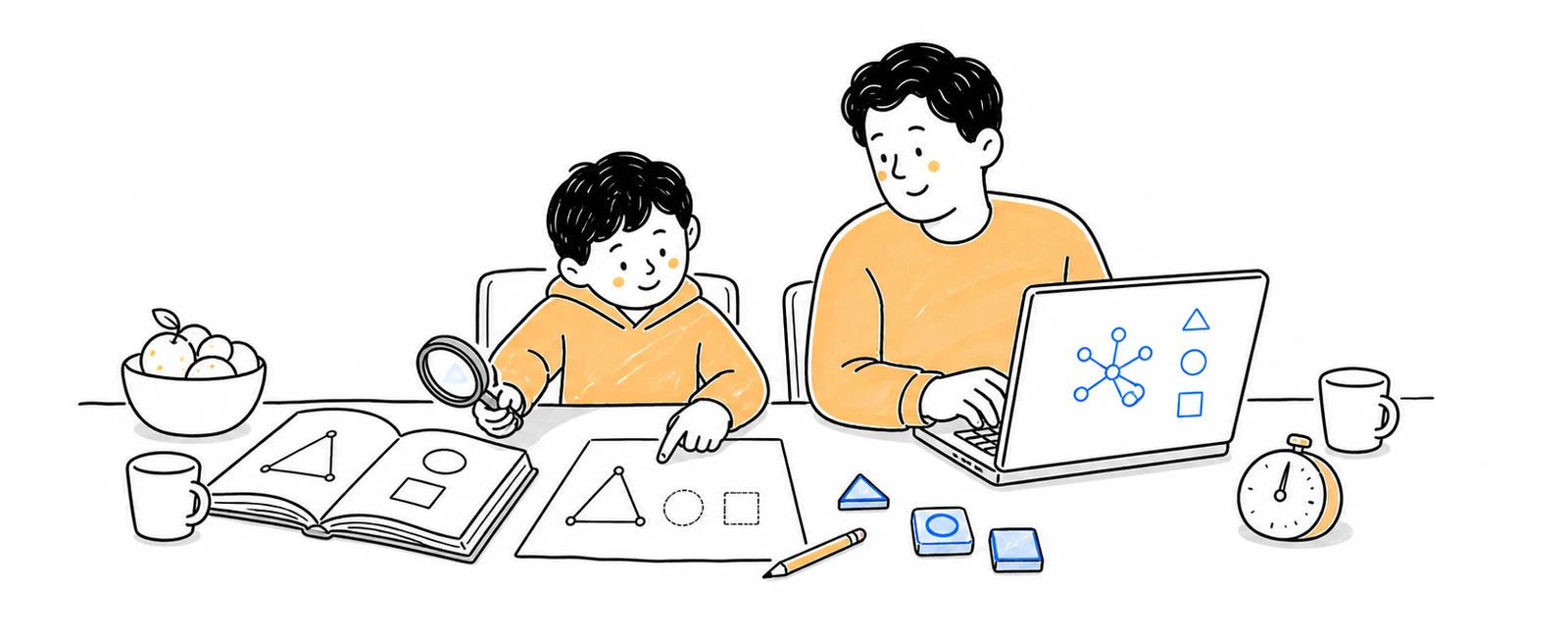 It's hard to predict which jobs will survive, but one direction seems fairly clear.
The cost of producing work with AI will keep falling, and the human role of reviewing and judging that work will become even more important.
Q. Should I keep my child away from AI as long as possible, or let them use it actively starting now?
Putting together current research and guidance from major institutions, the answer is closer to “Teach about AI actively, limit AI use.”
In 2025, a joint research team from the National and Kapodistrian University of Athens, the University of the Aegean, Aristotle University of Thessaloniki, and the University of Thessaly reviewed 272 studies on AI in primary education published between 2020 and 2024, and analyzed 12 experimental and quasi-experimental studies among them. This meta-analysis found that educational AI had an overall positive effect on elementary students' learning. However, the AI used in these studies wasn't just general-purpose ChatGPT. It included a variety of tools designed for learning, such as subject-specific chatbots, automated formative assessment, and personalized feedback systems. So we can't conclude that the more kids use generative AI, the better.
A comprehensive review published in 2026 by researchers at Children's Hospital of Philadelphia in Pediatrics, the journal of the American Academy of Pediatrics (AAP), warns that children ages 6 to 11 have trouble spotting plausible-sounding errors made by AI and risk relying on AI for homework and problem-solving. For this age group, rather than free, independent use, it recommends that parents look at the screen together with their child, question the AI's answers, and check them against other sources.
Q. At what age can kids use AI on their own?
There's currently no scientifically established “safe starting age.” However, in its 2023 Guidance for Generative AI in Education and Research, UNESCO proposes that countries set 13 as the minimum age for independent conversations with generative AI. ChatGPT also says that when children under 13 use it for educational purposes, an adult should conduct the actual conversation.
Keep in mind that 13 is less a “ready age” based on children's cognitive development and more a policy floor for privacy and safety.
The suggestions below aren't the only right answer, but they're worth reading together and trying out.
1. Hear your child's thinking first
Before asking AI, have your child write down or draw their own answer and why they think so. It doesn't have to be a finished answer. What matters is recording your child's thinking before they hear what AI says.
2. Ask AI for questions and hints, not direct answers
Try typing something like this:
Below is a problem that a grade ○ elementary school student tried first, along with their answer. Please don't give the correct answer or a complete solution.
[Problem and answer]Point out one part of the child's thinking that actually makes sense, and ask just one question that helps them discover any mistakes or missing pieces on their own.
After asking the question, stop and wait for the child's answer.Only if the child is still stuck after trying again, give one small hint at a time. At the end, ask, “Why did you think that?” so the child explains the answer in their own words. Please use short, simple language that a grade ○ student can understand.
The key isn't getting AI to explain things kindly. It's guiding AI to draw out your child's next thought.
3. Always double-check the answer
Compare AI's answers with other sources, such as textbooks, books, and official materials from schools or public institutions. If the information differs, talk together about which source is more trustworthy and why.
Through this process, kids naturally learn not to take what AI says on blind faith.
4. Don't use AI like a friend or a counselor
AI talks like a person, but it isn't one. It also (at least for now) doesn't feel emotions or truly understand people.
Especially at an age when kids are emotionally vulnerable and haven't yet formed a clear sense of the line between humans and AI, set a rule together: when they feel lonely or upset, they talk to a trusted person, like a parent or teacher, before turning to AI.
5. Explore together how AI comes up with answers
It's also worth learning with your child that AI doesn't produce answers by magic. In fact, this is exactly the kind of topic AI can make easy to learn.
I'd like to learn with my grade ○ elementary school child how generative AI comes up with its answers.
Using a simple analogy and a game we can play in 5 minutes, explain that AI learns patterns of language from lots of text and creates answers by predicting what words come next based on the context so far.
Also explain that AI doesn't think or feel emotions like a person, and why it can say things that aren't true in a way that sounds convincing. When you're done explaining, ask one question at a time to check whether the child understood. Wait for the child's answer before moving on to the next question.
The first lesson in preparing for the AI era isn't just learning how to use AI.
It's thinking for yourself even without AI, and not simply believing AI's answers even when it's there. It's learning how AI works so you understand the difference between people and AI, and building the habit of not handing AI the things you should ask a person.
AI is an amazing technology with great potential to change humanity's future for the better.
So let's neither lean on AI blindly nor push it away out of vague fear. Let's start, together with our kids, by truly understanding AI and learning how to judge when and how to use it.