Compare AIFind AIAI NewsAI How-To
About Us
PrivacyTermsFAQContactContact
AIB Inc.Company info
© 2026 AIB Inc.

AI Agents Enter Enterprise Workflows
AI Agents Enter Enterprise Workflows

KDnuggets·Saturday, August 22, 2026
  • •KDnuggets says agentic AI entered enterprise production in 2026 across five major workflow categories
  • •AI agents automate customer support, software engineering, logistics, healthcare administration, and financial fraud investigations
  • •The article says humans shift toward oversight as agents handle high-volume, rule-bound execution work
  • •KDnuggets says agentic AI entered enterprise production in 2026 across five major workflow categories
  • •AI agents automate customer support, software engineering, logistics, healthcare administration, and financial fraud investigations
  • •The article says humans shift toward oversight as agents handle high-volume, rule-bound execution work
  • •KDnuggets says agentic AI entered enterprise production in 2026 across five major workflow categories
  • •AI agents automate customer support, software engineering, logistics, healthcare administration, and financial fraud investigations
  • •The article says humans shift toward oversight as agents handle high-volume, rule-bound execution work
  • •KDnuggets says agentic AI entered enterprise production in 2026 across five major workflow categories
  • •AI agents automate customer support, software engineering, logistics, healthcare administration, and financial fraud investigations
  • •The article says humans shift toward oversight as agents handle high-volume, rule-bound execution work

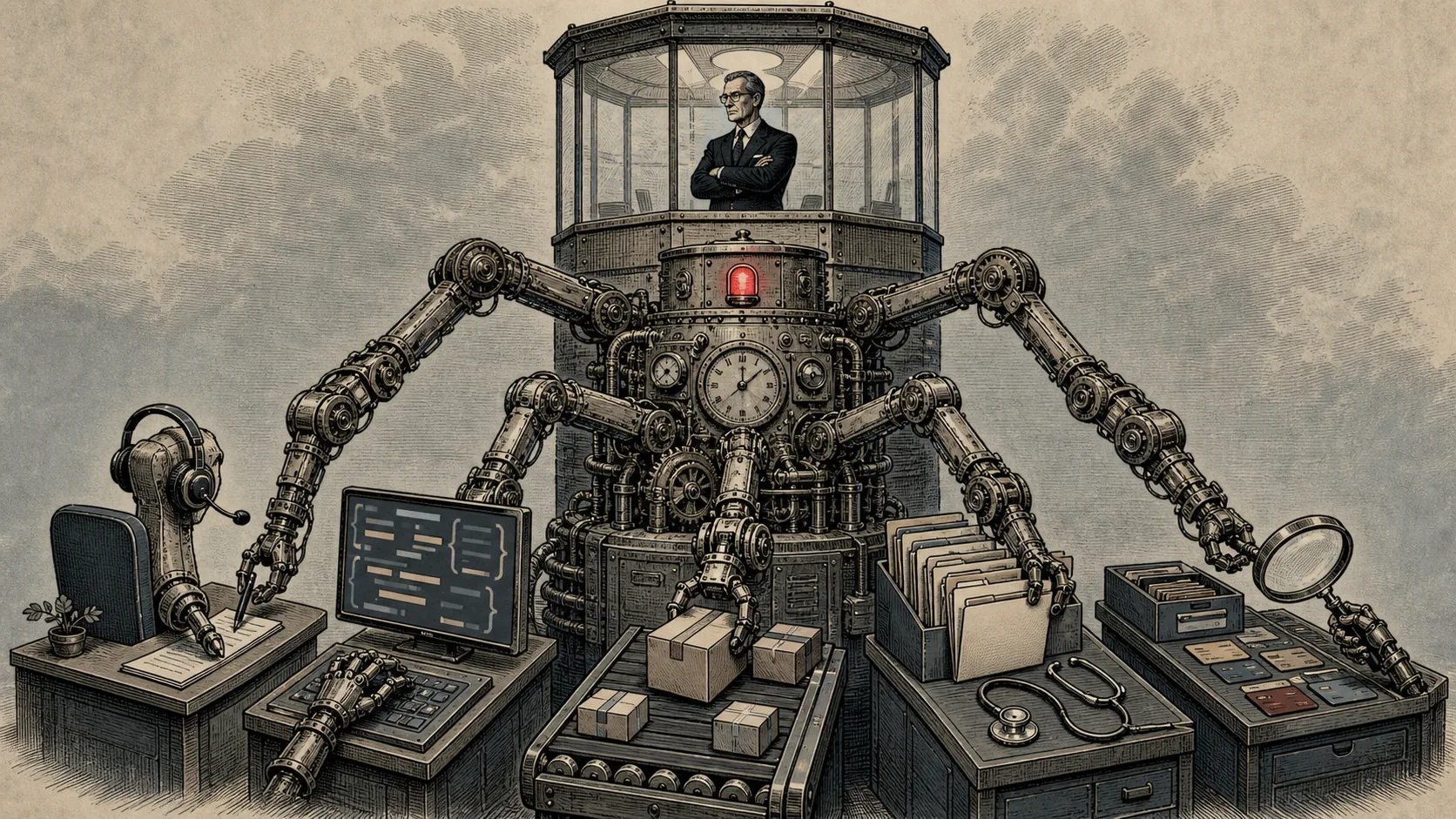
KDnuggets reported on August 21, 2026, that agentic AI has moved into enterprise production in 2026, with companies using autonomous AI agents to plan, execute, and adapt multi-step tasks across external tools, databases, and APIs without continuous human oversight. The article says the shift has moved the AI narrative from conversational chatbots that wait for human prompts toward agents that execute full workflows, including supply chain disruption handling and financial transaction fraud analysis.

Customer support teams are using AI agents inside customer relationship management systems to resolve multi-step issues across email, chat, phone, and social channels. The agents can draft replies, check inventory in a database, process returns through an API, update CRM tickets, escalate cases requiring human empathy or high-level authorization, and pass along generated summaries with prior context. The article says agents can also anticipate a delayed flight or order, rebook the service, and notify the customer before a complaint arrives, reducing average handle time and shifting human staff toward complex, relationship-sensitive conversations.

Software engineering teams are using autonomous coding agents that can take a high-level GitHub issue, search the codebase, write a feature, run unit tests, and submit a pull request. The article says these agents use the Model Context Protocol, or MCP (standard for sharing app context), to read and understand full repositories so new code fits existing architecture and naming conventions. They can write and run test suites, debug failures from error logs, iterate until tests pass, and help modernize decades-old COBOL or Java systems into newer frameworks, work the article says once required months of specialist contractor time.

Logistics companies are deploying multi-agent systems to monitor global data feeds and reroute shipments when port congestion, weather events, geopolitical trade restrictions, or raw material shortages disrupt supply chains. The article says these agents can compress responses that once took days of human coordination into minutes by finding alternative routes, contacting vendors, adjusting delivery windows, monitoring demand signals, executing purchase orders when stock levels fall below predicted needs, and matching thousands of supplier invoices against purchase orders and shipping receipts. It points readers to multi-agent reinforcement learning, or MARL (agents learning through shared environments), as a concept for complex logistics optimization.

Healthcare organizations are using AI agents to manage patient data, coordinate scheduling, and handle administrative clinical workflows as clinician burnout remains tied to paperwork. The article says physicians spend nearly as much time on documentation and paperwork as on direct patient care, while agents can listen to patient-doctor interactions, create structured clinical notes, route them to Electronic Health Record systems, analyze treatment plans against payer policies, submit insurance pre-authorization paperwork in minutes rather than days, and follow up with patients by text or voice after discharge.

Banks and other financial institutions are using AI agents for anti-money laundering and fraud detection because rule-based systems generate large volumes of false positives. The article says agents can scrape public records, news articles, and corporate registries for Know Your Customer investigations, review historical behavior, location data, and device telemetry when transactions are flagged, make immediate block-or-allow decisions with audit-trail documentation, and draft Suspicious Activity Reports after fraud is confirmed. KDnuggets concludes that agents are absorbing high-volume, rule-bound, time-sensitive execution work while humans move into oversight, exception handling, and strategic roles.

KDnuggets reported on August 21, 2026, that agentic AI has moved into enterprise production in 2026, with companies using autonomous AI agents to plan, execute, and adapt multi-step tasks across external tools, databases, and APIs without continuous human oversight. The article says the shift has moved the AI narrative from conversational chatbots that wait for human prompts toward agents that execute full workflows, including supply chain disruption handling and financial transaction fraud analysis.

Customer support teams are using AI agents inside customer relationship management systems to resolve multi-step issues across email, chat, phone, and social channels. The agents can draft replies, check inventory in a database, process returns through an API, update CRM tickets, escalate cases requiring human empathy or high-level authorization, and pass along generated summaries with prior context. The article says agents can also anticipate a delayed flight or order, rebook the service, and notify the customer before a complaint arrives, reducing average handle time and shifting human staff toward complex, relationship-sensitive conversations.

Software engineering teams are using autonomous coding agents that can take a high-level GitHub issue, search the codebase, write a feature, run unit tests, and submit a pull request. The article says these agents use the Model Context Protocol, or MCP (standard for sharing app context), to read and understand full repositories so new code fits existing architecture and naming conventions. They can write and run test suites, debug failures from error logs, iterate until tests pass, and help modernize decades-old COBOL or Java systems into newer frameworks, work the article says once required months of specialist contractor time.

Logistics companies are deploying multi-agent systems to monitor global data feeds and reroute shipments when port congestion, weather events, geopolitical trade restrictions, or raw material shortages disrupt supply chains. The article says these agents can compress responses that once took days of human coordination into minutes by finding alternative routes, contacting vendors, adjusting delivery windows, monitoring demand signals, executing purchase orders when stock levels fall below predicted needs, and matching thousands of supplier invoices against purchase orders and shipping receipts. It points readers to multi-agent reinforcement learning, or MARL (agents learning through shared environments), as a concept for complex logistics optimization.

Healthcare organizations are using AI agents to manage patient data, coordinate scheduling, and handle administrative clinical workflows as clinician burnout remains tied to paperwork. The article says physicians spend nearly as much time on documentation and paperwork as on direct patient care, while agents can listen to patient-doctor interactions, create structured clinical notes, route them to Electronic Health Record systems, analyze treatment plans against payer policies, submit insurance pre-authorization paperwork in minutes rather than days, and follow up with patients by text or voice after discharge.

Banks and other financial institutions are using AI agents for anti-money laundering and fraud detection because rule-based systems generate large volumes of false positives. The article says agents can scrape public records, news articles, and corporate registries for Know Your Customer investigations, review historical behavior, location data, and device telemetry when transactions are flagged, make immediate block-or-allow decisions with audit-trail documentation, and draft Suspicious Activity Reports after fraud is confirmed. KDnuggets concludes that agents are absorbing high-volume, rule-bound, time-sensitive execution work while humans move into oversight, exception handling, and strategic roles.

Read original (English)·Aug 21, 2026
#agentic ai#ai agents#enterprise automation#model context protocol#multi agent reinforcement learning#customer support#software engineering#supply chain#clinical workflows#fraud detection