AI Model Links Business Education to Industry
- •AI teaching model maps 45,600 job postings to business education curriculum updates
- •16-week experiment raises semantic alignment to 0.89 and cuts idle rate to 5.7%
- •Generative sandbox training improves strategy innovation and risk-prediction scores by more than 23 points
Y. L. Cui and L. Ma published a 2026 study in Advanced Electromagnetics on an AI-empowered industry-education integration teaching model for new business education. The model targets the mismatch between fast-changing industrial skill demand and static curriculum revision cycles by linking curriculum content, job-market requirements, project allocation, and practical decision training.
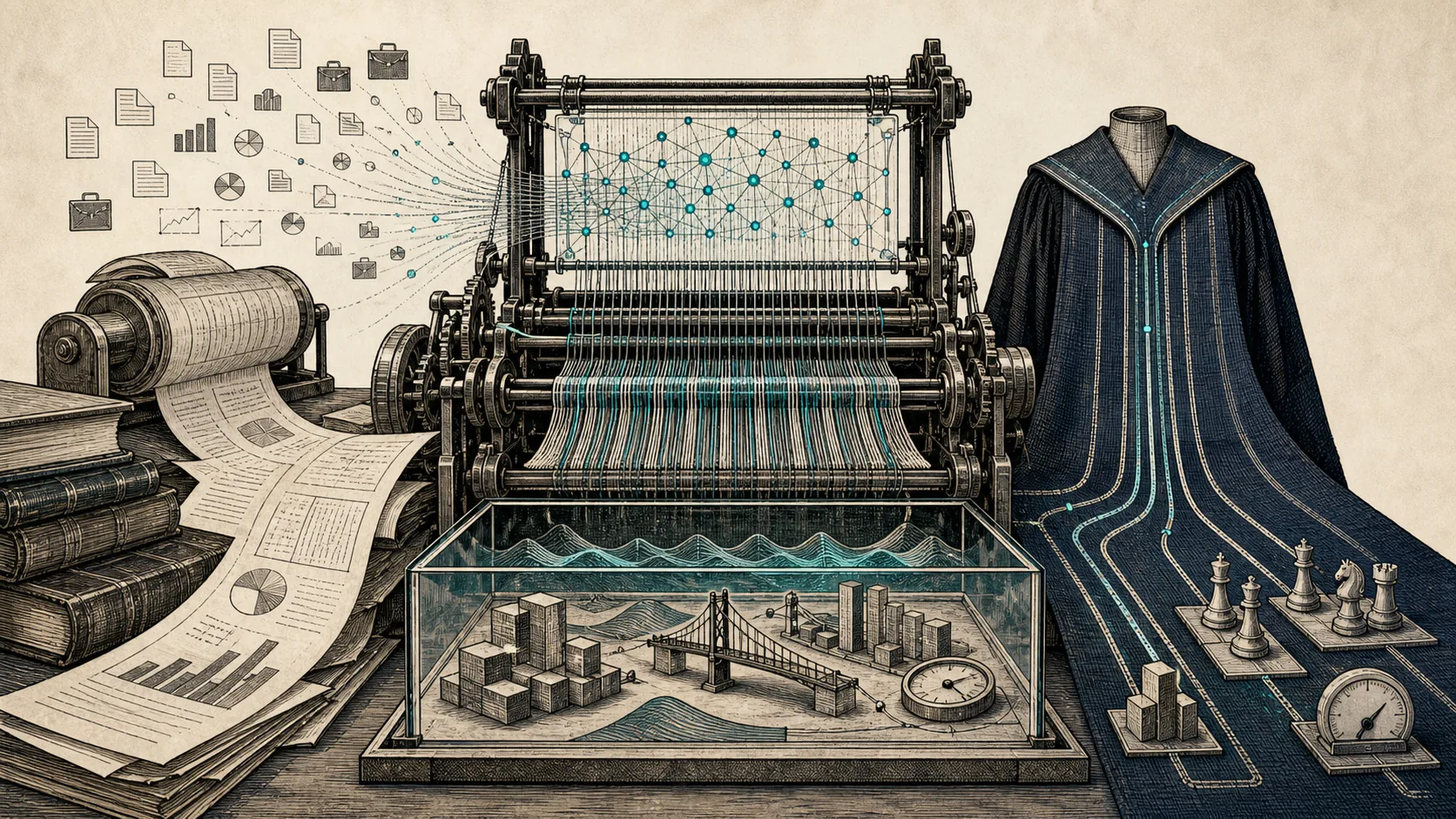
The study builds a dynamic industry-skill knowledge graph (a map of skills and relationships) from 45,600 job postings. BERT and BiLSTM-CRF extract job-skill entities and relationships, while a semantic mapping mechanism measures alignment between course syllabi and industry skill nodes to generate curriculum update suggestions.
A multi-agent reinforcement learning scheduler matches students with enterprise projects using ability vectors, project demand vectors, and reward functions based on semantic fit, team complementarity, and resource idleness. A generative business simulation sandbox using cGAN and large language models creates dynamic market demand and competitor strategies. In a 16-week controlled experiment, AI-driven mapping raised semantic alignment to 0.89, reinforcement learning cut project-resource idle rate to 5.7%, and sandbox training improved strategy innovation and risk-prediction scores by more than 23 points.