Compare AIFind AIAI NewsAI How-To
About Us
PrivacyTermsFAQContactContact
AIB Inc.Company info
© 2026 AIB Inc.

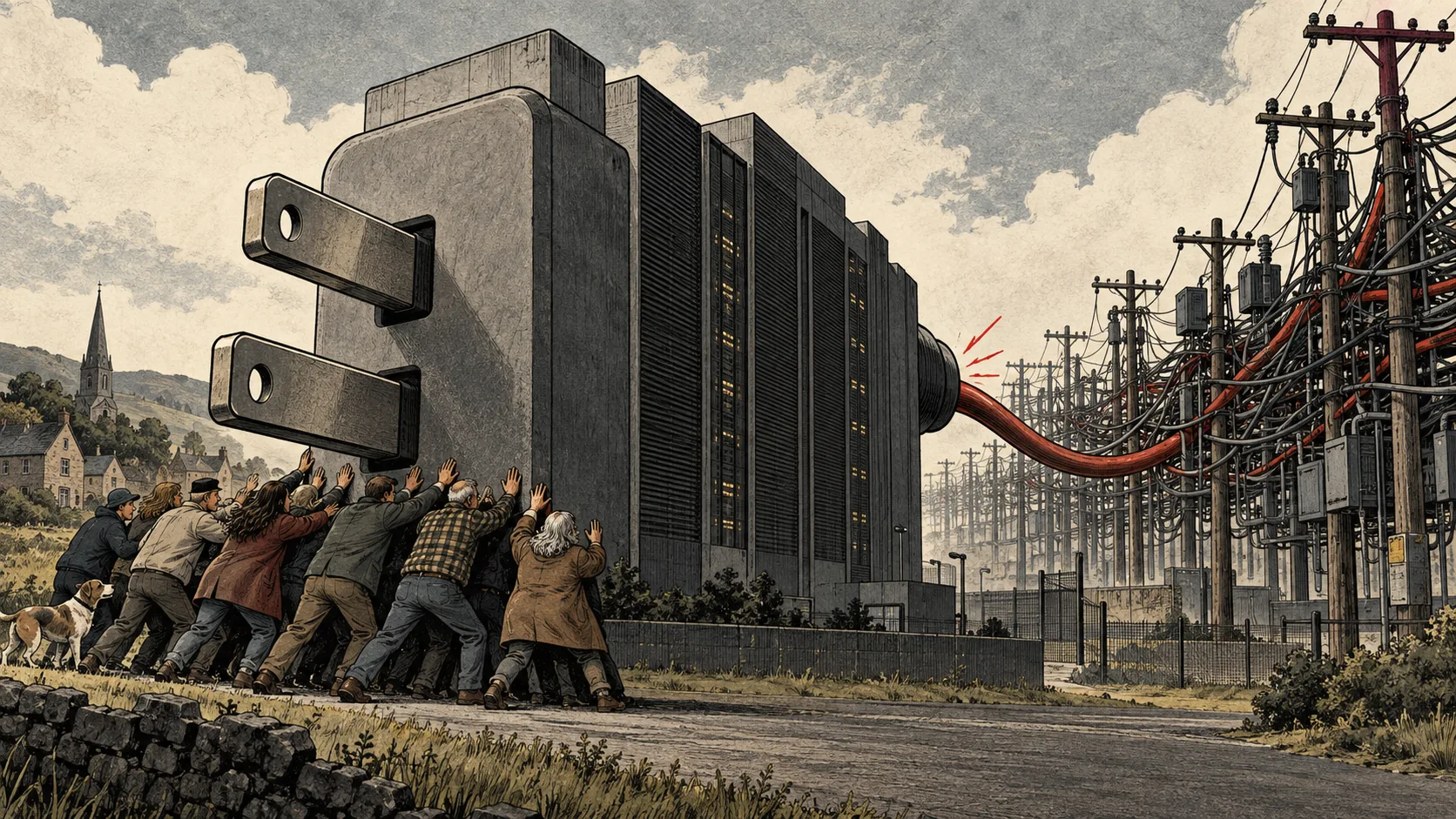
Data Center Backlash Grows in US and UK
Data Center Backlash Grows in US and UK

diginomica·Thursday, October 8, 2026
  • •A Gallup survey found 70% of Americans oppose data centers in their communities; 375 state bills emerged in 2026.
  • •Opposition blocked or delayed 45 US projects worth approximately $68 billion in 2026’s second quarter.
  • •Ofgem’s UK grid queue rose from 41 GW to 125 GW, with at least 80 gigawatts tied to data centers.
  • •A Gallup survey found 70% of Americans oppose data centers in their communities; 375 state bills emerged in 2026.
  • •Opposition blocked or delayed 45 US projects worth approximately $68 billion in 2026’s second quarter.
  • •Ofgem’s UK grid queue rose from 41 GW to 125 GW, with at least 80 gigawatts tied to data centers.
  • •A Gallup survey found 70% of Americans oppose data centers in their communities; 375 state bills emerged in 2026.
  • •Opposition blocked or delayed 45 US projects worth approximately $68 billion in 2026’s second quarter.
  • •Ofgem’s UK grid queue rose from 41 GW to 125 GW, with at least 80 gigawatts tied to data centers.
  • •A Gallup survey found 70% of Americans oppose data centers in their communities; 375 state bills emerged in 2026.
  • •Opposition blocked or delayed 45 US projects worth approximately $68 billion in 2026’s second quarter.
  • •Ofgem’s UK grid queue rose from 41 GW to 125 GW, with at least 80 gigawatts tied to data centers.

With the US midterms weeks away, opposition to data centers has become an election issue. A recent national Gallup survey found that 70% of Americans oppose building data centers in their communities. Of 375 data center bills introduced in US state legislatures in 2026, three-quarters seek to restrict development. Republican candidates in Michigan, Wisconsin, Pennsylvania and especially Texas are also opposing President Donald Trump’s pro-AI agenda.

Critics point to environmental and financial costs. The article says Meta may have used its US data center expansion to avoid paying at least £4 billion in federal taxes by classifying projects as research and development. Data center power demand is also driving fossil fuel use; gas-fired capacity in the United States nearly tripled in 2025. A report says Elon Musk is entering turbine manufacturing. Leaked Anthropic IPO plans reportedly project $518 billion in cloud computing and infrastructure spending in coming years, despite a possible $42 billion loss last year. Anthropic spent $7.3 billion on infrastructure in 2025, three times its 2024 spending.

Public opposition also reflects concern about household bills. A proposed Google data center in West Memphis could mean a 20-year utility rate increase for local residents. Sam Altman said 38,000 ChatGPT queries use 0.000085 gallons of water, comparing that amount to producing one California almond; commentators put almond production at 1 to 3.2 gallons, or roughly 1,000 to 11,000 queries per almond. A Bloomberg analysis in September said local opposition blocked or delayed 45 US data center projects worth approximately $68 billion in the second quarter of 2026.

In the UK, two planned data centers in Buckinghamshire and Bedfordshire have been reported as potentially producing more carbon emissions than ExxonMobil, while 315 more projects are waiting to connect to the electricity grid. The Scottish Parliament voted last month to pause decisions on new AI data centers for up to a year while it develops stricter environmental assessments and national planning guidance. Energy regulator Ofgem says applications in its connection queue rose from 41 GW to 125 GW in less than a year, with data center projects accounting for at least 80 gigawatts. It is proposing a commitment fee for large data centers to deter speculative projects from occupying grid capacity.

Industry representatives argue that data centers support services such as banking, healthcare and transport, and that development should account for location and community needs. Other proposals include more energy-efficient AI chips and workloads, improved facility power and cooling, and lower-energy data storage. Operators also call for earlier community engagement, infrastructure planning and transparency. The article says these innovations have not yet appeared at scale and argues that companies must make the costs and benefits feel fairer and explain their plans clearly. It warns that opposition may outlast the coming US elections.

With the US midterms weeks away, opposition to data centers has become an election issue. A recent national Gallup survey found that 70% of Americans oppose building data centers in their communities. Of 375 data center bills introduced in US state legislatures in 2026, three-quarters seek to restrict development. Republican candidates in Michigan, Wisconsin, Pennsylvania and especially Texas are also opposing President Donald Trump’s pro-AI agenda.

Critics point to environmental and financial costs. The article says Meta may have used its US data center expansion to avoid paying at least £4 billion in federal taxes by classifying projects as research and development. Data center power demand is also driving fossil fuel use; gas-fired capacity in the United States nearly tripled in 2025. A report says Elon Musk is entering turbine manufacturing. Leaked Anthropic IPO plans reportedly project $518 billion in cloud computing and infrastructure spending in coming years, despite a possible $42 billion loss last year. Anthropic spent $7.3 billion on infrastructure in 2025, three times its 2024 spending.

Public opposition also reflects concern about household bills. A proposed Google data center in West Memphis could mean a 20-year utility rate increase for local residents. Sam Altman said 38,000 ChatGPT queries use 0.000085 gallons of water, comparing that amount to producing one California almond; commentators put almond production at 1 to 3.2 gallons, or roughly 1,000 to 11,000 queries per almond. A Bloomberg analysis in September said local opposition blocked or delayed 45 US data center projects worth approximately $68 billion in the second quarter of 2026.

In the UK, two planned data centers in Buckinghamshire and Bedfordshire have been reported as potentially producing more carbon emissions than ExxonMobil, while 315 more projects are waiting to connect to the electricity grid. The Scottish Parliament voted last month to pause decisions on new AI data centers for up to a year while it develops stricter environmental assessments and national planning guidance. Energy regulator Ofgem says applications in its connection queue rose from 41 GW to 125 GW in less than a year, with data center projects accounting for at least 80 gigawatts. It is proposing a commitment fee for large data centers to deter speculative projects from occupying grid capacity.

Industry representatives argue that data centers support services such as banking, healthcare and transport, and that development should account for location and community needs. Other proposals include more energy-efficient AI chips and workloads, improved facility power and cooling, and lower-energy data storage. Operators also call for earlier community engagement, infrastructure planning and transparency. The article says these innovations have not yet appeared at scale and argues that companies must make the costs and benefits feel fairer and explain their plans clearly. It warns that opposition may outlast the coming US elections.

Read original (English)·Oct 7, 2026
Infra#data centers#ai infrastructure#us midterms#community opposition#energy demand#fossil fuels#ofgem#anthropic