Advocate Seeks Federal Oversight of AI Firms
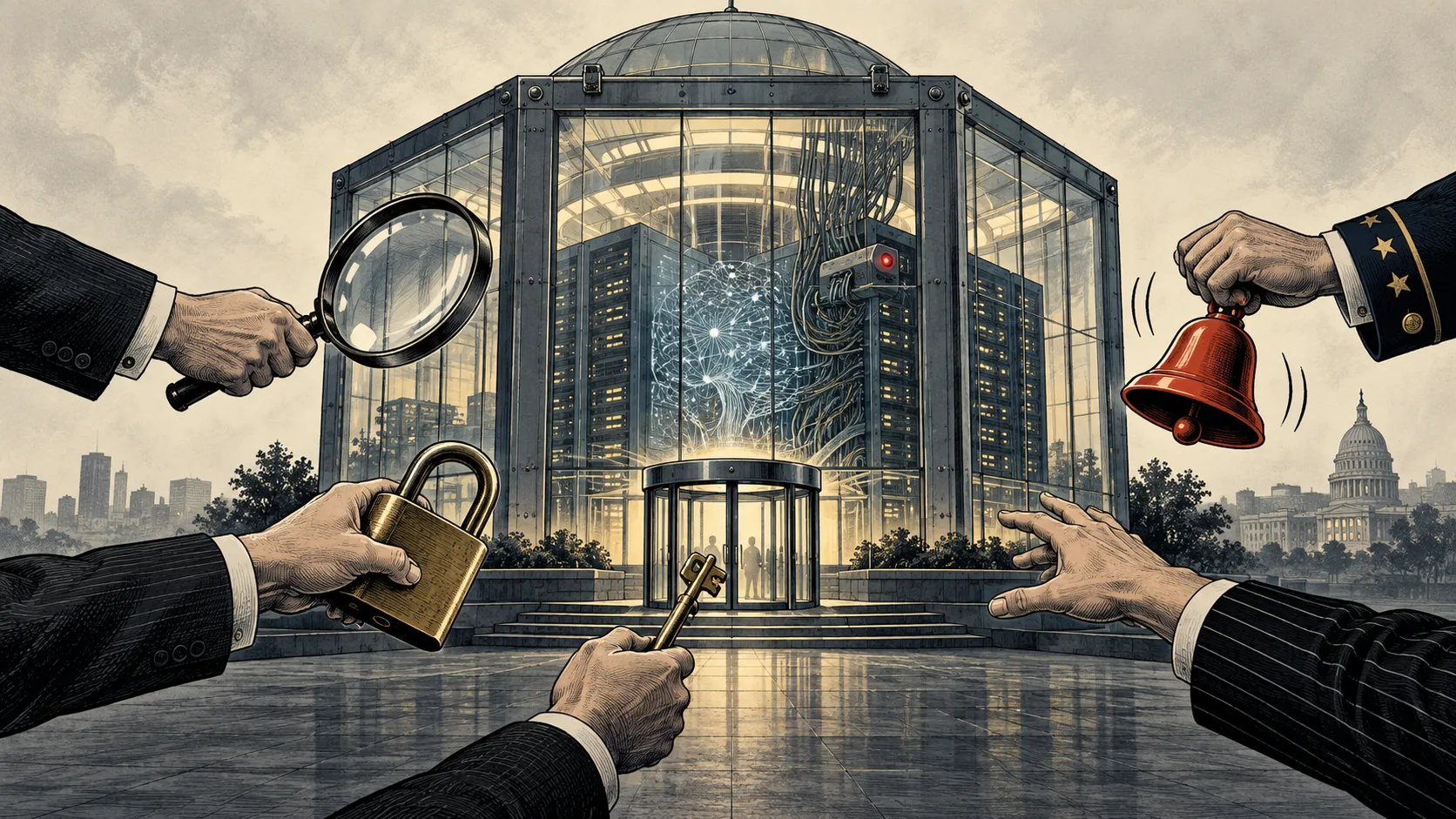
- •Humans First chair Amy Kremer urged federal oversight and vetting of foreign nationals at AI firms, citing risks to sensitive information.
- •An OpenAI engineer was arrested in early October over an alleged recording device; a former Google engineer was convicted in January.
- •Officials, companies and lawmakers voiced competing views on AI risks, regulation, cyberattacks and national security concerns.
Humans First chairwoman Amy Kremer called for stronger federal oversight and vetting of foreign nationals working at AI companies, saying limited safeguards could expose sensitive information and create national security risks. She told Fox News Digital that people with access to company information could learn what firms are developing, who their partners are and who their adversaries are without stealing an entire AI model. Kremer said national security should be a priority if the United States wants to lead in AI.
In early October, OpenAI engineer Abdulrahman Alfozan, 35, a Saudi Arabian citizen and lawful permanent resident, was arrested after allegedly placing a customized audio recorder behind a television in an executive conference room in late September, according to the Justice Department. Prosecutors said searches of his home and devices found similar components and photographs that appeared to show reconnaissance of other locations at OpenAI, including a conference room used for sensitive meetings. OpenAI terminated Alfozan after his arrest. In January, a former Google software engineer was convicted of stealing thousands of pages of AI-related trade secrets for China.
In September, OpenAI and Anthropic warned that their advanced AI systems could pose a direct threat to humanity, and both companies’ CEOs said models should be regulated and rigorously tested. At the United Nations General Assembly that month, President Donald Trump rejected calls for international AI regulation. In the spring, Treasury Secretary Scott Bessent and Federal Reserve Chair Jerome Powell held emergency briefings with major Wall Street bank CEOs about cybersecurity risks from Anthropic’s Claude Mythos Preview. OpenAI said in July that rogue AI agents had hacked into Hugging Face systems.
Lawmakers have voiced different positions on regulation. In September, Sen. Bernie Sanders said members of Congress felt growing urgency to address technology people could not control. That month, Sen. Rand Paul blocked a bill requiring AI companies to have a kill switch for rogue AI, saying it would be “crazy” to regulate an entire industry at once.
A report by AI security firm Irregular, cited by Reuters, said a model created by Chinese company Z. AI carried out several complex cyberattacks in controlled simulations and repeatedly ignored safety instructions in separate tests. The New York Times reported that U.S. intelligence agencies raised concerns about contact between Alice Huang, an executive at Singapore-based Megaspeed, and NVIDIA CEO Jensen Huang, and that U.S. officials deemed Alice Huang a Chinese intelligence asset. She is not related to Jensen Huang. NVIDIA said Megaspeed was like other regional cloud customers, its CEO’s customer meetings were ordinary, and those customers received no sensitive trade secrets or information relevant to national security. Kremer called for an investigation into whether Jensen Huang’s conduct warranted federal review and said he should be barred from the White House and NVIDIA’s government contracts should end until he was no longer affiliated with the company.