Compare AIFind AIAI NewsAI How-To
About Us
PrivacyTermsFAQContactContact
AIB Inc.Company info
© 2026 AIB Inc.

Survey Maps AI for Games
Survey Maps AI for Games

HuggingFace·Thursday, September 17, 2026
  • •NUS and NTU researchers publish 120-page survey on AI for games in foundation model era
  • •Survey maps six roles, from playing and acting to testing and evaluating AI-built games
  • •Authors cite 439 references and warn artifact reuse is not the same as capability transfer
  • •NUS and NTU researchers publish 120-page survey on AI for games in foundation model era
  • •Survey maps six roles, from playing and acting to testing and evaluating AI-built games
  • •Authors cite 439 references and warn artifact reuse is not the same as capability transfer
  • •NUS and NTU researchers publish 120-page survey on AI for games in foundation model era
  • •Survey maps six roles, from playing and acting to testing and evaluating AI-built games
  • •Authors cite 439 references and warn artifact reuse is not the same as capability transfer
  • •NUS and NTU researchers publish 120-page survey on AI for games in foundation model era
  • •Survey maps six roles, from playing and acting to testing and evaluating AI-built games
  • •Authors cite 439 references and warn artifact reuse is not the same as capability transfer

Researchers from the National University of Singapore and Nanyang Technological University published “AI for Games in the Foundation Model Era” on Sep 15, with Meng Luo submitting it to Hugging Face Papers on Sep 16. The arXiv:2609.16679 survey, listed as #2 Paper of the day with 103 upvotes, studies how foundation models and learned game-world models are changing AI uses across the full game lifecycle, not only game-playing.

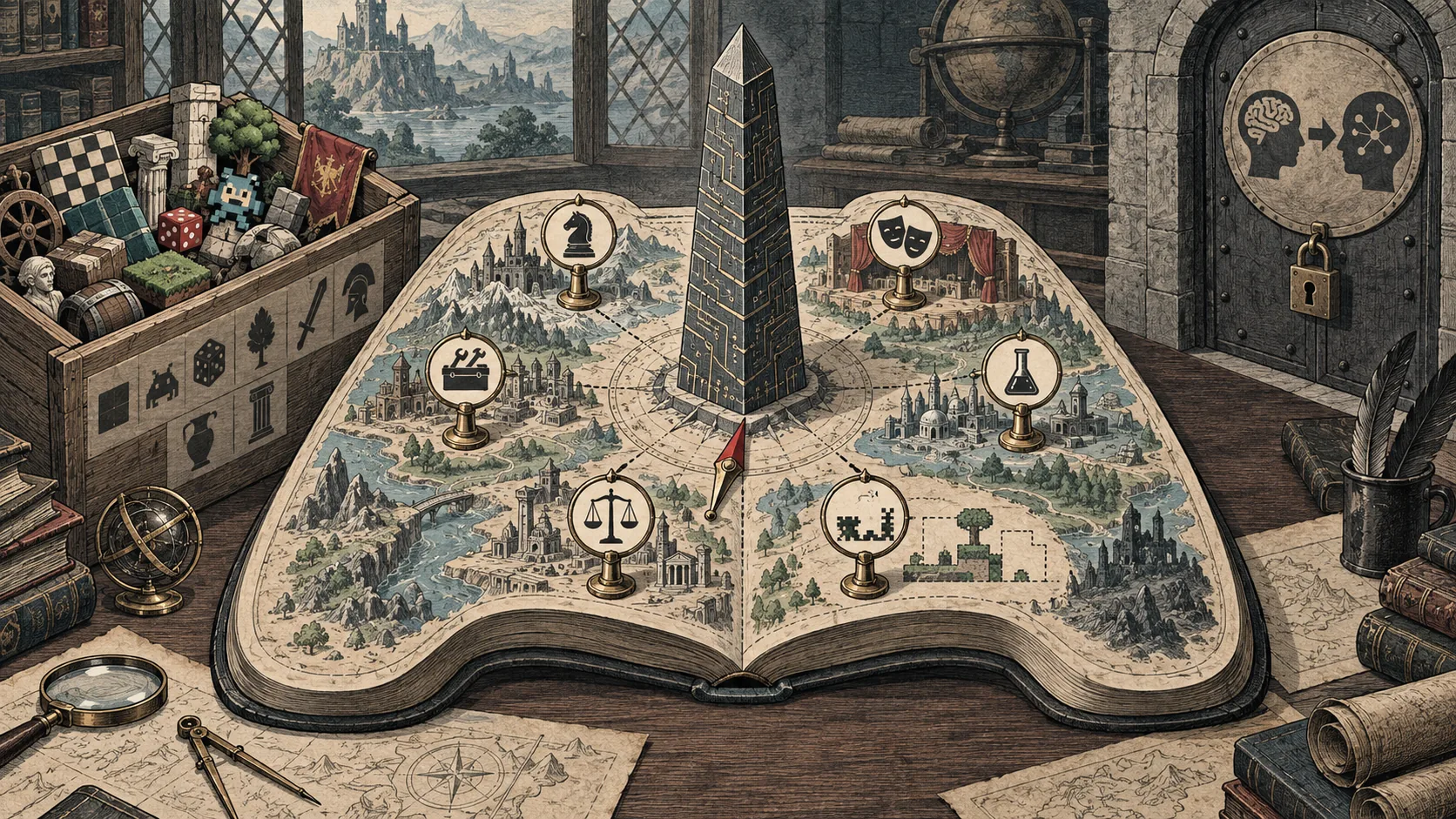
The 120-page survey organizes recent work into six roles based on the immediate use of AI output: playing and acting; modeling players and games; designing games; building and maintaining games; generating and adapting at runtime; and testing and evaluating games. The authors say recent systems now model players and game dynamics, support design and development, adapt player-facing experiences during play, and evaluate the artifacts they produce.

The survey is supported by a living collection of 439 references and asks three recurring questions across the six roles: what structure comes from the game or workflow, what AI learns or produces, and which capabilities and artifacts transfer across settings and roles. The authors identify several cross-role links, including gameplay trajectories training world models, learned environments providing experience for agents, design specifications driving executable implementations, and playtesting feedback guiding revision.

The paper’s cautionary finding is that artifact reuse is not the same as capability transfer. Control schemes, rules, engine interfaces, state representations, and player contexts often remain specific to a game or setting, so downstream claims need validation in the target environment where the AI output is used.

Evaluation is described as most standardized for bounded gameplaying and selected learned environments. The authors say persistent state in learned worlds, repeated software revision, validated player modeling, sustained runtime adaptation, and representative automated testing remain less established. The project also offers an interactive survey map, living bibliography, and six playable AI-crafted worlds.

Researchers from the National University of Singapore and Nanyang Technological University published “AI for Games in the Foundation Model Era” on Sep 15, with Meng Luo submitting it to Hugging Face Papers on Sep 16. The arXiv:2609.16679 survey, listed as #2 Paper of the day with 103 upvotes, studies how foundation models and learned game-world models are changing AI uses across the full game lifecycle, not only game-playing.

The 120-page survey organizes recent work into six roles based on the immediate use of AI output: playing and acting; modeling players and games; designing games; building and maintaining games; generating and adapting at runtime; and testing and evaluating games. The authors say recent systems now model players and game dynamics, support design and development, adapt player-facing experiences during play, and evaluate the artifacts they produce.

The survey is supported by a living collection of 439 references and asks three recurring questions across the six roles: what structure comes from the game or workflow, what AI learns or produces, and which capabilities and artifacts transfer across settings and roles. The authors identify several cross-role links, including gameplay trajectories training world models, learned environments providing experience for agents, design specifications driving executable implementations, and playtesting feedback guiding revision.

The paper’s cautionary finding is that artifact reuse is not the same as capability transfer. Control schemes, rules, engine interfaces, state representations, and player contexts often remain specific to a game or setting, so downstream claims need validation in the target environment where the AI output is used.

Evaluation is described as most standardized for bounded gameplaying and selected learned environments. The authors say persistent state in learned worlds, repeated software revision, validated player modeling, sustained runtime adaptation, and representative automated testing remain less established. The project also offers an interactive survey map, living bibliography, and six playable AI-crafted worlds.

Read original (English)·Sep 17, 2026
#foundation models#game ai#world models#runtime adaptation#automated testing#player modeling#game development#arxiv