Compare AIUse AILatest in AILearn AIAI Solutions
Event Info
Our VisionOur VisionPrivacyTermsFAQContactContact
AIB Inc.Company info
© 2026 AIB Inc.

AI Open Letters Split Over Open Weights
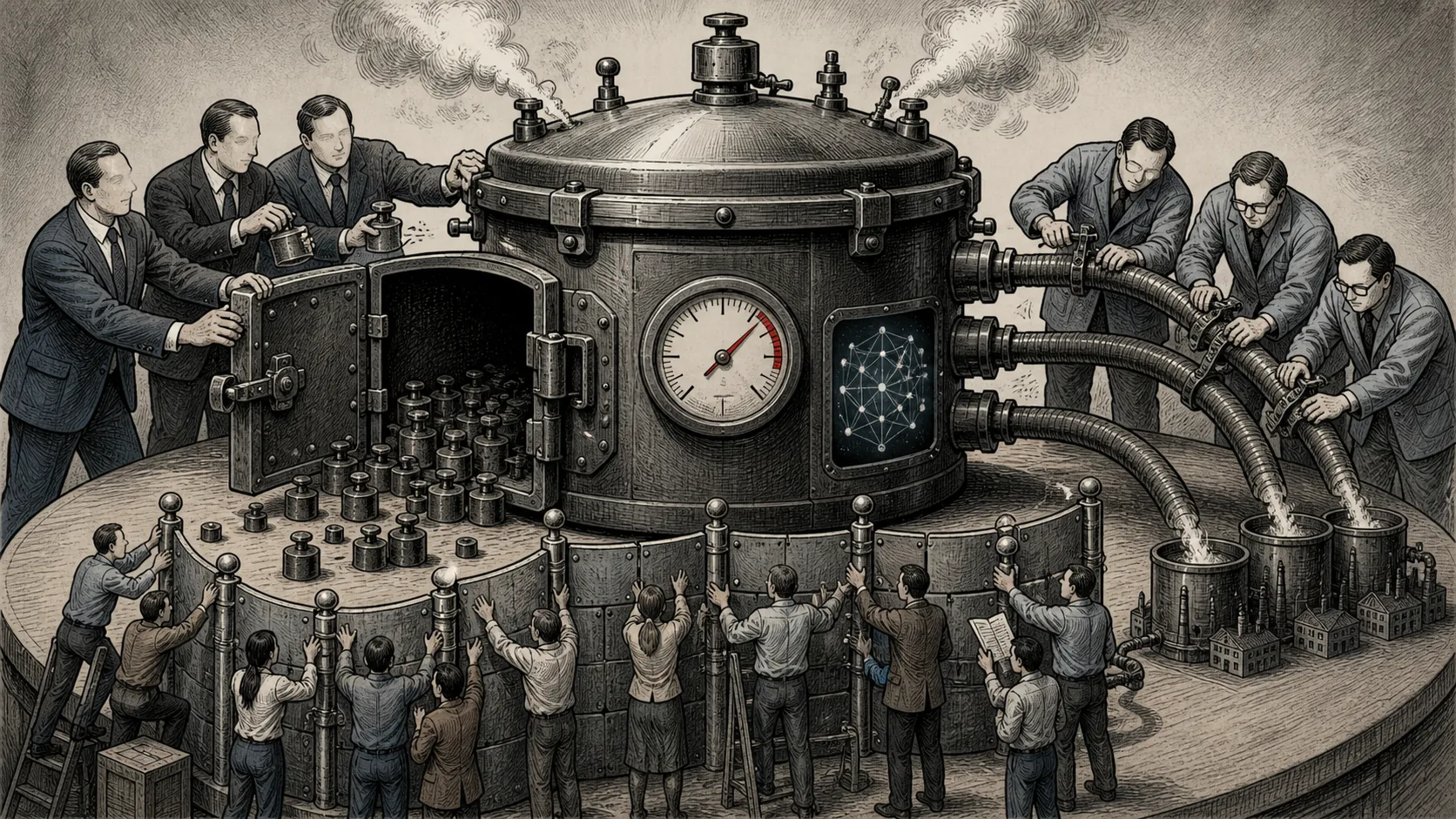
AI Open Letters Split Over Open Weights

Simon Willison·Monday, August 3, 2026
  • •Microsoft-shepherded July 24 open-weight letter drew 235 AI-adjacent company signatures, including OpenAI later
  • •Anthropic rejected an open-weight ban but urged a crackdown on industrial-scale distillation operations
  • •July 28 pacing letter carried 1,324 frontier AI employee signatures seeking international governance tools
  • •Microsoft-shepherded July 24 open-weight letter drew 235 AI-adjacent company signatures, including OpenAI later
  • •Anthropic rejected an open-weight ban but urged a crackdown on industrial-scale distillation operations
  • •July 28 pacing letter carried 1,324 frontier AI employee signatures seeking international governance tools
  • •Microsoft-shepherded July 24 open-weight letter drew 235 AI-adjacent company signatures, including OpenAI later
  • •Anthropic rejected an open-weight ban but urged a crackdown on industrial-scale distillation operations
  • •July 28 pacing letter carried 1,324 frontier AI employee signatures seeking international governance tools
  • •Microsoft-shepherded July 24 open-weight letter drew 235 AI-adjacent company signatures, including OpenAI later
  • •Anthropic rejected an open-weight ban but urged a crackdown on industrial-scale distillation operations
  • •July 28 pacing letter carried 1,324 frontier AI employee signatures seeking international governance tools

On August 2, 2026, Simon Willison described three open letters from late July 2026 that split AI companies, researchers and executives over how the U.S. government should treat open-weight models and automated AI development. The first letter, “Open Weights and American AI Leadership,” was dated July 24 and shepherded by Microsoft, with signatures from 235 AI-adjacent companies including NVIDIA, Amazon, Y Combinator, The Linux Foundation and, later, OpenAI.

“Open Weights and American AI Leadership” argued against U.S. restrictions on open-weight models over safety concerns. The letter said closed models can be breached, misused or fail in ways outsiders cannot detect, while concentrating advanced AI behind a small number of closed models creates single points of failure, weakens competition and leaves critical technology with a few providers. It said open-weight models let researchers and developers examine behavior, find vulnerabilities, build safeguards and improve systems over time.

The July 24 letter also defended distillation (training from another model’s outputs), saying policymakers should not confuse legitimate model-development techniques with misappropriation. Anthropic did not sign it and published “Our position on open-weights models” three days later. CEO Dario Amodei repeated concerns about authoritarian governments building “AI models that are more powerful than those built by the US,” warned about models being “misused to carry out cyberattacks or biological attacks,” and called for “a crack down on industrial-scale distillation operations,” while saying Anthropic had “never advocated for a ban on open-weights models.”

On July 28, “Pacing the Frontier” appeared with signatures from “1,324 employees of frontier AI companies,” including Jakub Pachocki, Ilya Sutskever, Dario Amodei and Jack Clark. The letter asked the U.S. government to support an international effort to develop technical and governance tools to “deliberately pace the frontier of automated AI development.” Willison linked that concern to competitive pressure and automated AI research, citing Anthropic producing 80% of its code with Claude Code, OpenAI’s Sol reducing end-to-end serving costs by 20%, and Kimi K3 designing a chip to serve a nano model built on its own architecture.

On August 2, 2026, Simon Willison described three open letters from late July 2026 that split AI companies, researchers and executives over how the U.S. government should treat open-weight models and automated AI development. The first letter, “Open Weights and American AI Leadership,” was dated July 24 and shepherded by Microsoft, with signatures from 235 AI-adjacent companies including NVIDIA, Amazon, Y Combinator, The Linux Foundation and, later, OpenAI.

“Open Weights and American AI Leadership” argued against U.S. restrictions on open-weight models over safety concerns. The letter said closed models can be breached, misused or fail in ways outsiders cannot detect, while concentrating advanced AI behind a small number of closed models creates single points of failure, weakens competition and leaves critical technology with a few providers. It said open-weight models let researchers and developers examine behavior, find vulnerabilities, build safeguards and improve systems over time.

The July 24 letter also defended distillation (training from another model’s outputs), saying policymakers should not confuse legitimate model-development techniques with misappropriation. Anthropic did not sign it and published “Our position on open-weights models” three days later. CEO Dario Amodei repeated concerns about authoritarian governments building “AI models that are more powerful than those built by the US,” warned about models being “misused to carry out cyberattacks or biological attacks,” and called for “a crack down on industrial-scale distillation operations,” while saying Anthropic had “never advocated for a ban on open-weights models.”

On July 28, “Pacing the Frontier” appeared with signatures from “1,324 employees of frontier AI companies,” including Jakub Pachocki, Ilya Sutskever, Dario Amodei and Jack Clark. The letter asked the U.S. government to support an international effort to develop technical and governance tools to “deliberately pace the frontier of automated AI development.” Willison linked that concern to competitive pressure and automated AI research, citing Anthropic producing 80% of its code with Claude Code, OpenAI’s Sol reducing end-to-end serving costs by 20%, and Kimi K3 designing a chip to serve a nano model built on its own architecture.

Read original (English)·Aug 2, 2026
Safety & Ethics#open weight models#distillation#ai safety#anthropic#openai#pacing the frontier#automated ai development#microsoft