AI Playbook for Supply Chains
- •Microsoft, Gallo and Blue Diamond Growers prioritized data cleanup before applying AI to supply chains
- •Blue Diamond cut what-if planning scenarios from roughly six hours to about 20 minutes
- •Gallo defined a human decision boundary before automating lower-value supply chain tasks
Microsoft, Gallo and Blue Diamond Growers have used AI and advanced planning tools in supply chain operations, according to an August 24, 2026 SupplyChainBrain article sponsored by SAP. Their projects converged on similar priorities: clean data before automation, redesign weak processes first, set clear human authority over major decisions, and avoid changing the whole supply chain at once. Tushar Bala, chief technology officer at CloudPaths, said successful AI implementation depends on business transformation, not just software.
Microsoft faced the issue as AI demand changed planning for cloud infrastructure. Joanna Kostecka, Microsoft Cloud corporate vice president, said demand can now jump by hundreds of percentage points instead of growing in the more linear pattern planners expected. Microsoft also had to account for constrained components and power, longer lead times, weekly or daily planning cycles, and years-ahead planning with strategic suppliers. Dhaval Desai, engineering manager at Microsoft Cloud, said the company first searched for waste across product design, planning, sourcing, manufacturing and delivery before deciding where AI could reduce cycle times or speed employee decisions.
Blue Diamond Growers, an almond cooperative with branded products and ingredients businesses, tried to combine separate demand and supply systems in SAP Integrated Business Planning, or IBP (software for coordinated business planning). The company already used SAP for ERP, but found that some required information was missing from its existing SAP environment. Steve Birgfeld, Blue Diamond’s vice president of IT, said “Data first and foremost” was a main lesson. After regrouping and creating some data inside IBP, Blue Diamond consolidated planning work that had been spread across different systems and spreadsheets. “What-if” scenarios that once took roughly six hours could be completed in about 20 minutes, and the company connected volume planning more closely with financial planning.
CloudPaths’ Bala recommended establishing the planning foundation first, then adding AI to targeted areas such as demand sensing, forecasting or supply optimization. At Gallo, vice president of supply chain excellence Nitin Murali called the company’s SAP-related AI work a “decision-improvement journey.” Gallo defined a “human decision boundary” to separate higher-value decisions where people keep judgment from lower-value tasks that can be automated after employees approve automation, including order intake or parts of deployment planning.
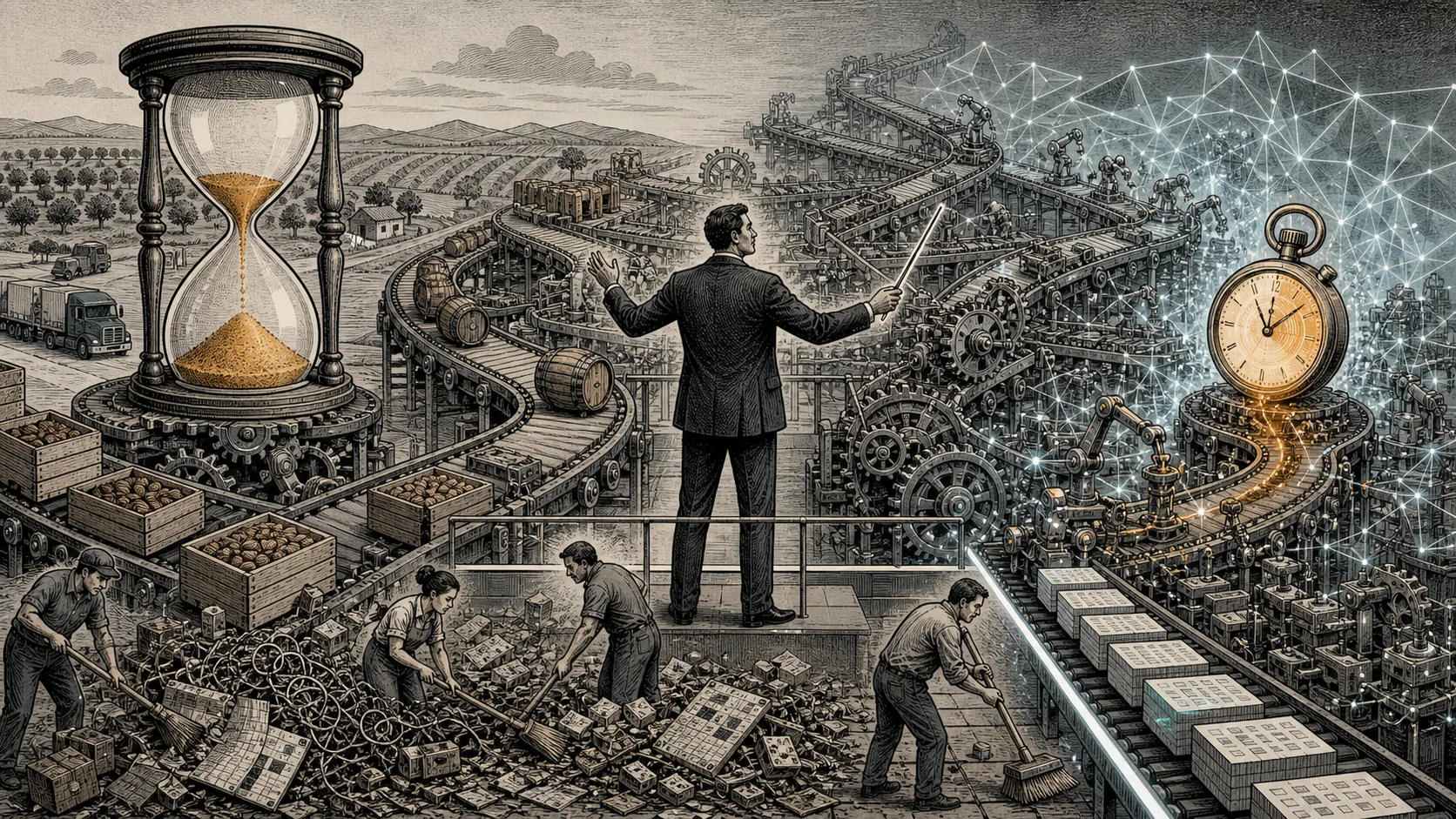
Microsoft is considering planners who act like “orchestra conductors,” with AI agents (software systems that perform tasks) handling manual analysis and spreadsheet work while people weigh trade-offs and make strategic decisions. Gallo’s teams work backward from a decision, then identify required signals, inputs and data instead of giving AI broad access just because information exists. Murali said planners should see what happened, why it happened, why it matters, what happened under similar conditions, and how confident the system is. Bala said AI “doesn't just replace the planner” but should make planners “exponentially better.”