How Work Is Redesigned for AI Collaboration
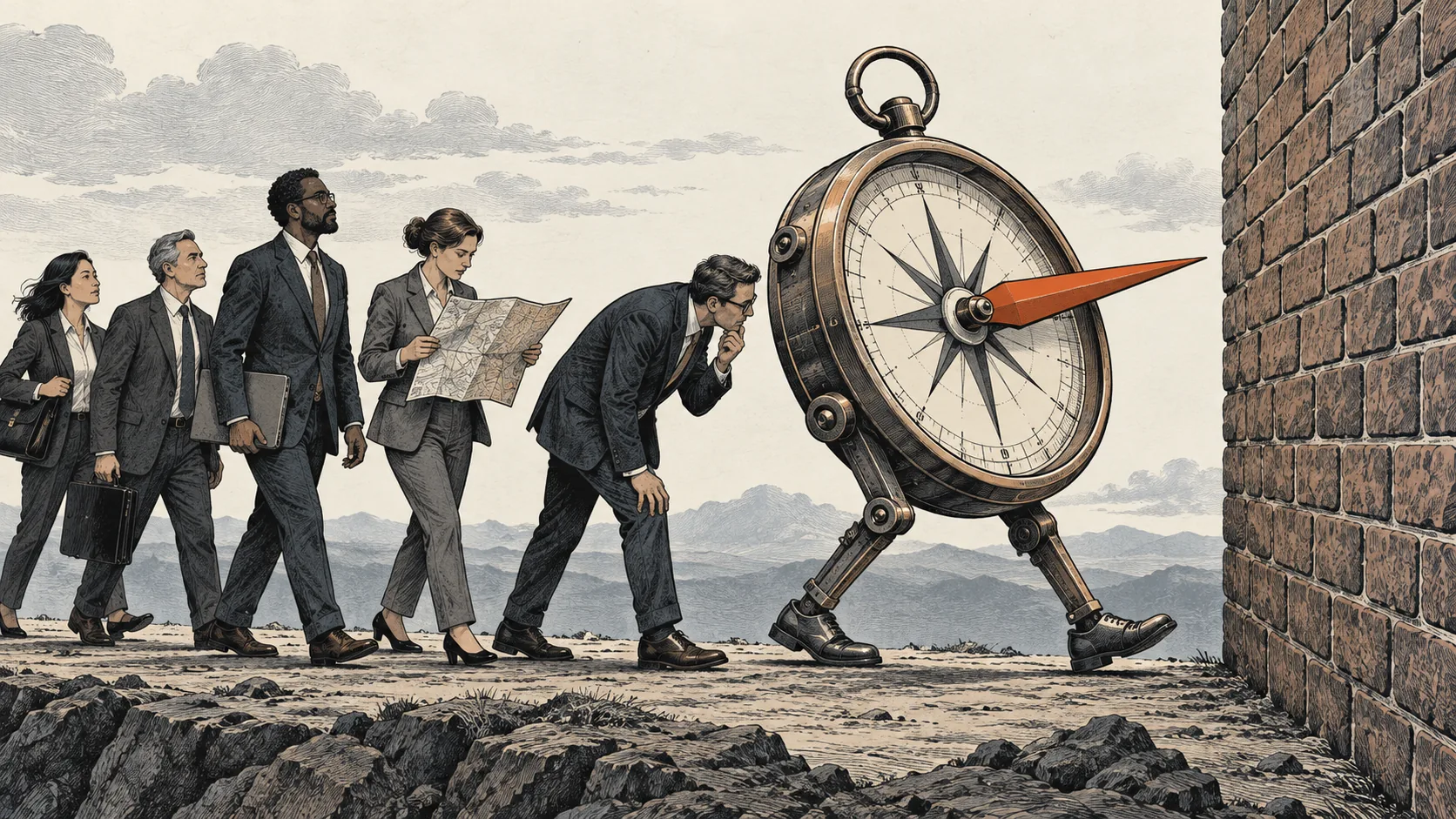
- •SK Telecom CEO Jae-heon Jeong asked what people should build with AI at a September 1 lecture.
- •A study of 244 BCG consultants found 60% were “cyborgs,” 14% “centaurs” and 27% “self-automators.”
- •About 80% followed AI’s wrong answers; researchers stressed defining problems, monitoring work and checking results.
As AI spreads across work, the way people and AI divide tasks is changing. At a joint SK Telecom and Seoul National University AI program lecture on September 1, SK Telecom CEO Jae-heon Jeong said the question had shifted from whether AI could surpass humans to what people could build with AI. Effective collaboration starts with understanding the stages of a task.
SK Telecom announced “AX Innovation 2.0” in June, assigning employee IDs, affiliations, roles and permissions to AI agents and introducing an “AX Sandbox” to redesign existing work around AI. One analysis argued that performance depends less on how much AI is used than on how thoroughly workflows are redesigned. In a McKinsey report published in August 2026, about 75% of respondents at high-performing companies that derived at least 5% of earnings before interest and taxes (EBIT) from AI said they had fundamentally redesigned workflows. Breaking a report into problem definition, information gathering, analysis, drafting, review and decision-making can help identify which stages to delegate to AI and which require human judgment. In Microsoft’s “2026 Work Trend Index,” 53% of “Frontier Professionals,” the group with the highest AI use, said they decide before starting a task which parts AI and people will handle. The figure among all AI users was 33%, a 20 percentage-point difference.
Harvard Business School researchers asked 244 Boston Consulting Group consultants to complete the same business task with AI. They analyzed nearly 5,000 interactions and identified three collaboration styles. The largest group, 60%, were “cyborgs,” involving AI at every stage and exchanging results with it; they gained both professional expertise and AI skills. “Centaurs,” 14% of participants, set the overall direction of analysis themselves and used AI for only some stages. They had the highest conclusion accuracy of the three groups and also developed professional expertise. Another 27% were “self-automators,” who handed over entire tasks. Among them, 44% submitted AI answers without correcting them, while the rest made only surface-level edits; neither group developed professional expertise or AI skills. The columnist argued that centaur-style work, which preserves human decision-making, is a practical starting point for employees accustomed to existing methods, while the long-term goal should be the cyborg style of thinking and revising alongside AI from start to finish.
Working with AI requires defining the problem, monitoring progress and giving feedback, and verifying results. In the first experiment of a 2026 study by Wharton School researchers Steven Shaw and Gideon Nave, participants’ accuracy was 25% higher when AI gave the correct answer than when they worked without AI, but 15% lower when AI gave a wrong answer. About 80% of participants who consulted AI followed its incorrect answer. Even when an AI agent has an employee ID and performs work, the person who defines the problem, monitors the process and checks the final result remains responsible for the outcome, the account said.
The “J-curve of AX,” which Jeong introduced at the Seoul National University lecture, describes productivity falling after AI adoption and then rising sharply after a certain point. In change management, the declining stretch is sometimes called the “valley of death” and described as the start of a learning curve. The columnist said trial and error during this period can teach teams which stages to assign to AI, what standards to use when checking its work and when a person should step in to change direction. The columnist proposed that leaders avoid judging too quickly during a temporary productivity dip, and that organizations provide time, tools and an environment where experiments can fail safely. Individuals, too, should treat trial and error as practice for the future. The column concluded that people decide what to build with AI, and that their competitive strength comes from defining, monitoring, checking and taking responsibility for the work.