Ai2 Introduces TutorMoments Evaluation
- •Ai2 introduced TutorMoments to test whether LLM tutors help, hold back, or over-scaffold students
- •TutorMoments-Preview includes 462 transcripts, more than 1,500 key moments, and 27 teacher annotators
- •Seven LLMs improved with evaluation-aware prompts, but still differed widely in tutoring decisions
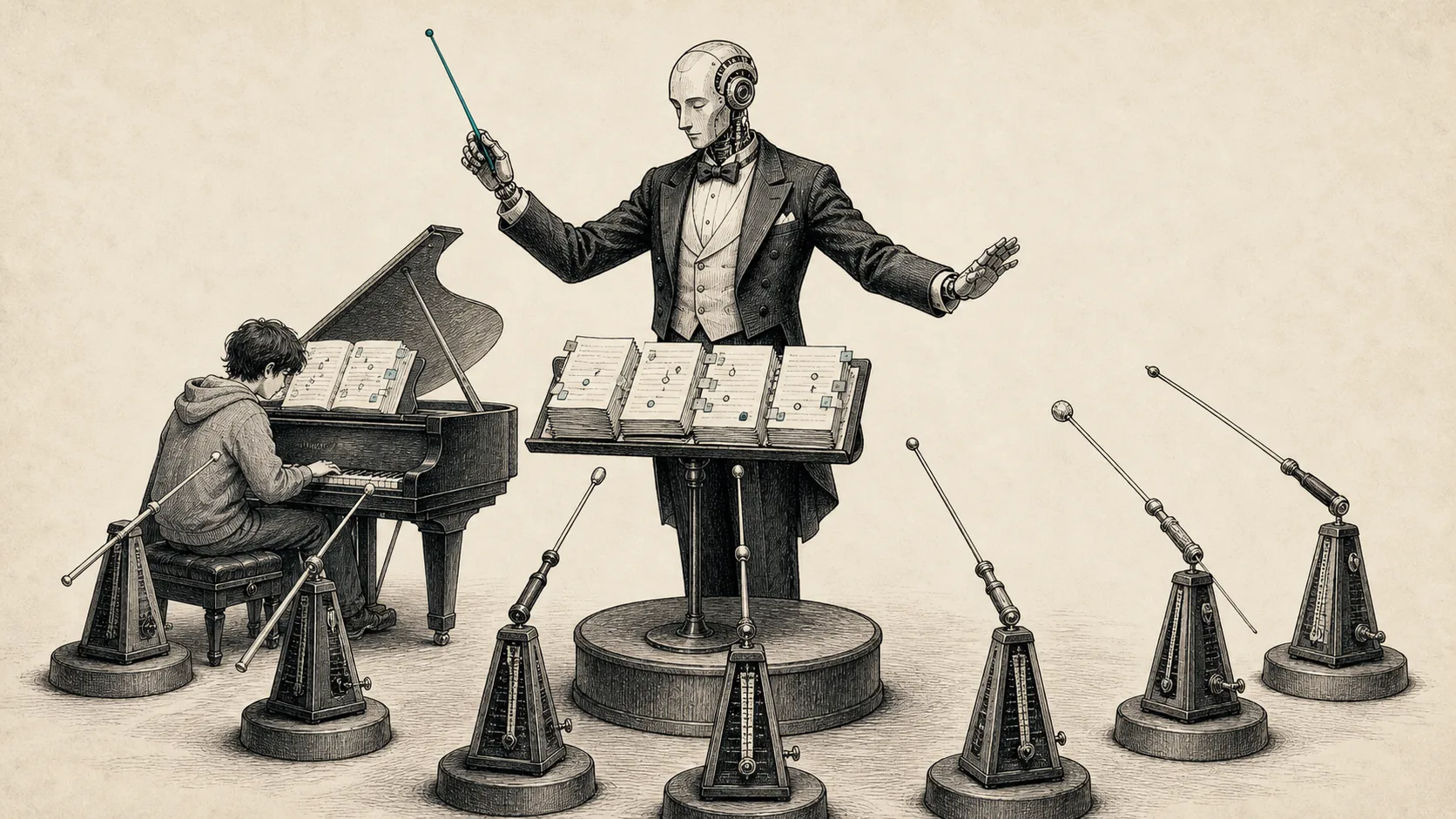
Allen Institute for AI introduced TutorMoments on August 7, 2026, as a preview framework for testing whether LLM tutors know when to help students and when to hold back. The replay-based evaluation uses real one-on-one math tutoring transcripts from a U.S. tutoring program, pauses each transcript at teacher-marked decision points, and lets a language model take over as tutor while another language model plays the student. The goal is to measure whether the model chooses scaffolding (making a task more accessible), pushing for rigor (asking for harder thinking), or over-scaffolding (reducing challenge too much).
TutorMoments-Preview contains 462 de-identified, text-only transcripts from real one-on-one math tutoring with U.S. students in grades 2-7. The release includes more than 1,500 teacher-annotated key moments and several thousand free-text annotations from 27 U.S.-based teacher annotators. The transcripts came from a high-dosage tutoring program whose students mostly attend Title I schools, and identifying details were removed first by the provider and then through an additional math-aware pipeline. Ai2 also released the dataset, code for running the replay pipeline, and model tutor replays for reproducibility.
Experienced math teachers marked moments where tutors had to choose between scaffolding and pushing for rigor. TutorMoments then gives the transcript up to that moment to an LLM, which continues the session as tutor for five turns with a simulated student. An LLM-based scoring pipeline rates each replay on whether the model scaffolded when support was needed, pushed for rigor when the student was ready, and avoided over-scaffolding. Ground truth comes from teacher majority labels; if three teachers annotated a moment and two chose rigor while one chose scaffolding, the moment is labeled rigor.
Ai2 ran seven LLMs through TutorMoments with two prompts. A plain prompt only told the model to use what it knows about good tutoring, while an evaluation-aware prompt explicitly described the trade-off between scaffolding, over-scaffolding, and pushing for rigor. Scores range from 0 to 1 and represent the share of relevant moments where the model made the appropriate move. A 0.50 score on appropriate rigor means the model pushed for rigor in half the moments that called for it.
The preliminary results found that models told only to "tutor well" tended to over-help, gave too much support, and rarely pushed students into deeper thinking. Every model scored higher with the evaluation-aware prompt than with the plain prompt, but the prompt did not close the gap to human tutoring that fits the moment consistently. Human tutors in the transcripts scored 0.458 on appropriate scaffolding, 0.182 on appropriate rigor, and 0.496 on avoiding over-scaffolding when scored at the same decision points; Ai2 said those numbers are a naturalistic reference, not evidence that AI tutors outperform humans, because annotators looked for moments where tutoring could have gone better.
Ai2 said the scores measure tutor behavior, not student learning, because replays use a simulated "oracle" student instead of real learners. The article also notes that rigor scoring is noisier than scaffolding and that the underlying annotations include fewer rigor moments, 260, than scaffolding moments, 738. In move breakdowns, prompting led models to push for rigor more often, but models used fewer strategies than human tutors and often asked students to explain their answers. Human tutors used more varied strategies and were more likely to step back and let students work independently.
TutorMoments remains early in development. Ai2 identified automated evaluation, a U.S.-based and mostly elementary and middle-school math dataset, and annotation by a single pool of educators as current limits. The team said the preview is being shared to gather feedback while it works toward a larger, multimodal dataset, a stronger scoring pipeline, and deeper analysis. The project received support in part from the Gates Foundation and Learning Commons.
The fastest, most reliable AI news, straight to your inbox