Amazon Launches Alexa+ Early Access in Japan
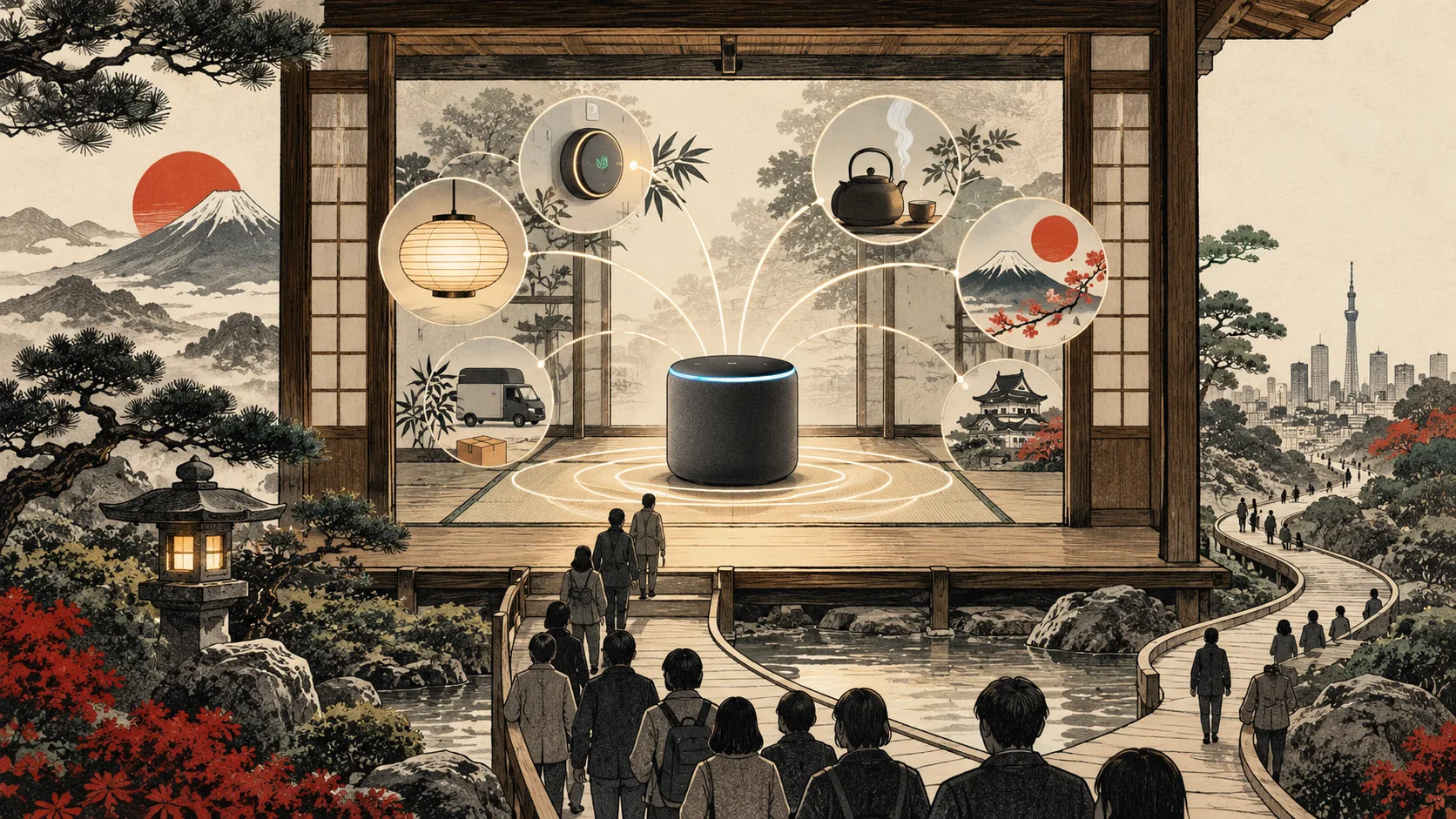
- •Amazon began Alexa+ early access in Japan, offering it free to several million users for now.
- •After early access, Alexa+ is planned to cost ¥3,000 monthly; Prime members paying ¥5,900 annually can keep using it free.
- •Alexa+ supports natural conversation, personalized responses, smart home controls and planned links to Japanese services.
Amazon began early access in Japan on October 29, 2026, for Alexa+, a personal assistant powered by generative AI. It supports natural conversation and task completion tailored to Japanese culture and habits, and will be offered free to “several million” users for now. After early access ends, the planned price is ¥3,000 per month, while Prime members paying ¥5,900 per year can continue using it free.
Alexa+ can follow a conversation without requiring users to say “Alexa,” including when they switch topics. It can play music to match a mood, order gifts on Amazon, control connected air conditioners and send email. It works on current-generation Echo devices, Fire TV devices and televisions with Fire TV, as well as in a browser on laptops. Amazon also released the Echo Time smart clock and Echo Dot 6th Generation on October 29.
Supported devices include Echo Show 8 (released in 2025), Echo Show 11, Echo Show 15, Echo Show 5, Echo Show 8 3rd Generation (released in 2024), Echo Dot Max (released in 2025), the latest Echo Studio model (released in 2025), Echo Dot 5th Generation and Echo Spot (released in 2024). The 2026 Echo Dot 5th Generation NBA Official Edition and Doraemon Edition are also supported. Compatible Fire TV devices include Fire TV Stick HD, Fire TV Stick 4K Plus, Fire TV Stick 4K Max and Fire TV Cube; three Panasonic VIERA 4K TV models are supported as well.
For smart home use, customers can continue using SwitchBot and Panasonic products already connected to Alexa. They can search in natural language for music, films and podcasts on Amazon Music, Spotify and Prime Video. For example, asking for “songs that get me excited while driving” prompts Alexa+ to select music suited to the mood. Planned integrations with Japanese services include Restaurant Reservations powered by Tabelog, Uber Eats, Demae-can and Ticket Pia, enabling reservations, orders and ticket purchases; launch dates have not been announced. At launch, Alexa+ can recommend recipes from Delish Kitchen.
When a customer says they are running low on paper towels, Alexa+ can notify them when their usual brand goes on sale and ask for confirmation before ordering. With repeated use, it learns preferences such as favorite music and books and disliked foods, then uses that remembered context in music and recipe suggestions. For family use, it recognizes individuals through Visual ID from a camera and Voice ID from speech, then responds to each person. Parents can limit Amazon purchases to themselves; Amazon says purchases and payments cannot be made accidentally by voice alone.
Amazon cited examples of Alexa+ making proactive suggestions: turning on the air conditioner when someone arrives home, starting a coffee maker at wake-up time, notifying users about new episodes of a show, and reminding them about lights left on or overlapping plans. The company calls technology that stays available when needed without getting in the way “Ambient AI” and says it is central to its Echo and Alexa+ rollout. More than 2.6 billion smart home controls were made in Japan over the past 12 months, and Amazon’s Japan team is analyzing usage. Using those insights, Alexa+ can create reusable routines from requests such as playing music and reading the weather forecast. Amazon is also offering Smart Home AI Toolkit to appliance makers to make integration with Alexa+ easier.
Gianmaria Visconti of Amazon Alexa International said the company had “rebuilt Alexa from the ground up” by combining AI, large language models (AI systems that understand and generate text), nine years of experience and context in Japan, and voice technology. He said the Japan version was designed to sound neither overly polite nor too casual, and incorporates knowledge about the timing and purpose of osechi, a traditional New Year’s meal. Alexa+ can carry conversational context across devices, such as remembering a recipe searched for the previous day and answering a question about its ingredients on a smartphone the next day.
Mai Maruyama of Amazon’s Devices division said Alexa interactions in Japan had exceeded about 30 billion over the past three years. She said that in the past year, smart home controls exceeded 2.6 billion and music played on Echo devices exceeded 520 million hours. Visconti highlighted access through voice devices without opening an app, usability across generations and links to services used in Japan.
The report also says Apple’s “Siri AI” started in Japan on October 27 and Meta’s AI agent “Muse” on October 23. Michele Butti of Amazon Alexa International said the company took time to shape an experience suited to Japanese customers; Japan’s rollout came a little over six months after early access began in the United States in February. Alexa+ also offers savings features such as price-drop alerts, but Amazon says users must explicitly confirm and control purchases and reservations.