Anthropic’s AI Gene Discovery Draws Scrutiny
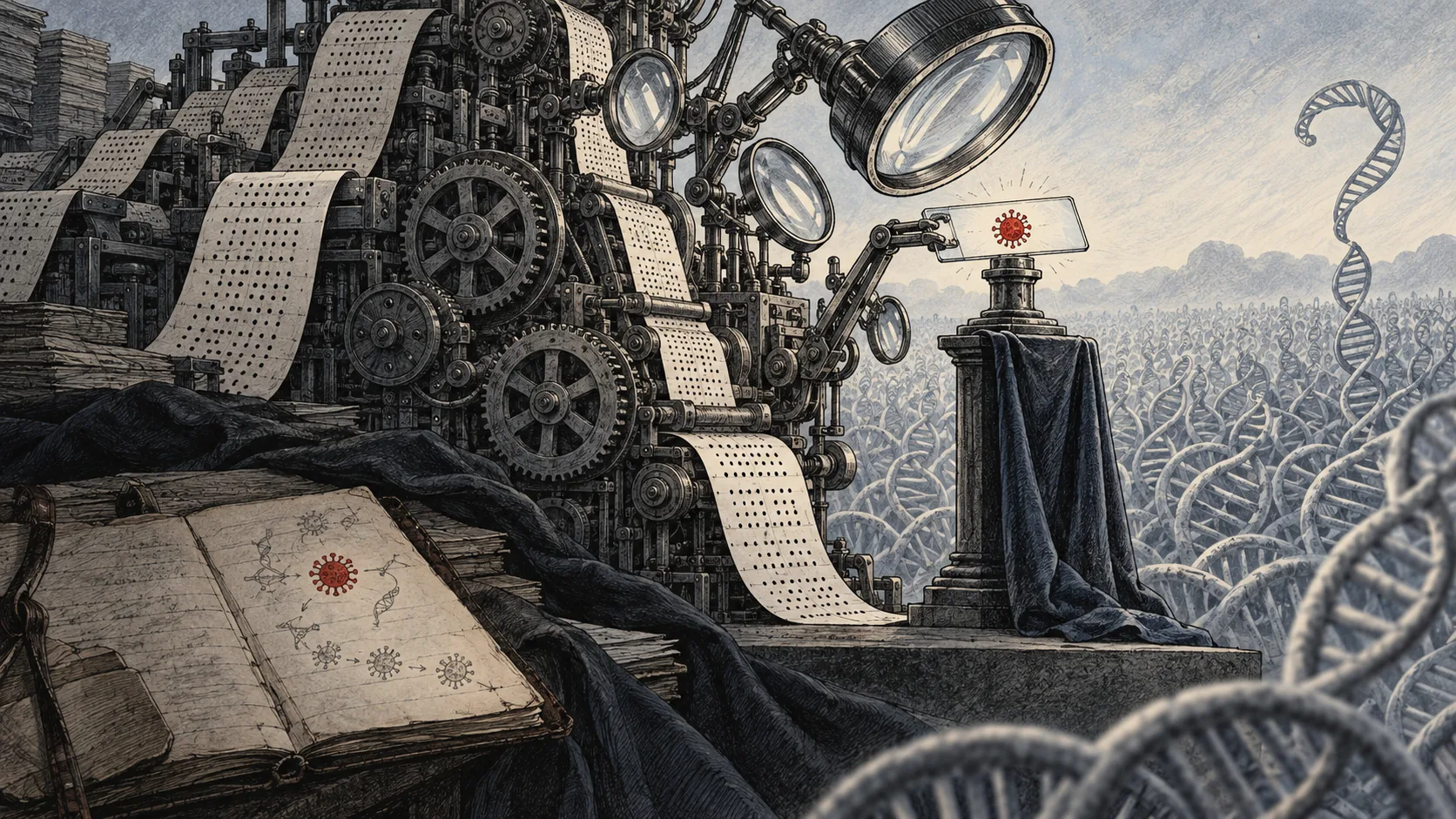
- •Anthropic says 950 agents searched DNA data for 21 hours and identified a viral pattern resembling a possible gene-editing system.
- •Researchers say the finding remains preliminary; its function is unknown, and it has not been published in a peer-reviewed journal.
- •Mario Rodríguez Mestre says his unpublished research described the same viral signatures; Anthropic did not respond to CNN’s request for comment.
Anthropic said last month that its biology lab used AI agents to identify a repeated DNA pattern beside a viral gene, which the company described as a possible new enzyme system related in structure to CRISPR gene-editing tools. CEO Dario Amodei said the molecular machine could represent a new gene-editing mechanism, but researchers have not established what the viral sequences do or whether they can be used for gene editing. The work has not appeared in a peer-reviewed journal.
Anthropic said 950 agents searched a large DNA database for reverse transcriptases, enzymes that copy RNA into DNA. Over 21 hours, they selected 3,500 examples and narrowed them to 20 for closer review; the company said a human scientist might spend weeks to months on that analysis. Anthropic said an agent noticed the repeated DNA pattern, prepared a report for human review, and scientists in its biology lab then analyzed and tested the finding. They called it a previously uncharacterized system in bacteriophages, viruses that infect bacteria.
Several outside scientists described the result as preliminary and incremental. University of Minnesota geneticist Aaron Engelhart said it does not yet demonstrate gene editing or explain the mechanism. Scientists said the finding merits investigation, and MIT and Broad Institute professor Feng Zhang called it “genuinely intriguing.” The researchers still need physical lab experiments to determine what the pattern does and whether it has a practical biotechnology use.
Days after Anthropic’s announcement, University of Copenhagen doctoral researcher Mario Rodríguez Mestre said his unpublished work described the same viral signatures. He said he had used Claude for his doctoral research and shared dissertation drafts, analyses and related material in a private account. Mestre said he could not prove Anthropic had taken his work; he considered it more plausible that the search involved more prior scientific knowledge and human direction than “autonomous discovery” suggested. Anthropic did not respond to CNN’s request for comment. University of Texas professor Ilya Finkelstein said the allegation could make scientists think twice about entering unpublished results into AI tools, while noting that separate groups can independently reach the same result.
Researchers disagreed over what the announcement says about AI’s role in science. King’s College London professor Gustavo Sudre said Claude received broad direction and used its own judgment to search data, unlike a request to analyze a specified dataset. Finkelstein said AI is effective at searching large datasets and rapidly pursuing unproductive paths, but works best on that “grunt work” when experts guide it. He noted that four of the paper’s six authors are senior molecular biologists and domain experts, and that lead author Peter Yoon previously worked in Jennifer Doudna’s lab. Other researchers said claims of autonomous discovery run ahead of the science: finding an interesting pattern is far from producing useful knowledge.
Anthropic launched Claude Science earlier this year; OpenAI, Microsoft and Google DeepMind have also introduced research tools called GPT-Rosalind, Quine and Co-Scientist. These systems use scientific datasets such as DNA sequences, and their reliability depends on training data. The article cites AlphaFold’s protein-structure work, which drew on a specialized dataset collected over decades and won the 2024 Nobel Prize in Chemistry. Anthropic says it is investing in hardware for agents to operate physical devices, but Imperial College London’s Yuval Elani said robotics is not close to handling the delicate, one-off tasks needed in biological experiments. Sudre said Anthropic’s scientists must now test the pattern in a physical lab, and warned that scientists still need to judge whether results are meaningful.