How Anthropic Reviews Claude Code Changes
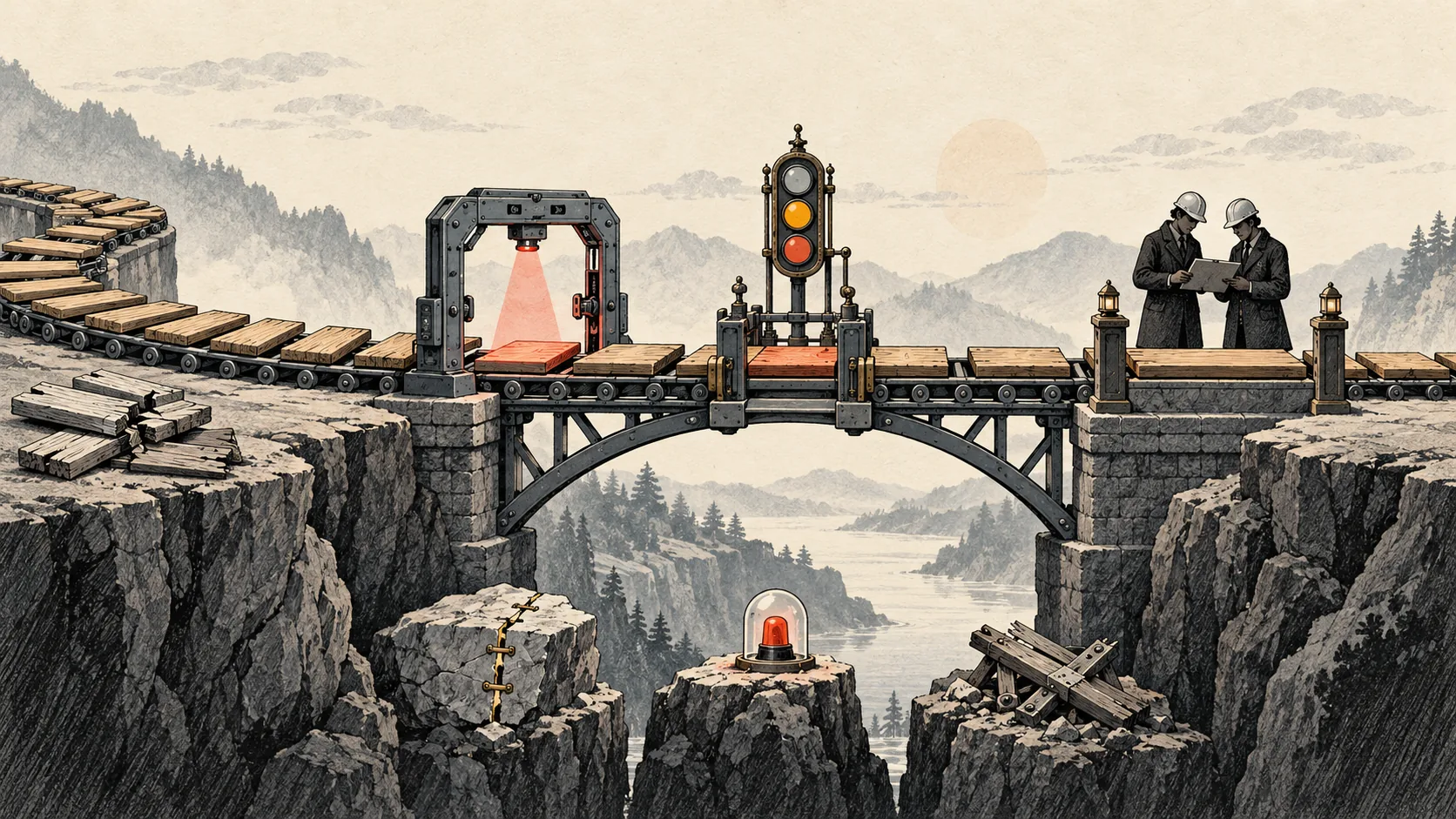
- •Claude Code pull requests more than doubled from June to September as the reverted share fell by more than 40%.
- •Anthropic routes reviews through automated checks, risk tiers and human approvals, with high-risk changes requiring two people.
- •The team caps review at three rounds and evaluates reviewer comments against incidents, fixes and reverts.
Anthropic’s Claude Code team described a review process built for a rise in agent-written code. From June to September, merged pull requests to the Claude Code codebase more than doubled while the share later reverted fell by more than 40%. The team says it did not remove review: it shifted much of the reading to automated checks and aimed to keep most pull requests to at most one human reviewer without increasing reverts or incidents. It tracks human approvals per pull request, comments and waiting time, with reverts and incidents as safeguards.
In Anthropic’s monorepo, changes landing each day rose from about 2,500 in May to more than 30,000 in September 2026. The team says manual, line-by-line review is difficult at that pace. It frames review as both finding defects before release and sharing codebase knowledge, but its process focuses mainly on detecting problems. Review now runs continuously: Claude checks and helps fix many changes before a human is asked to review them.
Before a pull request is opened, engineers give Claude something to run, such as tests, a build or a screenshot comparison, and ask it to show evidence. A separate agent then reviews the code changes with fresh context. Engineers may also run internal skills to search for bugs, simplify changes and check behavior end to end. If automated review repeatedly flags the same issue, the team updates the relevant skill, lint rule or project instructions.
Every pull request receives Claude’s review against the full repository and the stated purpose of the change. The public Code Review for Claude Code is generally available on Team and Enterprise plans; the /code-review command runs a lighter local version. After its research preview launched, the share of internal pull requests receiving substantive review comments rose from 16% to 54%. Most pull requests above 1,000 lines get findings, while most small ones return clean. Administrators can select Quick, Standard or Deep review. Other agents check findings, and a finding is posted only when enough reviewers agree it is real.
Security review, linting, type checks, platform tests and builds also run. An unresolved bug or security finding blocks a merge. A classifier assigns each change a risk tier: low-risk changes can proceed without human approval after automated checks pass, ordinary changes need one person, and high-risk changes need two. Certain sensitive paths always require a person, and only trusted authors qualify for lighter review. The person who directed an agent-written change counts as a required reviewer; agent approval does not substitute for human approval.
A merge queue reruns checks against the main branch. New behavior usually reaches Anthropic employees behind a flag first; public releases go to the latest channel before the stable channel. Flags can be turned off without a deployment, and the team has a weekly on-call rotation. The team says it does not yet have circuit breakers that raise approval requirements when revert or incident rates change. It turns incidents, fixes and reverts into a daily evaluation set for the reviewer and tracks whether people fix or reject its comments to measure noise.
To stop review from cycling indefinitely, the team added a three-round cap, diff-only re-review after initial passes and a rule against repeating findings. One pull request had gone through more than fifty overnight rounds; about 59% of the code repeatedly flagged had already existed at the reviewer’s first pass. People retain decisions about product direction, risky code, architecture, evidence from checks and accountability for shipped changes. The team says it has no formal process for sharing codebase knowledge; staff ask Claude for an explainer of the specific code they want to understand, which takes minutes and reflects the code as it is.