Anthropic Eases Fable 5 Biology Blocks
- •Anthropic says Claude Fable 5 biology fallback rate fell by about 85% in testing
- •Fable 5 now handles more everyday health, education, and clinical support queries
- •Dual-use virology, toxicology, molecular design, and drug development requests still fall back to Opus 5
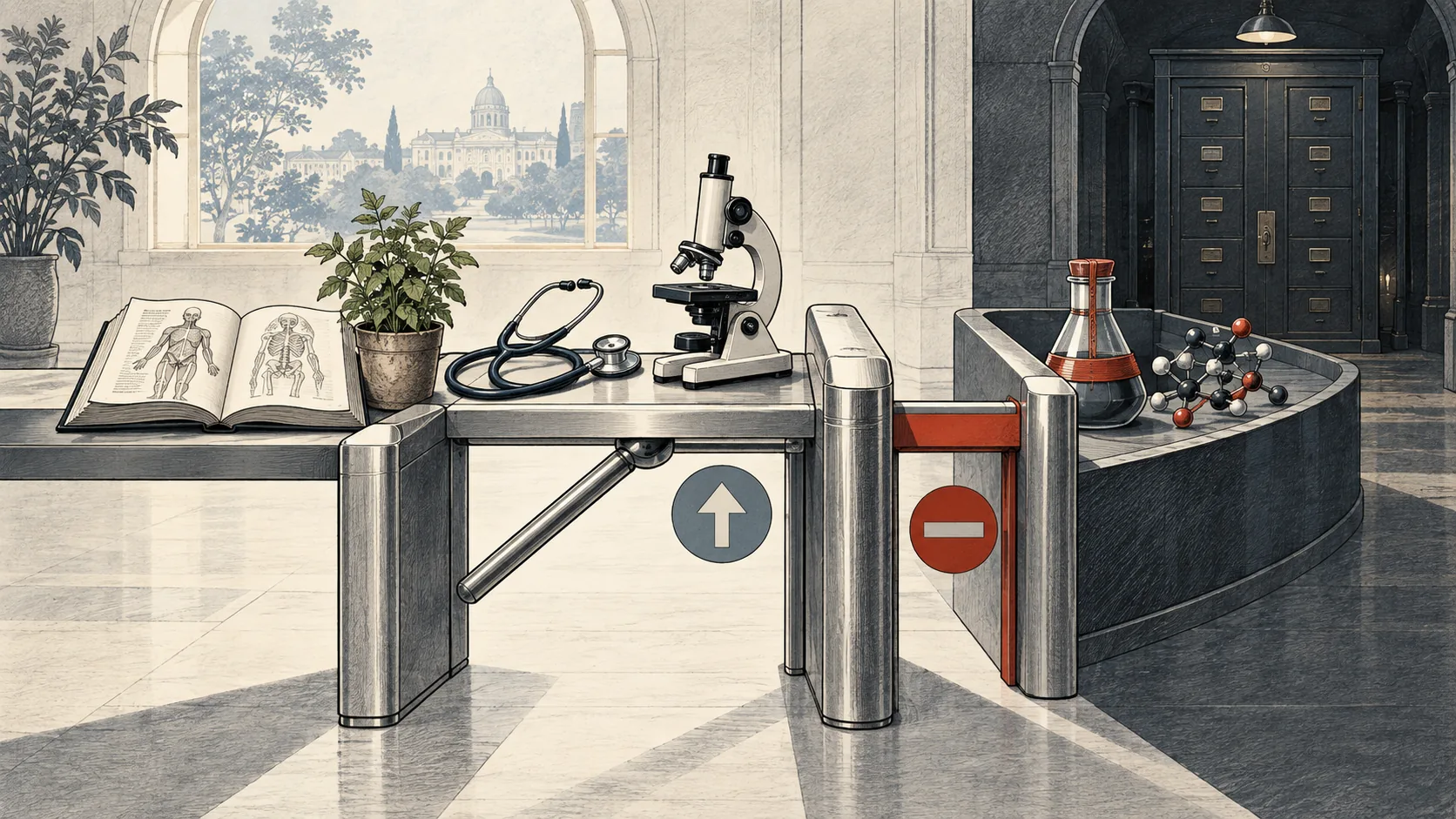
Anthropic updated Claude Fable 5’s biology safeguards to reduce unnecessary fallbacks, the moments when a biology-related query is moved from Fable 5 to the less capable Opus 5. The company said its testing found the change reduced biology-related fallbacks by about 85% across its product surfaces, allowing Fable 5 to answer more everyday health and education questions such as interpreting lab results, understanding symptoms, and learning biology in class contexts.
Anthropic said Fable 5 still falls back to Opus 5 for requests it considers dual-use, including virology, toxicology, and molecular design. The company said that means Fable 5 is not yet usable for professional biology research and drug development, while healthcare professionals should receive more support on clinical tasks after the update.
Anthropic said it built strong safeguards because Fable 5 can outperform experts on some highly complex biological tasks and provide operational support on others. The same abilities could help a researcher developing a new medical treatment, but the company said its capability assessments show Fable 5 could provide significant uplift to a malicious actor developing a biological weapon, meaning help they could not find elsewhere.
The company said biology is difficult to police because beneficial and harmful work can look similar. It cited live vaccines, which require scientists to grow the same pathogen they aim to prevent, and captopril, a hypertension drug developed after scientists isolated toxic components of snake venom that sharply lower blood pressure in humans.
Anthropic also pointed to the US Intelligence Community’s 2026 Annual Threat Assessment, which said advances in biotechnology, including synthetic biology and genomic editing, “could lead to novel biological threats.” The company said several state actors likely maintain active offensive biological and chemical weapons programs, and access to raw frontier AI capabilities could accelerate such programs.
Anthropic said Fable 5 launched with almost all biology queries blocked because of concerns over dual-use capabilities. That choice produced many false positives, where legitimate biology questions were blocked and sent to Opus 5, but the company said misuse in a dual-use biology domain could potentially be catastrophic.
The safeguards rely on safety classifiers, smaller automated AI systems that detect safeguarded biology tasks or harmful outputs. When a classifier triggers, Fable 5 reroutes the request to Opus 5, which Anthropic described as capable but without Fable 5’s level of biological capability.
Anthropic said it spent the past several weeks rewriting the classifier’s constitution, a collection of rules that separates safeguarded content from allowed content. The company solicited feedback from internal and external experts, created updated training data, retrained the classifier, and verified that it would still generally trigger on harmful and dual-use research biology while allowing more benign uses.
Anthropic said the updated classifier now blocks fewer clearly benign biology requests than at Fable 5’s launch. False positives will remain, and Fable 5 will continue blocking dual-use professional biology and drug development queries while Anthropic works on trusted access pathways for researchers.