Review Surveys AI’s Role in Healthcare
- •Ali Murat Koc’s 2026 review surveys AI applications across healthcare, from diagnosis to outcome prediction
- •Radiology serves as a model specialty because workflows, datasets and outputs are standardized or measurable
- •Review identifies validation, monitoring, governance and human oversight as requirements for safe clinical use
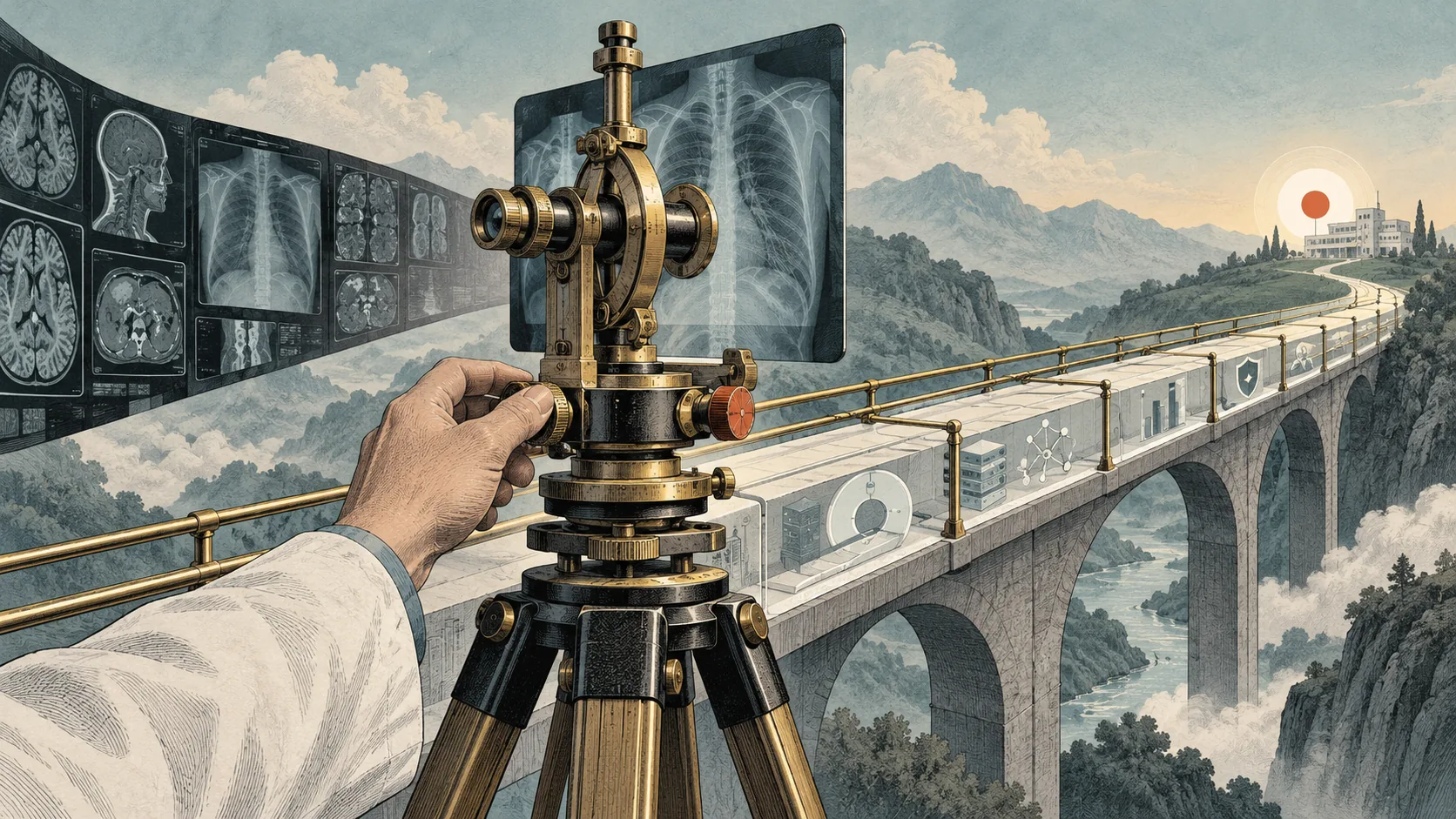
Ali Murat Koc’s 2026 narrative review in Developments and Experiments in Health and Medicine surveys how artificial intelligence is being integrated into healthcare. Applications include diagnostic interpretation, clinical decision-making, workflow optimization, documentation, patient communication, medical education and outcome prediction. The review uses radiology as a model specialty because its workflows are standardized, its datasets are large and its outputs are measurable.
It describes growing roles for generative AI, large language models, multimodal foundation models, patient-facing applications and AI-assisted medical education. Persistent limitations include hallucinations, bias, limited generalizability, inadequate reporting and insufficient prospective clinical evidence.
Digital twins (virtual patient-specific models) and agentic AI systems may support patient-specific simulation, longitudinal monitoring and multi-step workflow automation, but their clinical use remains at an early stage. Implementation, the review says, requires external validation, transparent reporting, continuous performance monitoring, institutional governance and clearly defined human oversight. It says AI’s future value will depend on safely, effectively, equitably and responsibly improving care within human-supervised clinical systems, rather than achieving complete autonomy.