AWS Details Multi-Agent Engineering Assistant
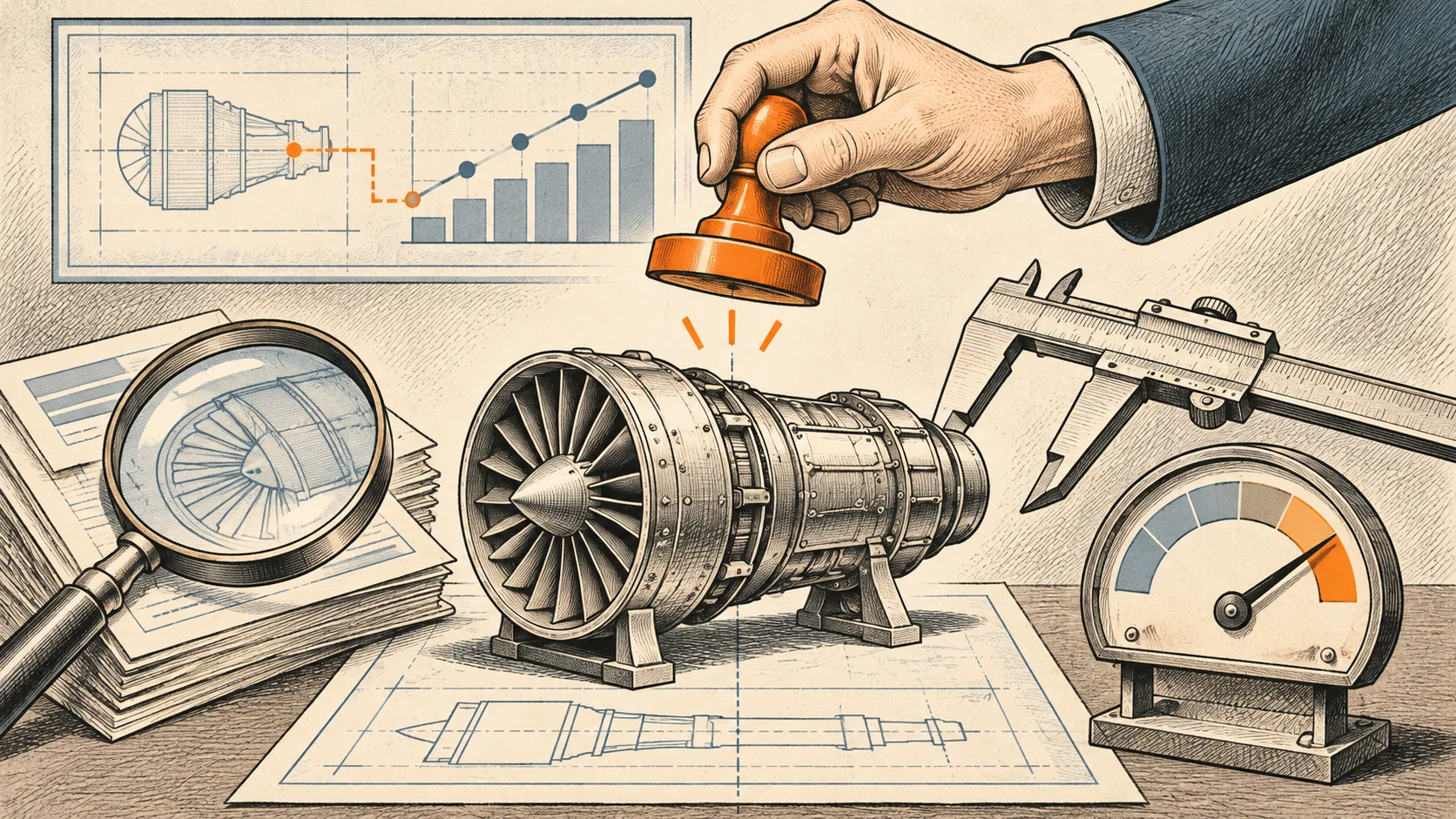
- •AWS presents a multi-agent assistant that gathers aerospace part-substitution evidence and drafts engineering assessments.
- •Three specialists search documents, evaluate specifications and check lifecycle status; engineers retain all substitution decisions.
- •Chart-crop indexing matched 7 of 7 parts in AWS testing, up from 3 of 7 with whole-page indexing.
Engineers evaluating a replacement for an obsolete or delayed aerospace component may spend days comparing vendor datasheets, interface control documents (ICDs) and qualification records. AWS proposes a multi-agent assistant built with Amazon Bedrock AgentCore, Amazon Nova Multimodal Embeddings and the open-source Strands Agents SDK to gather substitution evidence and draft assessments. Engineers retain every decision: the system neither recommends nor approves substitutions.
A planner routes queries among Catalog, Evaluation and Knowledge specialists. They search text and visual documents, check live end-of-life information, compare candidate parts and apply Python tolerance rules; a supervisor combines results when multiple specialists contribute. The system drafts justification memos and Integration Impact Assessments for review, and records an audit trail aligned with AS9100 sections 8.4 and 8.5.6.
The architecture uses Claude Haiku 5.5 for routing, Claude Sonnet 5.5 for specialist tools and Claude Opus 5.5 to synthesize combined findings. The sample knowledge base covers seven fictional AnyCompany reaction wheels with momentum storage from 0.003–5.0 Nms. Structured specifications support reproducible fit scoring, while photos, datasheet pages and chart crops add details absent from text fields. The vendor value in structured data is authoritative, preventing the system from guessing a manufacturer from filenames, images or web results.
Nova Multimodal Embeddings supports text and document retrieval, including queries for torque curves, and image searches through an Amazon S3 Vectors index. The managed knowledge base retrieval API does not accept image input, so uploaded charts or photos use that separate index. Photo comparisons produce cosine similarity scores; examples were around 0.84 for wheels in the same product family and 0.40 for wheels in different classes. Those scores support, but do not determine, the spec-fit verdict.
AWS says indexing cropped chart regions improved chart-upload matching in its tests from 3 of 7 parts correct with whole-page indexing to 7 of 7 with chart-band crops. When an engineer names a part, the tool filters results to that part’s indexed content. The image-search path can silently fall back to text retrieval if it encounters errors, including a missing s3vectors:QueryVectors permission on the runtime role; AWS says this can lead to a wrong part being named with high apparent confidence. The tool therefore logs an explicit failure warning when that image path falls back. The sample is delivered as five standalone Jupyter notebooks; prerequisites include Python 3.10 or later, a US East (N. Virginia) AWS account with the specified Bedrock model access, and the knowledge base, S3 Vectors index and AgentCore Gateway.