AI and Seamstresses Shape Artemis Spacesuit
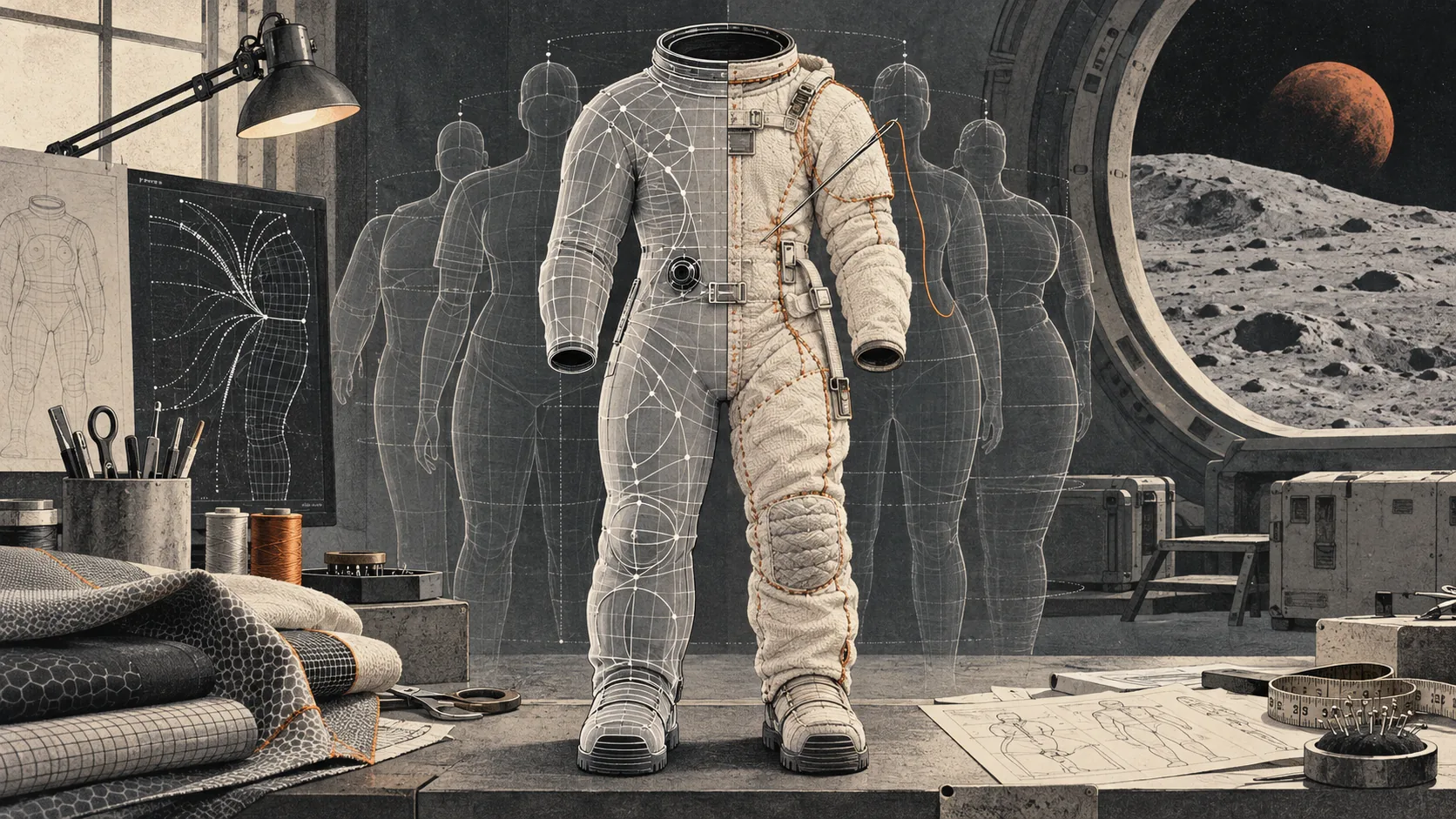
- •Axiom Space’s AxEMU combines AI-assisted design and hand-sewn construction for NASA’s Artemis lunar landing missions.
- •Genetic algorithms, GANs and astronaut digital twins informed suit components, patterns and fit across body sizes.
- •Prada contributed material and textile expertise; NASA tested the suit underwater, in reduced gravity and in thermal-vacuum chambers.
Axiom Space’s AxEMU spacesuit, selected for NASA’s Artemis lunar landing missions and designed for the lunar south pole, combines AI-assisted design with hand sewing by skilled technicians. Based on NASA’s earlier xEMU design, the suit was tested and refined in laboratory and facility simulations. Prada contributed clothing and textile expertise to the suit’s fabric layers. Apollo-era suits were also sewn by hand, but their bulk restricted astronauts’ movement; the AxEMU is designed to let astronauts work more naturally on the Moon.
Engineers used genetic algorithms and Generative Adversarial Networks (AI systems that generate and assess designs) to improve topology optimisation, making metal suit parts lighter, stronger and more efficient. Full-body 3D scans and digital twins (virtual models of astronauts) let designers assess pressure on the body and movement across small to large body sizes. AI systems then predicted suitable suit patterns, joint positions and adjustable parts, informing decisions about fabric sizes and construction. NASA tested the suit underwater at the Neutral Buoyancy Laboratory at Johnson Space Center in Houston, on reduced-gravity flights, and in thermal-vacuum chambers to assess performance under lunar-like conditions.
The AxEMU is designed to fit almost all adult body sizes and support eight-hour spacewalks. Its hard upper torso is paired with flexible limbs and joints at the hips, knees, ankles, shoulders and wrists, allowing astronauts to kneel, squat, lunge and walk instead of relying on the hopping gait associated with Apollo suits. Redesigned gloves aim to reduce fatigue and improve dexterity for handling tools and fine tasks. Helmet and visor coatings reduce glare, improve contrast and protect against scratches, dust and extreme temperatures.
Axiom Space selected Italian fashion house Prada to help develop the suit. Prada’s experience includes durable materials and performance gear, including clothing made for the Luna Rossa America’s Cup sailing team from the 1990s onward. Axiom engineers developed the insulation, while Prada focused on selecting and sourcing materials and refining seam placement and stitching. Those methods are intended to limit bulk and chafing, reduce lunar dust buildup and reinforce high-stress areas.
The suit is built from four major layers: a replaceable white OrthoFabric outer shell made from Gore-Tex, Kevlar and Nomex; six layers of aluminised Mylar insulation; an airtight, urethane-coated nylon bladder that holds oxygen; and a Dacron polyester restraint layer that keeps the bladder in shape. Technicians use computer-aided design and AI-generated patterns to check fit, seams and fabric drape before cutting. They sew thick materials with industrial machines, reinforce high-stress points, and use heat-sealing or ultrasonic welding on the bladder to avoid needle holes. Hand stitching fills areas machines cannot reach, and seamstresses inspect seams for tension, skipped stitches and shifted fabric layers. The AxEMU pairs these digital design tools with skilled garment making, while incorporating life-support systems, communications, helmet displays and controls, battery power and avionics.