Blue Yonder Reorients Supply Chain Apps Around Decisions
- •Blue Yonder outlines Orchestrator, bringing agents, recommendations, workflows and collaboration into supply chain applications
- •Two warehouse mobile apps target operators and supervisors, with decision time and task completion among measures
- •Mission Hub will show models, agents, AI consumption and infrastructure costs; customers can set model limits in GenAI Studio
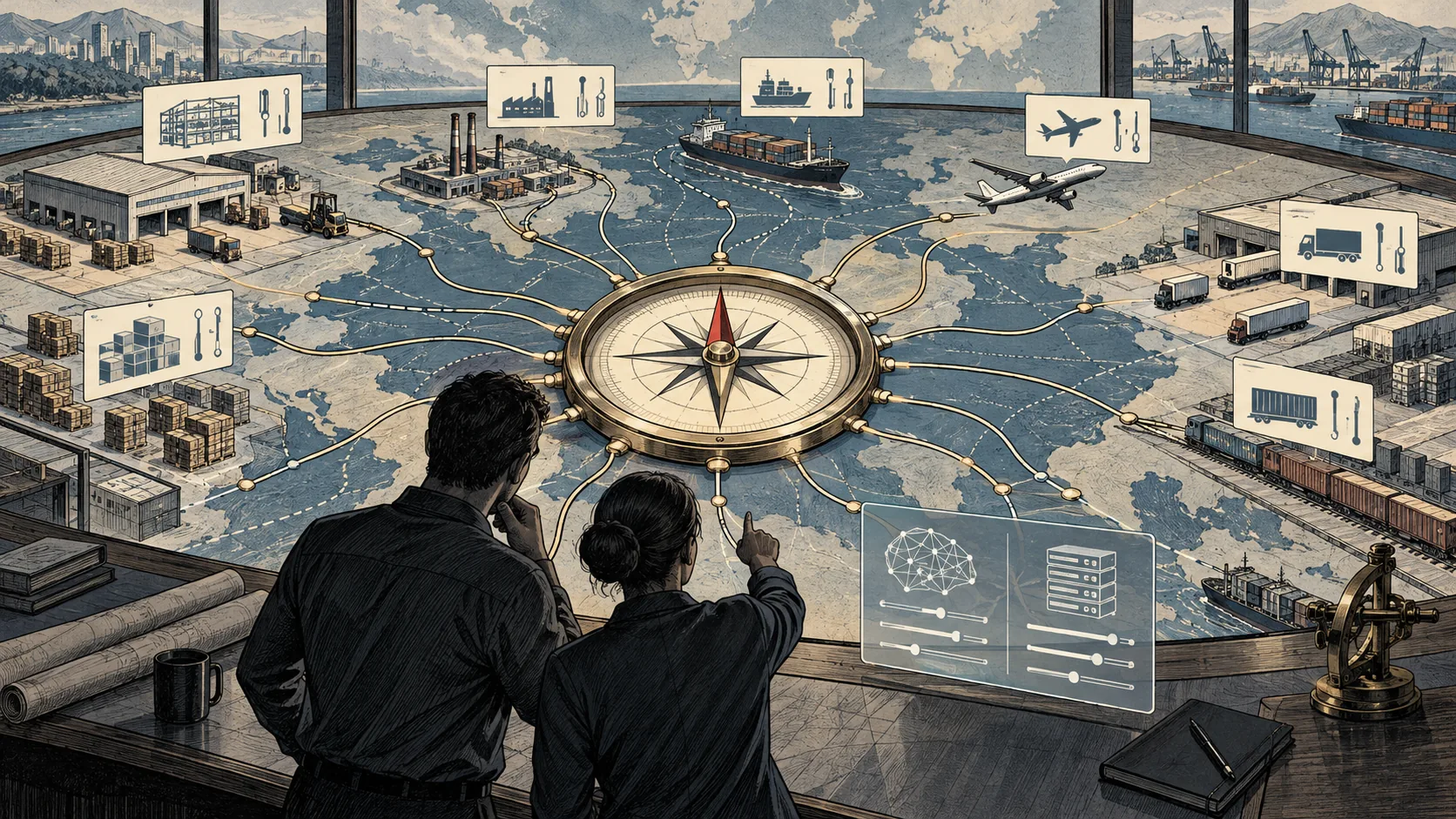
Blue Yonder is redesigning its supply chain applications around decisions rather than screen navigation as AI takes a larger role in planning and execution. During a recent analyst briefing, Chief Design Officer Nunzio Esposito described Blue Yonder Orchestrator, which brings together AI agents, recommendations, workflows, mobile capabilities and collaboration tools. The company aims to reduce manual navigation and repetitive interactions by surfacing relevant information and decisions directly.
Orchestrator uses context such as the business process, the user’s role and policies, and the situation in which an application is accessed to determine what information to show, who may need to participate and what decision may be needed. Esposito described the company’s briefing feature as an intelligent dashboard: agents can handle lower-level tasks, while users are brought in when higher-value judgment is required. Blue Yonder is also consolidating search, lookup, favorites, navigation and agent interaction into a central access point. Frequency of use, previous activity and user-journey patterns can feed into its context graph, which the company says helps Orchestrator respond dynamically.
Blue Yonder wants its services available across desktops, phones, voice-enabled environments, warehouse devices and potentially wearables. Some domain-agent functions are already available in Microsoft Teams. For example, a procurement manager could ask about current activity and outstanding issues through Teams instead of returning to the logistics application.
In warehouses, Blue Yonder has developed two role-specific mobile applications, for operators and supervisors, using its mobile studio and designing for industrial devices. The company says the work prioritizes fewer clicks, application performance and task completion. It is assessing decision time and speed to completion. A decision-based workflow, called a workbook, is intended to show tasks, participants and work status to reduce cognitive load and support collaboration. The article’s analysis says small cuts in repeated clicks, navigation or decision time can matter over a shift.
Blue Yonder is developing generative user interfaces that could adapt to the information and situation, as well as Cognitive Coach, which uses information about a user’s tasks, decision-making and collaborators to explore personalized, in-context assistance. Esposito said companies must consider how jobs change as agents take on more activities. Blue Yonder aims to make that transition less disruptive and reduce the change management needed for AI-assisted work.
Esposito said Blue Yonder selects models for different tasks, can coordinate multiple models, and considers cost in that process. Mission Hub will show system roles, policies and entitlements, generative AI consumption, and which models and agents are activated, along with infrastructure costs. Through GenAI Studio, customers can choose models and set usage limits or boundaries instead of relying entirely on automatic orchestration.
Blue Yonder says some capabilities are already available while others remain in development. The article points to the company’s December releases, continued Cognitive Coach work and generative-interface efforts as upcoming evidence of how the approach moves into daily supply chain operations. Its stated direction is to reduce navigation, surface decisions, delegate more lower-level activity to agents and support work across applications and devices.