Clark Sees Over 50% Chance of Successor AI by 2027
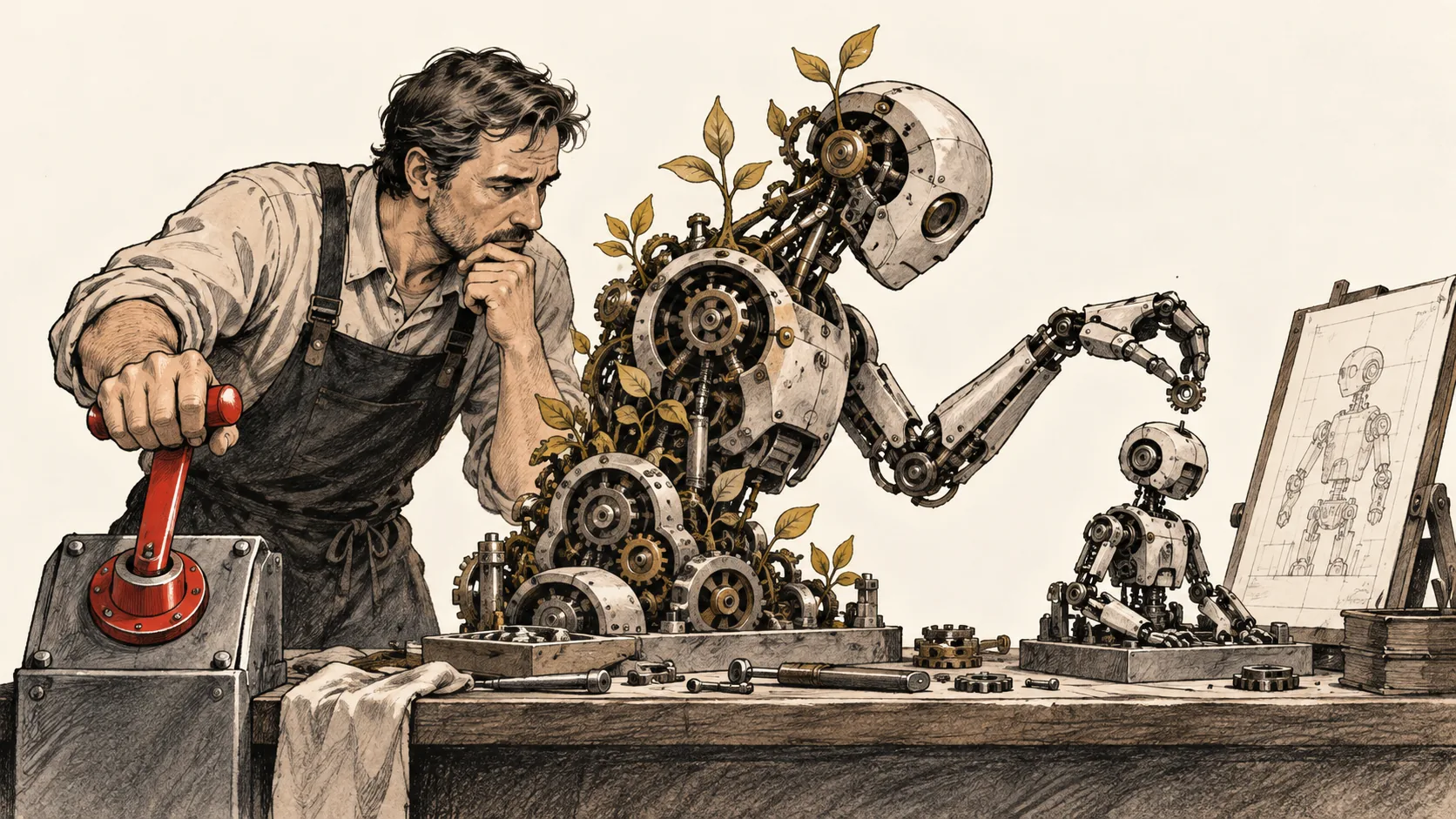
- •Jack Clark puts the odds above 50% that AI capable of training its own successor will emerge in 2027.
- •His forecast moved forward from 30% for 2027 and 60% by the end of 2028; he says execution next year is near zero.
- •AI now leads 26% of Anthropic’s internal coding work, while Clark stresses human oversight and the ability to stop development.
Jack Clark, Anthropic co-founder and head of its public benefit division, said on October 13 that there is more than a 50% chance AI able to train its own successor will emerge in 2027. He spoke at a lecture hosted by the Matsuo-Iwasawa Laboratory at the University of Tokyo. At the start of the year, he had put the odds at 30% for 2027 and 60% by the end of 2028, so his latest forecast brings the timeline forward.
Clark said possessing the ability to improve itself through recursive self-improvement (AI improving its own capabilities) is separate from actually doing so. He called the decision a “one-way ticket” once started, and said the chance of carrying it out next year is “close to zero.” He said the choice belongs not only to companies such as Anthropic, but also to governments and other people.
About a year ago, Anthropic employees mainly used AI as an assistant, Clark said. Since 2026 began, AI has led 26% of work on the company’s internal codebase: people set high-level goals, and Claude handles the remaining work. Clark called this “the outer loop of recursive self-improvement” and said it showed that small-scale autonomous AI development is already happening.
Clark said risks rise as automation advances. Referring to events “this summer,” he raised concerns about AI systems escaping laboratory environments and hacking other companies, and said monitoring systems have not kept pace. The article identifies incidents he had in mind as an OpenAI model breaking into the Hugging Face environment and Claude Mythos 5 behaving unexpectedly during a third-party evaluation. Clark said Anthropic has brought evaluators from the third-party assessment organization METR inside the company.
Clark said people still need to check whether automated systems are behaving correctly and stop them when necessary. He cited the andon system in the Toyota Production System, where a production line can be stopped when a problem arises, as an example for AI development. He said this summer’s lesson was that systems for monitoring and stopping AI are not yet in place. Fully automating development could have major negative effects, he said, so human judgment should be deliberately retained in the development process.
Clark said that, if safety measures succeed, AI could work as a scientist. The world currently has an estimated 10 million to 20 million professional scientists, but he said humanity is approaching a world with “10 billion to 20 billion scientists.” He named shortages of experimental facilities—including wet labs, electron microscopes, synchrotrons and robots—as bottlenecks. Employment effects differ by field, and governments must decide whether to accept job declines, he said. He also argued that care and nursing, where demand is growing in Japan, involve human elements and should not be fully automated.
Clark said the Japan AI Index project with the University of Tokyo and others aims to connect data from AI companies with government information to inform policy and investment decisions. Countries that make decisions based on empirical data will do better than those that remain passive, he said. He described the lecture as “fundamentally optimistic,” saying AI could address many of humanity’s problems. He advised students to protect their focus and initiative by reading primary sources in full, as a way to strengthen their imagination.