Claude Helps Identify New Enzyme System
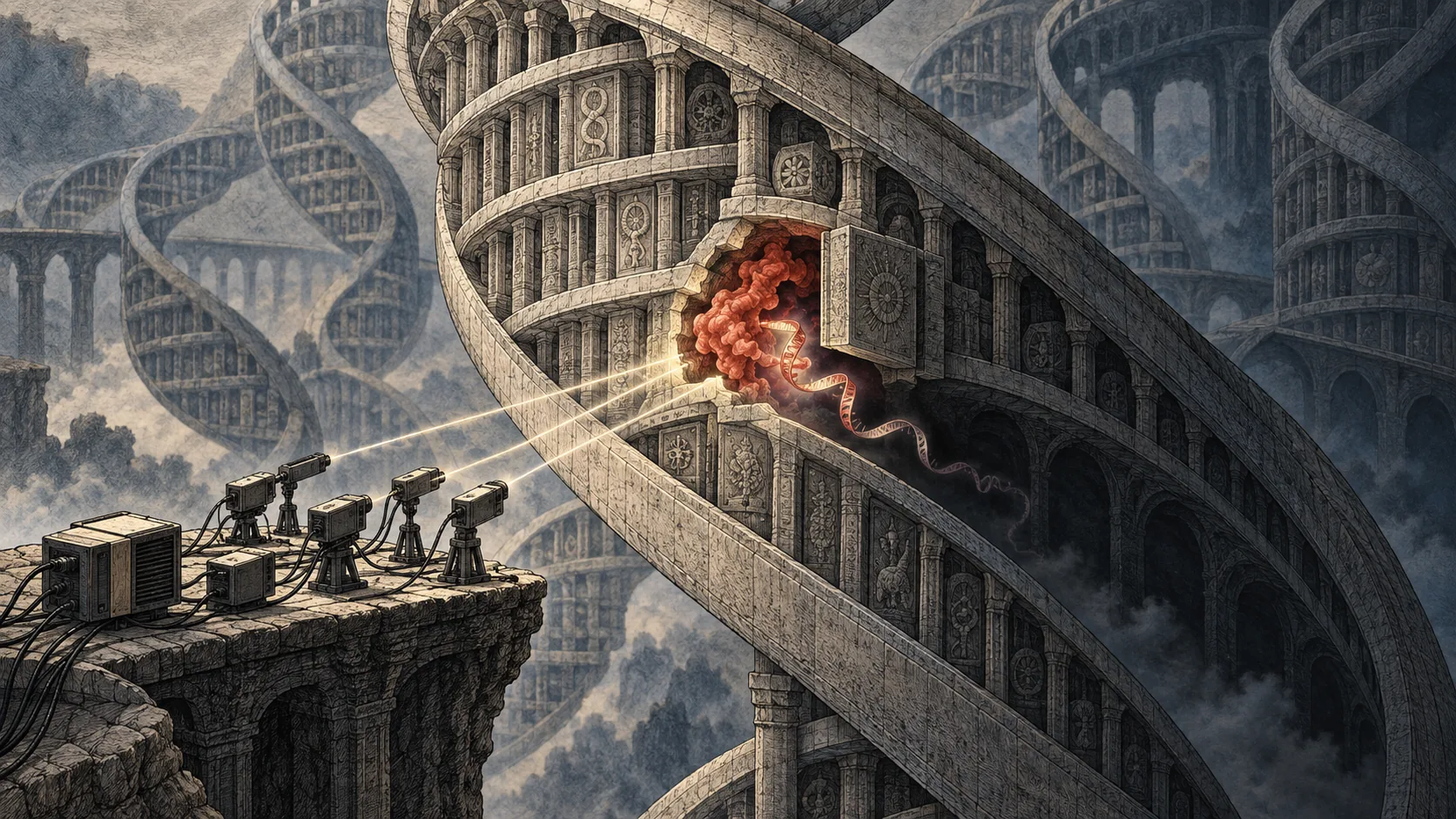
- •Anthropic says Claude agents helped identify the previously unknown ART enzyme system in bacteriophage DNA.
- •About 950 agents analysed more than 200,000 sequences over 21 hours, using about 210 million tokens.
- •Lab tests confirmed ART’s DNA repeats produce short RNA sequences; its biological role and applications remain unclear.
Anthropic said on September 24, 2026, that its Claude AI model helped identify a previously unknown enzyme system in bacteriophage DNA, naming it array-associated reverse transcriptases (ART). About 950 Claude agents searched more than 200,000 reverse transcriptase sequences for 21 hours, using about 210 million tokens. Anthropic researchers then validated the finding with laboratory experiments. The company said ART’s biological role and possible uses remain under investigation.
One agent flagged a repeating array of DNA beside a gene for an atypical reverse transcriptase, an enzyme that copies RNA into DNA. Anthropic said the arrangement resembled CRISPR. ART consists of the reverse transcriptase, a neighbouring partner gene and a long stretch of evenly spaced DNA repeats. Lab tests confirmed that the repeats produce short RNA sequences, but researchers have not established what the system does in nature. Anthropic has published a preprint describing the finding.
Anthropic CEO Dario Amodei said that searching large genomic datasets with AI could shorten the path from identifying biological systems to developing research applications. The article notes that programmable DNA-editing systems such as CRISPR have historically taken years to become usable medical tools. It also reports Amodei’s comparison of AI progress in mathematics: models moved from solving high-school-level problems in 2023 to tackling some of the field’s hardest open questions by 2026. Any biotechnology application for ART remains speculative.
The report also cites OpenAI’s announcement weeks earlier that thousands of autonomous agents worked for about 88 hours on the Navier-Stokes existence and smoothness problem, one of seven Millennium Prize problems. OpenAI said its model made significant progress on part of the problem, which had not been independently verified. Anthropic likewise cautioned that ART’s precise function is still being investigated.