Claude Optimizes Quantum Circuit Designs
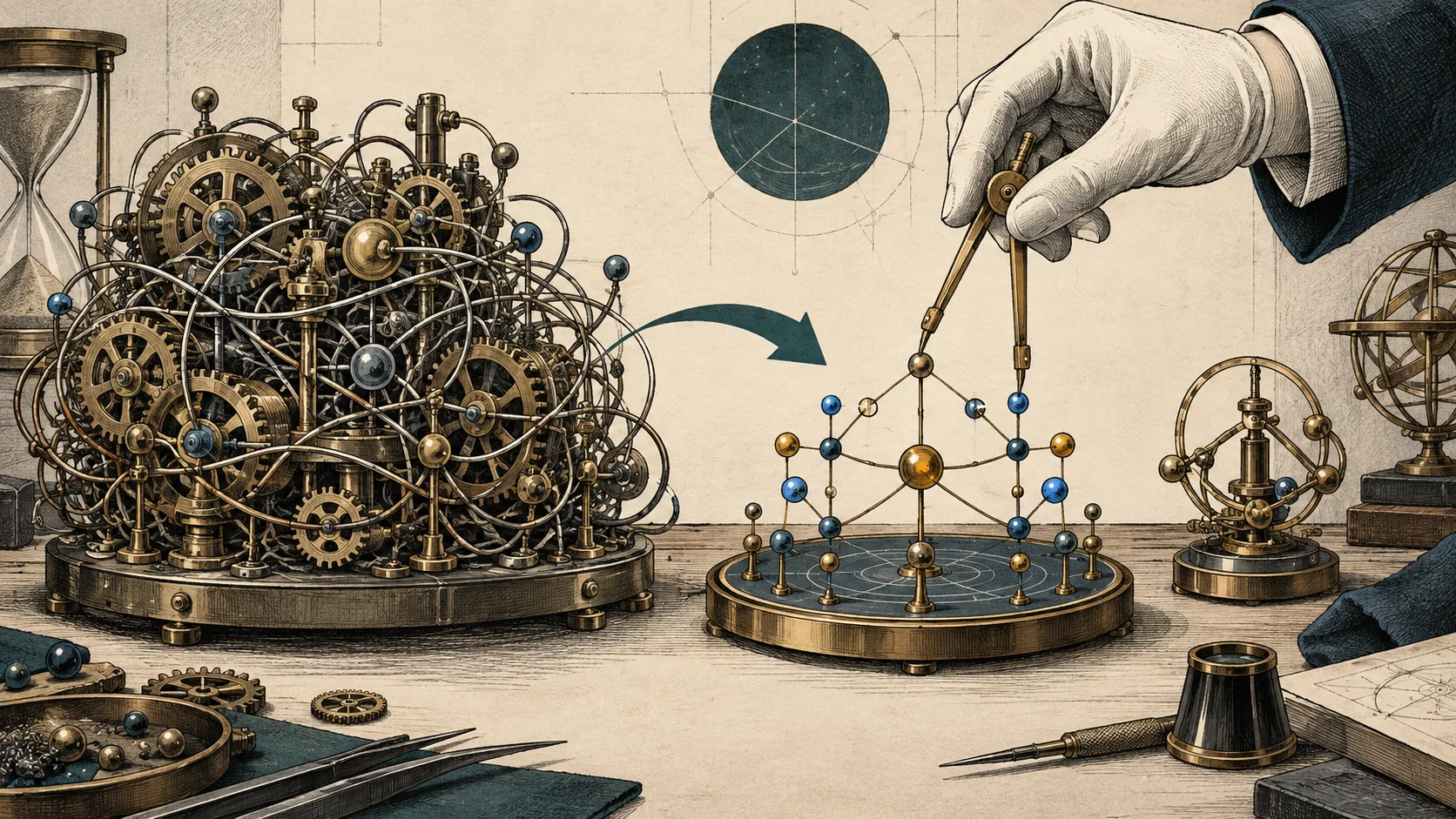
- •Anthropic says Claude Mythos 5 improved quantum circuit designs across eight computational tasks
- •One point-addition design used 12% more qubits but 17x fewer gates than the smallest previous design
- •Researchers report the costliest step in a leading quantum optimizer became about 12x cheaper
Anthropic researchers report that Claude Mythos 5 designed circuits for eight quantum-computing tasks using fewer qubits and gates than the best previously published designs. The tasks covered chemistry, optimization, quantum simulation, number theory and numerical computing. An automated evaluator checked each design for correctness and scored its qubit and gate use; Claude revised its proposals in a feedback loop without human input between rounds. In some cases, the improvements were an order of magnitude or more. The work was led by Andi Gu through Anthropic’s STEM Fellows Program, with mentorship from Anthropic quantum physicist Alek Kemeny and collaboration with Susanne Yelin and Mikhail Lukin of Harvard University, and QuEra Computing.
The researchers tested Claude on circuits because their designs can be written as code, while some quantum algorithms can be checked efficiently by an ordinary computer. The evaluator’s score multiplied the number of qubits by the number of gates as a proxy for runtime. Claude’s gains came from finding new mathematical structure, rather than fine-tuning existing circuits. For an iron-sulfide molecule, it reused results enabled by the molecule’s symmetries and repeating structure; in other cases it removed costly circuit components needed only for extremely rare inputs.
The paper places the work against the resource demands of quantum computing. Existing machines have hundreds to thousands of qubits, which are sensitive to environmental noise such as heat, vibration and cosmic rays. A 2017 estimate said computing the ground-state energy of FeMoco, an iron–sulfur cluster in the nitrogen-fixing enzyme nitrogenase, would require about 50 trillion Toffoli gates. Later algorithmic advances brought the estimate to about 340 million gates, roughly a 150,000-fold reduction; the article says this would take a few hours on a future machine with about three million physical qubits. These reductions largely came from circuit redesign rather than better hardware.
One highlighted result concerns modular inversion, a costly step in elliptic-curve calculations. Claude worked for 53 hours with minimal human input on a point-addition circuit, which combines two points on an elliptic curve. It produced a reversible version of divsteps, an algorithm used on ordinary computers, without storing the long history of conditional operations that a quantum circuit would otherwise need to run backward. Claude derived a rule to recover that history from number pairs, tested it in large-scale simulations and formalized the claim in Lean.
Claude also varied when the circuit stored or decoded that history, creating a family of designs that trades qubits against gates. Compared with the smallest previous design, one uses 12% more qubits but 17x fewer gates, expanding the available combinations of qubit use and runtime. The researchers also report a design that makes the costliest step of a leading quantum optimization algorithm about 12x cheaper. They say the findings show AI can help redesign quantum circuits, a step toward running quantum algorithms with fewer resources.