Compare AIFind AIAI NewsAI How-To
About Us
PrivacyTermsFAQContactContact
AIB Inc.Company info
© 2026 AIB Inc.

Claude Watermarks Test EU AI Rules
Claude Watermarks Test EU AI Rules

TNW·Saturday, August 15, 2026
  • •Anthropic began watermarking Claude output worldwide on 2 August without publishing its algorithm or detector
  • •Claude marks proofreading, translation and summaries even when the EU AI Act exempts standard editing
  • •Existing models have until 2 December to comply as OpenAI and Google lack text marking
  • •Anthropic began watermarking Claude output worldwide on 2 August without publishing its algorithm or detector
  • •Claude marks proofreading, translation and summaries even when the EU AI Act exempts standard editing
  • •Existing models have until 2 December to comply as OpenAI and Google lack text marking
  • •Anthropic began watermarking Claude output worldwide on 2 August without publishing its algorithm or detector
  • •Claude marks proofreading, translation and summaries even when the EU AI Act exempts standard editing
  • •Existing models have until 2 December to comply as OpenAI and Google lack text marking
  • •Anthropic began watermarking Claude output worldwide on 2 August without publishing its algorithm or detector
  • •Claude marks proofreading, translation and summaries even when the EU AI Act exempts standard editing
  • •Existing models have until 2 December to comply as OpenAI and Google lack text marking

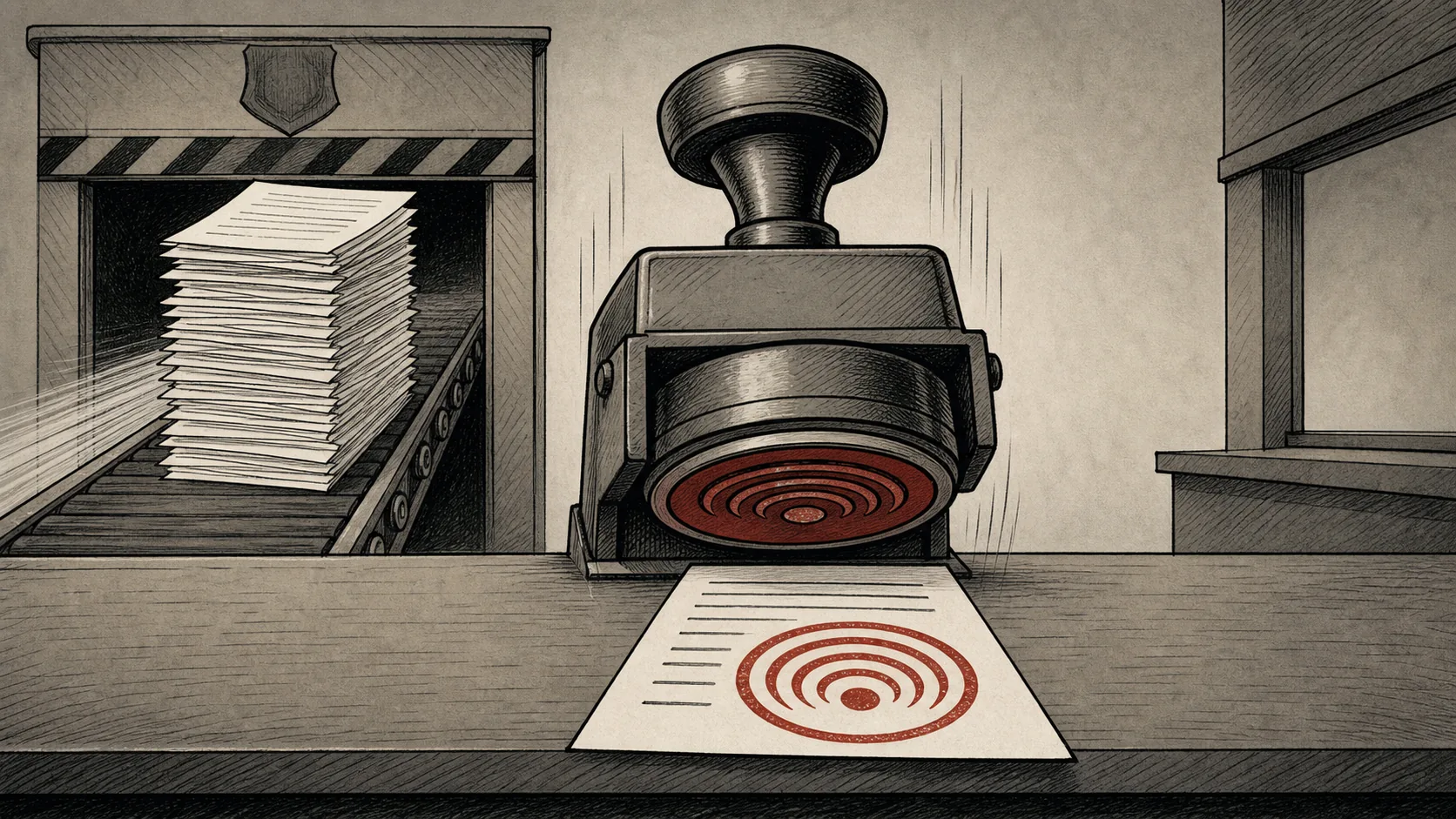
Anthropic began watermarking Claude output worldwide on 2 August to comply with the EU AI Act, even though the company has not published the algorithm or released a detector. The watermark is not visible text; it uses a secret key to steer a model’s word choices toward one statistical pattern, which a detector can identify across 500 or 1,000 words. Anthropic says a detected mark means content “may have been processed by Claude,” not that Claude wrote it.

The watermark applies to output Claude touched, including proofreading, translation and summaries of a user’s own writing. The article says the opposite signal is also limited: no mark does not prove no AI involvement, because short passages, heavy paraphrasing, older models and stripped file metadata can produce clean text. The EU AI Act exempts standard editing functions, including grammar correction, from marking requirements, but Anthropic marks those outputs anyway because a model-level watermark cannot distinguish a full draft from a comma.

Article 50’s reader-facing disclosure rule is narrower than model-level marking. An AI-written novel and AI-generated marketing copy need no label, while text informing the public on matters of public interest needs one unless a named and accountable human editor has reviewed it. The EU can inspect and fine models directly, with penalties reaching €15m or 3% of worldwide annual turnover.

Critics raised objections within a day. Investor Bill Gurley said Anthropic would become “judge, jury, and prosecutor” if only it could read the mark; Anthropic told Business Insider it would ship a free detection API. Steven Sinofsky questioned “data retention and your right to private thoughts free of a digital trail.” Simon Smith asked whether a grammar check would be flagged as AI-authored, while John Crickett asked whether watermarked AI-generated code could complicate copyright claims requiring proof of human input.

Supporters argued marking can help models avoid training on their own output and help readers judge whether words reflect a person’s thinking. Anthropic says the watermark does not change the meaning, quality or readability of Claude responses. Ars Technica asked Anthropic for a detection timeline, false-positive and false-negative testing, and how marks fit the standard-editing exemption; the company’s statement did not answer those points.

The mark may be easy to remove through rewriting in a second model, screenshots or metadata editing. OpenAI marks images and audio using SynthID and C2PA metadata but has not shipped text marking; Google also uses SynthID but has not shipped text marking. Existing models have until 2 December to comply, leaving Anthropic as the only company named in the article currently carrying text-marking friction.

Anthropic began watermarking Claude output worldwide on 2 August to comply with the EU AI Act, even though the company has not published the algorithm or released a detector. The watermark is not visible text; it uses a secret key to steer a model’s word choices toward one statistical pattern, which a detector can identify across 500 or 1,000 words. Anthropic says a detected mark means content “may have been processed by Claude,” not that Claude wrote it.

The watermark applies to output Claude touched, including proofreading, translation and summaries of a user’s own writing. The article says the opposite signal is also limited: no mark does not prove no AI involvement, because short passages, heavy paraphrasing, older models and stripped file metadata can produce clean text. The EU AI Act exempts standard editing functions, including grammar correction, from marking requirements, but Anthropic marks those outputs anyway because a model-level watermark cannot distinguish a full draft from a comma.

Article 50’s reader-facing disclosure rule is narrower than model-level marking. An AI-written novel and AI-generated marketing copy need no label, while text informing the public on matters of public interest needs one unless a named and accountable human editor has reviewed it. The EU can inspect and fine models directly, with penalties reaching €15m or 3% of worldwide annual turnover.

Critics raised objections within a day. Investor Bill Gurley said Anthropic would become “judge, jury, and prosecutor” if only it could read the mark; Anthropic told Business Insider it would ship a free detection API. Steven Sinofsky questioned “data retention and your right to private thoughts free of a digital trail.” Simon Smith asked whether a grammar check would be flagged as AI-authored, while John Crickett asked whether watermarked AI-generated code could complicate copyright claims requiring proof of human input.

Supporters argued marking can help models avoid training on their own output and help readers judge whether words reflect a person’s thinking. Anthropic says the watermark does not change the meaning, quality or readability of Claude responses. Ars Technica asked Anthropic for a detection timeline, false-positive and false-negative testing, and how marks fit the standard-editing exemption; the company’s statement did not answer those points.

The mark may be easy to remove through rewriting in a second model, screenshots or metadata editing. OpenAI marks images and audio using SynthID and C2PA metadata but has not shipped text marking; Google also uses SynthID but has not shipped text marking. Existing models have until 2 December to comply, leaving Anthropic as the only company named in the article currently carrying text-marking friction.

Read original (English)·Aug 13, 2026
Policy#claude#anthropic#watermarking#eu ai act#article 50#synthid#c2pa#detection api#text marking