Compare AIFind AIAI NewsAI How-To
About Us
PrivacyTermsFAQContactContact
AIB Inc.Company info
© 2026 AIB Inc.

Construction Robots Need Data, Site and Legal Reforms
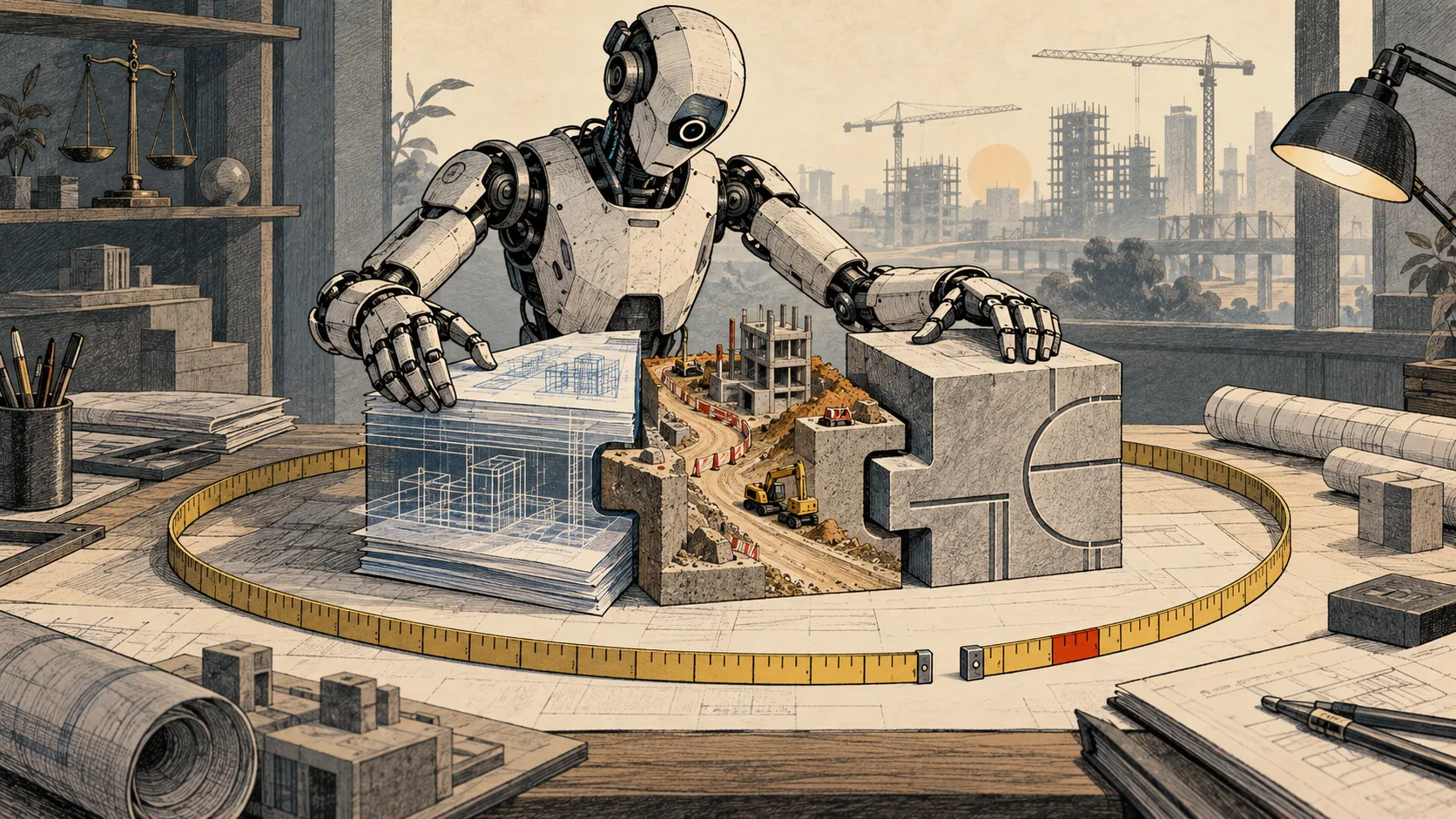
Construction Robots Need Data, Site and Legal Reforms

Byline Network·Wednesday, October 7, 2026
  • •A policy seminar proposed aligning data, job sites and construction standards to support construction robot adoption.
  • •Collecting data across a project can take three years; projects usually last 2.5 years and sometimes 3–4 years.
  • •Speakers called for legal definitions and site standards, plus redesigned routes and operating systems for robots.
  • •A policy seminar proposed aligning data, job sites and construction standards to support construction robot adoption.
  • •Collecting data across a project can take three years; projects usually last 2.5 years and sometimes 3–4 years.
  • •Speakers called for legal definitions and site standards, plus redesigned routes and operating systems for robots.
  • •A policy seminar proposed aligning data, job sites and construction standards to support construction robot adoption.
  • •Collecting data across a project can take three years; projects usually last 2.5 years and sometimes 3–4 years.
  • •Speakers called for legal definitions and site standards, plus redesigned routes and operating systems for robots.
  • •A policy seminar proposed aligning data, job sites and construction standards to support construction robot adoption.
  • •Collecting data across a project can take three years; projects usually last 2.5 years and sometimes 3–4 years.
  • •Speakers called for legal definitions and site standards, plus redesigned routes and operating systems for robots.

Construction robots will need training data, robot-friendly work environments and construction standards that recognize robotic work, speakers said at a policy seminar in Seoul on the 6th. Industry, academic and research participants discussed adoption challenges at the National Assembly Members’ Office. Physical AI is artificial intelligence that enables robots to make decisions and move in real-world environments.

Industry representatives called for a national construction data platform and redesigned job sites. Jung Young-do, a professional at POSCO E&C, said irregular conditions—varying by region, terrain and work requirements—complicate commercialization because they change construction methods and material delivery sequences. He warned that company data efforts could be wasted if they are not linked to a national standard. Lee Dong-min, CEO of Gole Robotics, said the company trains robots with synthetic data (computer-generated training data) in NVIDIA’s Isaac Sim and Isaac Lab virtual environments because real-world data is scarce. But construction robots handle materials such as bricks and gypsum board, unlike general-purpose humanoid robots trained on apples, cups and drink bottles, so synthetic data alone has limits. The company is digitizing representative materials from construction firms, but one private company cannot readily collect data covering all materials and sites.

Site data must also track project stages, Lee said. Construction usually takes 2.5 years and can last 3–4 years; collecting data across progress from 0% to 100% takes three years. He said the company uses NVIDIA platform standards, but they cannot capture every requirement of construction sites, while private firms struggle to set standards independently. He asked the National Assembly and government to establish data formats and standards.

Participants said uneven floors, tangled cables and materials, and simultaneous work by multiple trades make robotic tasks difficult. They proposed charging facilities, coordination with material-lifting hoists, dedicated robot routes and standardized pallets. Professor Kim Joo-hyung of Hanyang University said sites need redesigned operating systems, including separate zones or work times for people and robots and changes to material supply and routes. Simply removing workers and putting robots in their place rarely works and has limited effectiveness.

Lee Kwang-pyo, a research fellow at the Korea Research Institute for Construction Policy, said overlapping laws, including the Construction Machinery Management Act, could create confusion over how construction robots are defined and regulated. He proposed first establishing their legal definition and status, and reviewing whether to include them in existing laws or create a separate law. Construction standards governing facility design and construction methods are also needed, including Design Standards (KDS) and Standard Specifications (KCS). Lee proposed that developers collect site-use data during the early adoption period and use it to develop standards.

Construction robots will need training data, robot-friendly work environments and construction standards that recognize robotic work, speakers said at a policy seminar in Seoul on the 6th. Industry, academic and research participants discussed adoption challenges at the National Assembly Members’ Office. Physical AI is artificial intelligence that enables robots to make decisions and move in real-world environments.

Industry representatives called for a national construction data platform and redesigned job sites. Jung Young-do, a professional at POSCO E&C, said irregular conditions—varying by region, terrain and work requirements—complicate commercialization because they change construction methods and material delivery sequences. He warned that company data efforts could be wasted if they are not linked to a national standard. Lee Dong-min, CEO of Gole Robotics, said the company trains robots with synthetic data (computer-generated training data) in NVIDIA’s Isaac Sim and Isaac Lab virtual environments because real-world data is scarce. But construction robots handle materials such as bricks and gypsum board, unlike general-purpose humanoid robots trained on apples, cups and drink bottles, so synthetic data alone has limits. The company is digitizing representative materials from construction firms, but one private company cannot readily collect data covering all materials and sites.

Site data must also track project stages, Lee said. Construction usually takes 2.5 years and can last 3–4 years; collecting data across progress from 0% to 100% takes three years. He said the company uses NVIDIA platform standards, but they cannot capture every requirement of construction sites, while private firms struggle to set standards independently. He asked the National Assembly and government to establish data formats and standards.

Participants said uneven floors, tangled cables and materials, and simultaneous work by multiple trades make robotic tasks difficult. They proposed charging facilities, coordination with material-lifting hoists, dedicated robot routes and standardized pallets. Professor Kim Joo-hyung of Hanyang University said sites need redesigned operating systems, including separate zones or work times for people and robots and changes to material supply and routes. Simply removing workers and putting robots in their place rarely works and has limited effectiveness.

Lee Kwang-pyo, a research fellow at the Korea Research Institute for Construction Policy, said overlapping laws, including the Construction Machinery Management Act, could create confusion over how construction robots are defined and regulated. He proposed first establishing their legal definition and status, and reviewing whether to include them in existing laws or create a separate law. Construction standards governing facility design and construction methods are also needed, including Design Standards (KDS) and Standard Specifications (KCS). Lee proposed that developers collect site-use data during the early adoption period and use it to develop standards.

Read original (Korean)·Oct 7, 2026
Robotics#construction robots#physical ai#synthetic data#robotics#construction standards#isaac sim#isaac lab