CTA Outlines CES 2027 Technology Themes
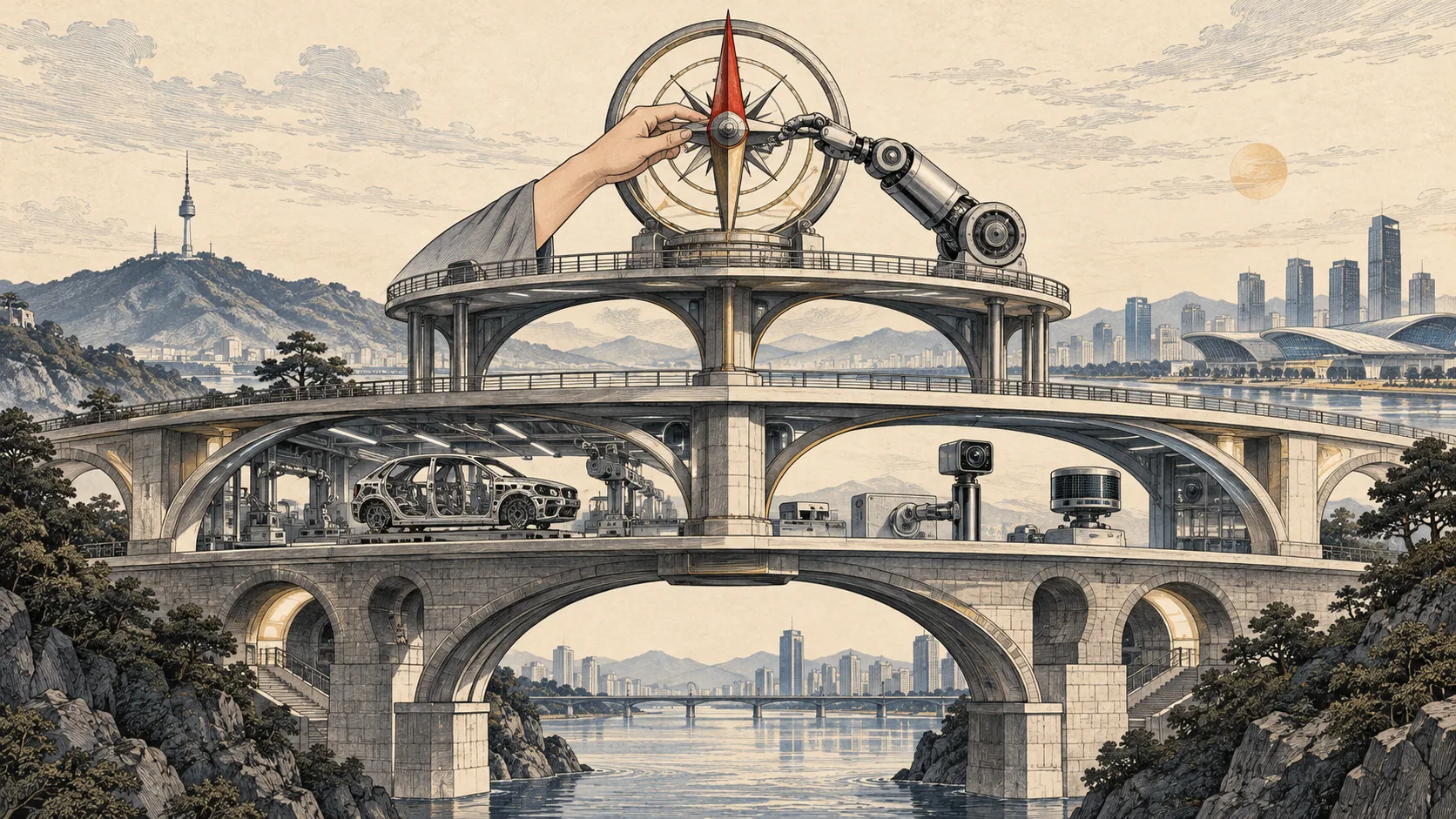
- •At a Seoul briefing, CTA grouped CES 2027 technology trends into foundations, transformation and exploration.
- •Every surveyed South Korean worker who uses AI said it helps their work; only South Korea and the United States had unanimous positive responses.
- •Bosch plans its 15th consecutive CES appearance in 2027, showcasing physical AI, vehicle technologies and sensors for robotics.
The Consumer Technology Association (CTA) outlined three core technology themes for CES 2027 at a Seoul briefing on October 14, 2026: “foundations,” “transformation” and “exploration.” Melissa Harrison, CTA’s vice president of marketing and communications, said the foundations include computing, cybersecurity, cloud, data and energy, with AI connecting these fields. AI requires more computing resources, data and energy, while creating new security challenges; it is also used to operate related systems more intelligently and efficiently. Harrison said AI is becoming part of the innovation base across industries.
CTA identified AI chips, vertical AI (AI tailored to a specific industry or task) and agentic AI (AI that completes multistep tasks on a person’s instructions) as key AI fields. Semiconductor development continues to improve processor and memory performance and energy efficiency. CTA expects technology that performs work, rather than only answering questions, to be a major CES 2027 topic. Rising energy demand from AI also makes power generation, storage and management, as well as AI-based energy efficiency, areas of interest.
CTA also named quantum technology, space technology and brain-computer interfaces (systems linking brain activity with computers) as future technologies to explore. In CTA’s survey of workplace AI use in South Korea, every South Korean respondent who used AI at work said it was helpful. South Korea and the United States were the only surveyed countries where all users rated AI’s usefulness positively. Harrison said the result showed AI moving beyond experimentation and becoming part of everyday work.
CTA President and CEO Kinsey Fabrizio said CES 2026 presented AI concepts and possibilities for changing manufacturing, work, home life and health care, while CES 2027 is expected to show more concrete applications and results. Her examples included higher workplace productivity, advanced manufacturing, drug discovery and treatment development, and more precise monitoring and communication. Fabrizio forecast that as AI solutions mature, companies will be able to quantify their effects in intended settings. She compared 12 months of progress in AI with 50 years of change in earlier technologies.
Bosch Korea President Marcello Ruzzardi said Bosch has applied AI to manufacturing processes for decades and also uses it to improve employee productivity. He said more technologies would emerge and be put to use over the next 5 months and 10 months. Bosch will exhibit at CES 2027 for the 15th consecutive year, with “physical AI” as its theme. In vehicles, it plans to show vehicle motion management, steer-by-wire and central computer technologies designed for AI-defined vehicles beyond software-defined vehicles. Its robotics displays are set to include MEMS-based inertial measurement unit (IMU) sensors for balance and position awareness, and tactile pressure sensors for delicate manipulation by robot hands.
Ruzzardi cited speed, technological depth across the supply chain and consumers’ high quality expectations as reasons Bosch continues to invest in South Korea. He said the country has a technology ecosystem spanning mobility, semiconductors, batteries, consumer electronics and shipbuilding, and is a necessary market for Bosch’s industrial technology and consumer goods businesses. He recalled being struck by the “hurry, hurry” culture during his first visit in 2007, and said it has developed into an ability to plan ahead and quickly turn ideas into prototypes and market launches. Bosch entered South Korea through a distributor in the 1920s and built a production and engineering base over the past 40 years. About 1,800 people now work at 6 locations from Seoul to Busan. Ruzzardi named AI and robotics as forces shaping the next 10 years and said the world will watch South Korea’s everyday adoption of robots.