Compare AIFind AIAI NewsAI How-To
About Us
PrivacyTermsFAQContactContact
AIB Inc.Company info
© 2026 AIB Inc.

DeepMind Builds Physical AI Layer
DeepMind Builds Physical AI Layer

Logistics Viewpoints·Tuesday, August 4, 2026
  • •Google DeepMind introduced Gemini Robotics 2 as a portable intelligence layer for physical AI
  • •DeepMind reported object-picking success rates of 68.4 percent, 76.3 percent, and 45.7 percent
  • •Gemini Robotics On-Device 2 can adapt to a previously unseen robot using fewer than 200 examples
  • •Google DeepMind introduced Gemini Robotics 2 as a portable intelligence layer for physical AI
  • •DeepMind reported object-picking success rates of 68.4 percent, 76.3 percent, and 45.7 percent
  • •Gemini Robotics On-Device 2 can adapt to a previously unseen robot using fewer than 200 examples
  • •Google DeepMind introduced Gemini Robotics 2 as a portable intelligence layer for physical AI
  • •DeepMind reported object-picking success rates of 68.4 percent, 76.3 percent, and 45.7 percent
  • •Gemini Robotics On-Device 2 can adapt to a previously unseen robot using fewer than 200 examples
  • •Google DeepMind introduced Gemini Robotics 2 as a portable intelligence layer for physical AI
  • •DeepMind reported object-picking success rates of 68.4 percent, 76.3 percent, and 45.7 percent
  • •Gemini Robotics On-Device 2 can adapt to a previously unseen robot using fewer than 200 examples

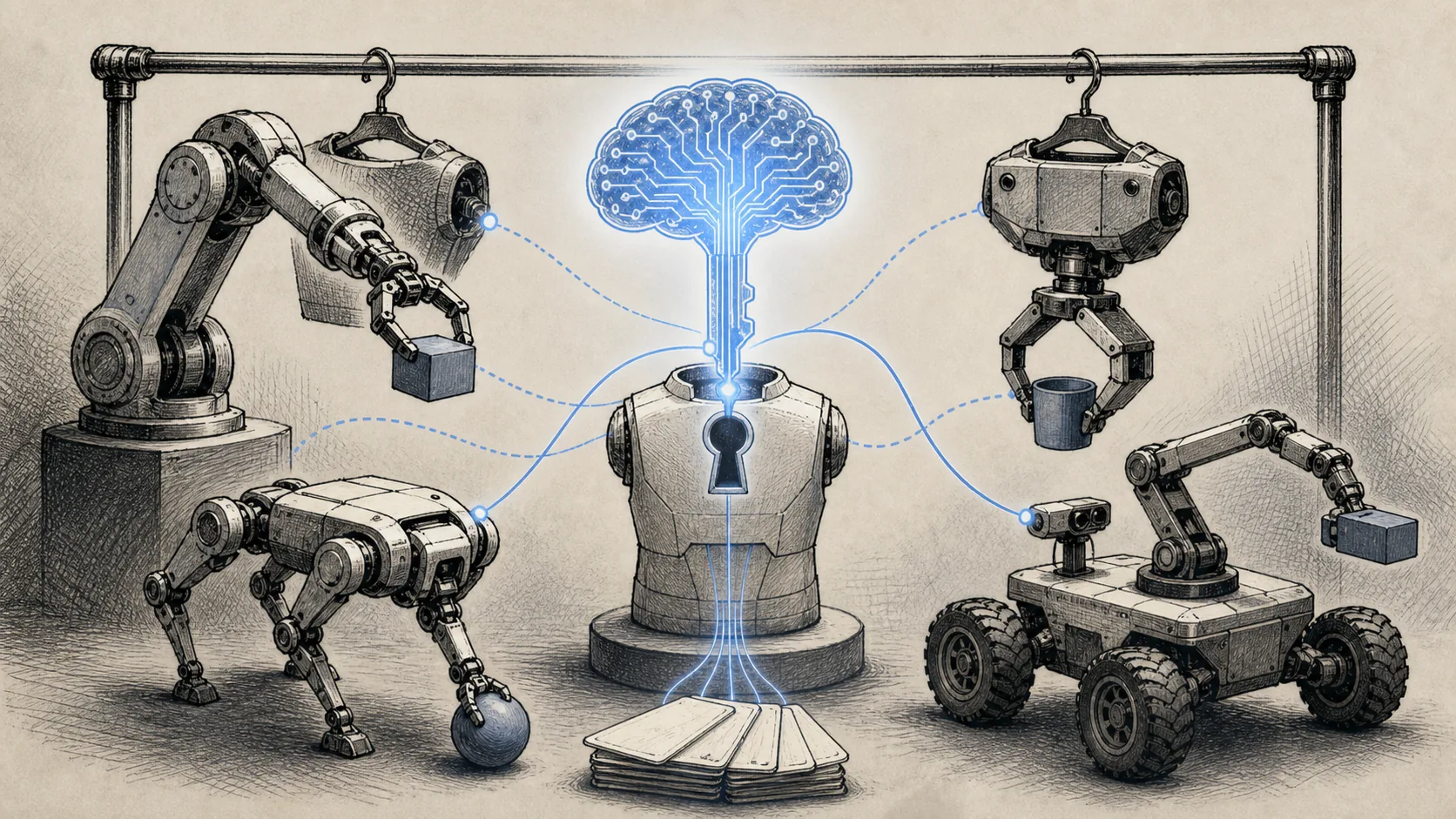
Google DeepMind introduced Gemini Robotics 2 on August 3 as a new generation of physical AI models for controlling different robotic bodies, executing whole-body movements, handling longer tasks, and coordinating multiple robots. The article frames the system as an intelligence layer for robotics, aimed at factories, warehouses, and other industrial environments where machines vary by vendor, form, workflow, and operating conditions.

Gemini Robotics 2 points away from robot-specific programming, where a robotic arm, autonomous mobile robot, or warehouse picking system is built around fixed products, containers, cameras, grippers, and facility layouts. DeepMind demonstrated a common model controlling physically different systems, including an Apptronik Apollo humanoid with different hand configurations and a separate two-arm platform using a conventional gripper. The company also says Gemini Robotics On-Device 2 can be adapted to a previously unseen robot using fewer than 200 examples, while noting that hardware interfaces, safety systems, motion constraints, training data, and operating environments still matter.

DeepMind introduced three related models rather than one standalone product. Gemini Robotics 2 is a vision-language-action model (turning sights and instructions into actions) that controls whole-body movement across the torso, legs, arms, hands, and grippers. Gemini Robotics ER 2 provides embodied reasoning (planning through physical tasks), including multistep plans, progress monitoring, failure response, and coordination among more than one robot. Gemini Robotics On-Device 2 runs locally on robotic hardware, a feature the article says may matter in factories, warehouses, ports, and remote industrial environments where cloud access is unreliable, latency-sensitive, restricted, or prohibited.

The article says the supply chain value is less about humanoid appearance and more about reducing engineering work across fragmented automation environments. A modern distribution center may include conveyors, sortation systems, robotic arms, autonomous mobile robots, automated storage and retrieval systems, pallet-moving equipment, machine vision, and warehouse execution software. A more transferable intelligence layer could let organizations reuse robotic capabilities across robot manufacturers, facilities, gripper configurations, product assortments, and workflows.

Whole-body control is presented as one of the more consequential advances because Gemini Robotics 2 can coordinate locomotion and manipulation. A warehouse robot may need to navigate to a location, adjust around shelving or equipment, reach at different heights, recover from an imperfect position, and continue safely. The article says this is why humanoid robots attract interest in facilities designed around human bodies, including doors, aisles, shelves, stairs, tools, and workstations.

DeepMind reported whole-body object-picking success rates of approximately 68.4 percent from a table, 76.3 percent from a shelf, and 45.7 percent from the floor. The article says those results show progress but remain far below what most industrial operations would accept for repetitive, high-volume workflows. It also says multifinger manipulation remains inconsistent, simpler grippers can still outperform humanlike hands on many practical tasks, and commercial viability will depend on reliability, speed, recovery, and total cost.

Gemini Robotics ER 2’s exception-handling role is treated as especially relevant for supply chains. Warehouses often face damaged cartons, misplaced inventory, shifted products inside totes, blocked aisles, unreadable barcodes, and unexpected objects. A robot that can recognize failure, reconsider its plan, select another approach, and continue working would move beyond rigid automation, while a shared reasoning layer could help multiple robots divide workflows.

The article says integration remains unresolved because robotic intelligence still needs inventory data, order priorities, task queues, facility maps, product dimensions, equipment status, safety zones, and exception workflows from systems such as WMS, WES, ERP, OMS, MES, TMS, and automation-control platforms. It places DeepMind’s effort inside a broader contest among Alphabet, NVIDIA, industrial automation suppliers, robotics startups, and Chinese technology companies to control layers such as computing infrastructure, simulation and digital twins, Rob

Google DeepMind introduced Gemini Robotics 2 on August 3 as a new generation of physical AI models for controlling different robotic bodies, executing whole-body movements, handling longer tasks, and coordinating multiple robots. The article frames the system as an intelligence layer for robotics, aimed at factories, warehouses, and other industrial environments where machines vary by vendor, form, workflow, and operating conditions.

Gemini Robotics 2 points away from robot-specific programming, where a robotic arm, autonomous mobile robot, or warehouse picking system is built around fixed products, containers, cameras, grippers, and facility layouts. DeepMind demonstrated a common model controlling physically different systems, including an Apptronik Apollo humanoid with different hand configurations and a separate two-arm platform using a conventional gripper. The company also says Gemini Robotics On-Device 2 can be adapted to a previously unseen robot using fewer than 200 examples, while noting that hardware interfaces, safety systems, motion constraints, training data, and operating environments still matter.

DeepMind introduced three related models rather than one standalone product. Gemini Robotics 2 is a vision-language-action model (turning sights and instructions into actions) that controls whole-body movement across the torso, legs, arms, hands, and grippers. Gemini Robotics ER 2 provides embodied reasoning (planning through physical tasks), including multistep plans, progress monitoring, failure response, and coordination among more than one robot. Gemini Robotics On-Device 2 runs locally on robotic hardware, a feature the article says may matter in factories, warehouses, ports, and remote industrial environments where cloud access is unreliable, latency-sensitive, restricted, or prohibited.

The article says the supply chain value is less about humanoid appearance and more about reducing engineering work across fragmented automation environments. A modern distribution center may include conveyors, sortation systems, robotic arms, autonomous mobile robots, automated storage and retrieval systems, pallet-moving equipment, machine vision, and warehouse execution software. A more transferable intelligence layer could let organizations reuse robotic capabilities across robot manufacturers, facilities, gripper configurations, product assortments, and workflows.

Whole-body control is presented as one of the more consequential advances because Gemini Robotics 2 can coordinate locomotion and manipulation. A warehouse robot may need to navigate to a location, adjust around shelving or equipment, reach at different heights, recover from an imperfect position, and continue safely. The article says this is why humanoid robots attract interest in facilities designed around human bodies, including doors, aisles, shelves, stairs, tools, and workstations.

DeepMind reported whole-body object-picking success rates of approximately 68.4 percent from a table, 76.3 percent from a shelf, and 45.7 percent from the floor. The article says those results show progress but remain far below what most industrial operations would accept for repetitive, high-volume workflows. It also says multifinger manipulation remains inconsistent, simpler grippers can still outperform humanlike hands on many practical tasks, and commercial viability will depend on reliability, speed, recovery, and total cost.

Gemini Robotics ER 2’s exception-handling role is treated as especially relevant for supply chains. Warehouses often face damaged cartons, misplaced inventory, shifted products inside totes, blocked aisles, unreadable barcodes, and unexpected objects. A robot that can recognize failure, reconsider its plan, select another approach, and continue working would move beyond rigid automation, while a shared reasoning layer could help multiple robots divide workflows.

The article says integration remains unresolved because robotic intelligence still needs inventory data, order priorities, task queues, facility maps, product dimensions, equipment status, safety zones, and exception workflows from systems such as WMS, WES, ERP, OMS, MES, TMS, and automation-control platforms. It places DeepMind’s effort inside a broader contest among Alphabet, NVIDIA, industrial automation suppliers, robotics startups, and Chinese technology companies to control layers such as computing infrastructure, simulation and digital twins, Rob

Read original (English)·Aug 3, 2026
Robotics#gemini robotics 2#google deepmind#physical ai#robotics#whole body control#embodied reasoning#on device ai#warehouse automation#supply chain