Democrats Put AI Regulation on Congress’s Agenda
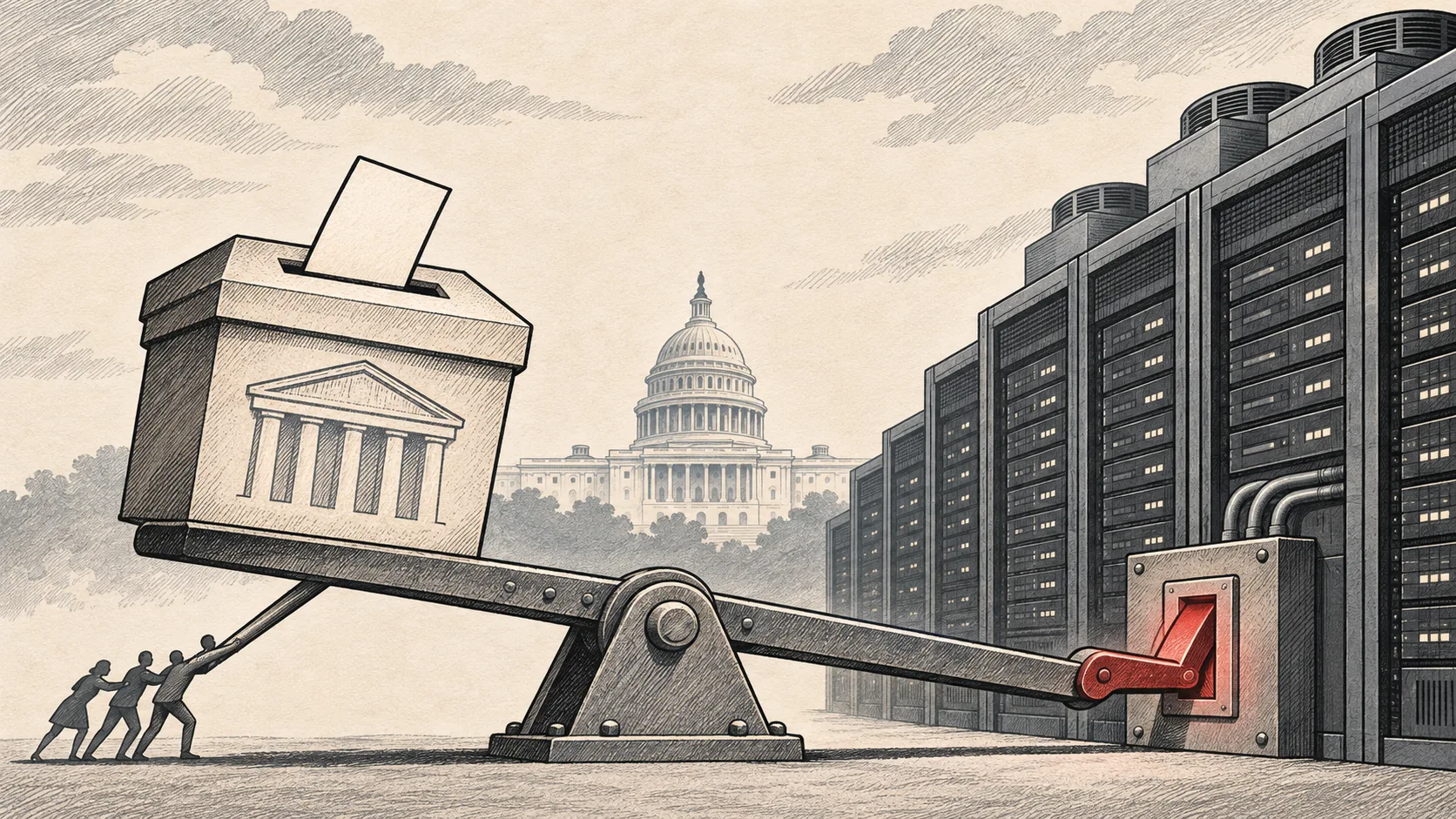
- •Democratic midterm wins bring AI safeguards and data center limits onto the incoming Congress’s agenda
- •More than 30 data center ballot proposals across 13 states passed almost entirely, Redbud Consulting reported
- •An NBC exit poll found 56% of voters considered AI and data centers crucial to their vote
Democrats’ strong results in the November 2026 midterm elections brought wins for candidates promising AI safeguards and losses for some data center developers and candidates opposing regulation. More than 80% of both Republican and Democratic voters supported candidates who favored AI safeguards, according to polling by the Alliance for Secure AI. The incoming Congress is planning oversight hearings and drafting policy, while federal AI legislation had not been on the agenda under President Donald Trump and allied Republicans, who cited competition with China and economic incentives to keep federal policy out of innovation.
Several incoming lawmakers made AI a campaign issue. Michigan Sen.-elect Abdul El-Sayed called AI risks his No. 1 issue in a 60 Minutes interview; Colorado Rep.-elect Manny Rutinel flipped a seat after sponsoring an early comprehensive AI bill; and Georgia Sen. Jon Ossoff mentioned AI in his victory speech. Citizens for Safe AI executive director Jay Shooster wrote that Congress and state houses would have many new AI safety advocates.
Democrats have promised to investigate AI companies after multiple incidents in 2026. On October 29, 20 Democrats asked OpenAI about its firing of three safety researchers. Spencer Amdur, a senior research scholar at the Institute for Law and AI, expects more congressional hearings, with cyberattacks, hacking and child safety among likely topics. He said company leaders may be asked to testify on camera and under oath as incidents arise. Some AI companies have appeared at a New York City Council safety hearing, and OpenAI and Anthropic have supported or proposed AI safety bills. Amdur also said hearings could include tense exchanges as lawmakers respond to public anxiety.
More than 30 data center regulation proposals appeared on ballots across 13 states on Election Day, and almost all passed, according to Redbud Consulting. The measures all limit data center construction in some way: Defiance, Ohio, approved a ban on facilities over 25 megawatts, while Perry, Ohio, approved requirements for hyperscale data centers seeking tax breaks to post bonds and meet noise limits. Cleanview founder Michael Thomas said the results could pause projects in some major markets and bring regulations even to states such as Texas. Cleanview data indicate newly elected governors could pause 41% of planned U.S. data centers. Elon Musk, who spent over $470 million on the midterms according to CNBC, said space-based data centers looked appealing. He invested almost half his spending in Texas and supported Republican candidates Ken Paxton and Greg Abbott, who lost to Democrats who had opposed data centers.
An NBC exit poll found 56% of voters considered AI and data centers crucial factors in their vote. Chamber of Progress CEO Adam Kovacevich cautioned that opposition to Trump should not be mistaken for opposition to technology, saying voters wanted economic change rather than a crackdown on innovation. Amdur expects AI policy to advance meaningfully in the next year through a possible federal deal or state action, and said AI could become a larger focus of the 2028 presidential election.