ETRI Outlines Physical AI Strategy
- •ETRI’s Daegu-Gyeongbuk research division names Physical AI a central focus for the next 20 years.
- •Four priorities cover robotics and mobility, manufacturing control, autonomous farms, and medical technology.
- •ETRI aims to co-research with more than 300 companies within 10 years and raise research productivity 3–5 times.
Byun Woo-jin, head of ETRI’s Daegu-Gyeongbuk Research Division, identified Physical AI as a central focus for the next 20 years as the division marked its 20th anniversary. Physical AI enables AI to perceive and make decisions about real-world environments, then carry out physical actions through robots, vehicles, and industrial equipment. Byun said the division would play a central role in helping Daegu and Gyeongbuk grow into South Korea’s hub for Physical AI.
The division began with research combining embedded software with automotive and mechanical components. It later expanded into AI-based urban infrastructure, robotics, and digital healthcare. Byun said its two-track strategy—research responding to companies’ technology needs alongside work on future technologies—underpins its high rate of technology commercialization.
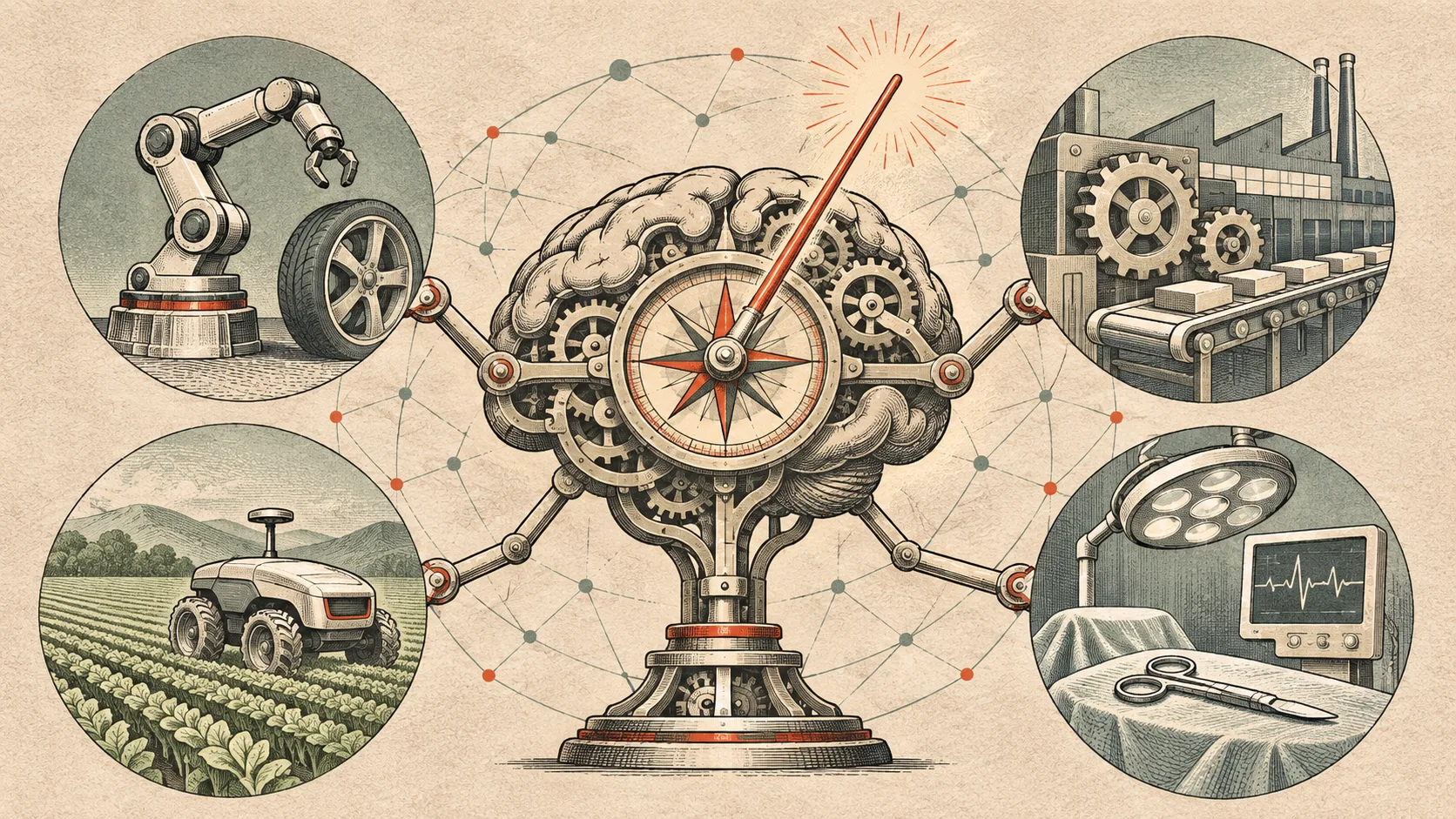
The division’s four Physical AI priorities are perception for robots and mobility that remains reliable in bad weather and at night, autonomous detection for public infrastructure, precision control for regional manufacturing AX, unmanned autonomous farms that handle tasks from seeding through harvest, and advancing Physical AI for healthcare and medicine. Byun said the strategy would connect the region’s industrial strengths with national-level competitiveness in convergent technologies.
The division has collaborated with about 275 companies over the past 10 years and plans to pursue joint research with more than 300 companies within the next 10 years. It also plans to build a global research collaboration system with regional universities and research institutions, retain talented people who might otherwise move to the Seoul metropolitan area, and target global markets.
Byun said population decline has intensified competition for research staff and that the division’s workforce has not grown substantially compared with 10 years ago. He set a goal of raising research productivity to 3–5 times its current level through AI use, communication among staff, and creative collaboration, saying simple headcount increases have limits as a way to expand R&D capacity. He thanked researchers who worked to apply technology in industrial settings over the past 20 years and said the division would take on new social problems and seek to become a global research institution over the next 20 years.