Google Suncatcher Satellite Starts On-Orbit Tests
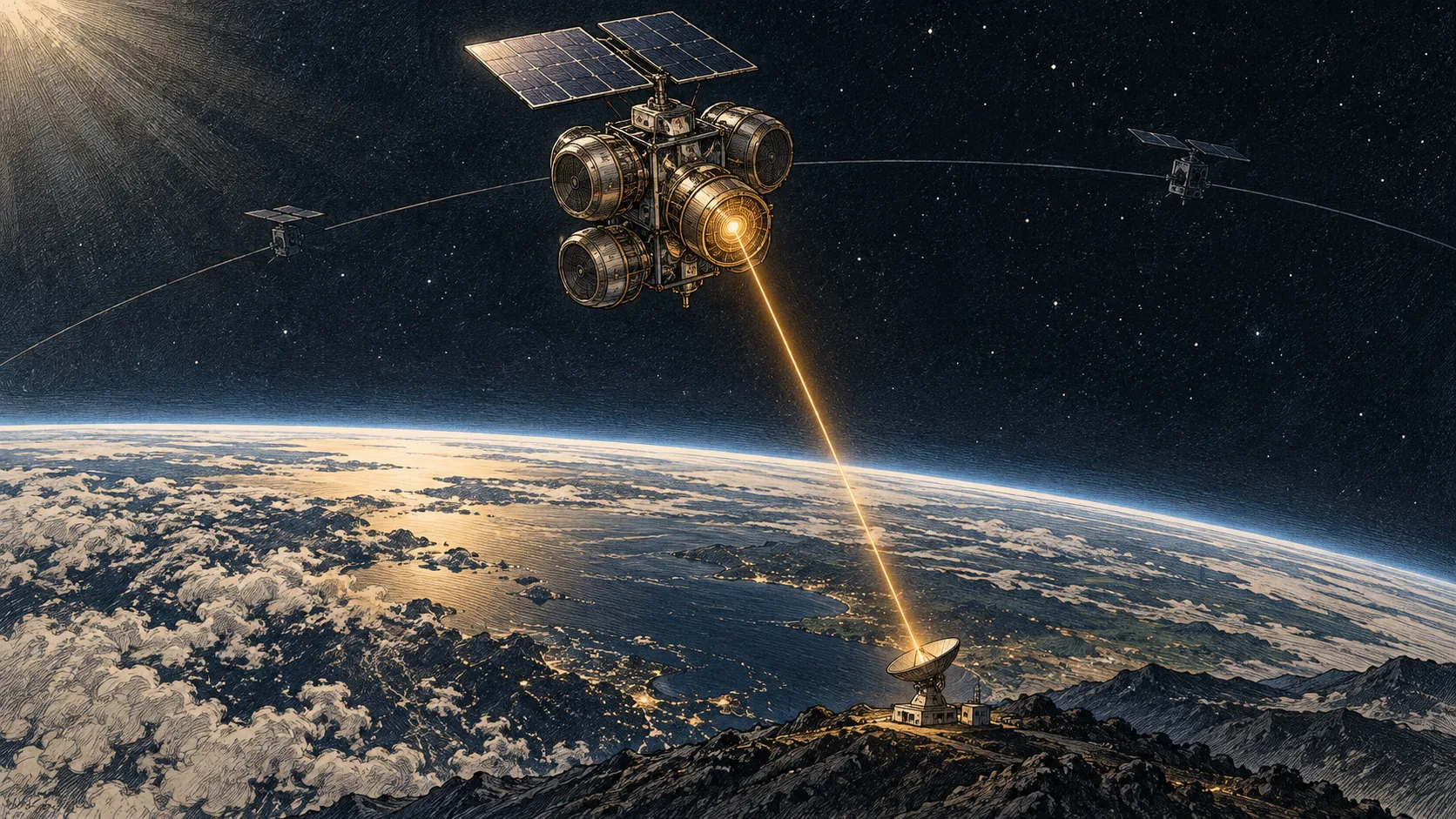
- •Google’s Suncatcher prototype data center satellite is online and communicating with the ground after launching earlier this month.
- •The spacecraft carries four TPUs, but power demands limit operation to one chip for about 20 minutes at a time.
- •Google plans two more satellites in 2027 if the chips prove capable, to test higher power and optical links.
Google’s Suncatcher prototype data center satellite is online and communicating with the ground after launching earlier this month on a SpaceX Falcon 9 rocket with more than 100 other spacecraft. It carries four Google Tensor Processing Units (specialized chips for AI computing) and generates up to 1 kW of electricity. Because of the chips’ power demands, only one TPU can operate at a time, for about 20 minutes. Google says the satellite is operating nominally.
After about three weeks of commissioning tests, engineers sent the satellite’s preloaded Google DeepMind Gemma 4 model a prompt this week to write a haiku about space. Google also asked the spacecraft to report on orbital conditions around it. The ongoing test campaign will assess how the chips perform under thermal stress and space radiation. Radiation can cause bit flips, which alter stored memory values and may corrupt data without triggering typical monitoring tools.
Ground tests suggested radiation would have minimal impact on inference workloads but pose more of a problem for model training. Google will now assess those effects in space rather than simulation. If the chips prove capable, Google plans to launch two more satellites equipped with the advanced chips in 2027; they will support higher power generation and demonstrate inter-satellite optical links. Suncatcher envisions high-speed links between satellites for coherent distributed workloads. SpaceX’s planned data centers are also expected to use laser links, but the satellites may orbit too far apart to share processing effectively. Starcloud and Cowboy Space plan to run inference workloads on individual satellites.
A peer-reviewed analysis published earlier this month estimated SpaceX would need to fly Starship 1,800 times to achieve the learning-driven cost reductions it saw with earlier vehicles. Google describes Suncatcher as infrastructure intended to be economical in the 2030s. Alphabet, Google’s parent company, has a significant investment stake in SpaceX, and both companies will require Starship, a heavy-lift rocket still in development, to be fully and rapidly reusable to launch their orbital data centers. Separately, Alphabet shares fell this week after it reported that efforts to add AI to its search businesses are hurting advertising revenue growth.