AI Agents Find Leads in Brain Cell Data
- •OpenAI, PerturbAI and Scripps Research analyzed millions of mouse brain cells in 32 minutes using thousands of GPT-Rosalind agents
- •Distributed agents cited more than 700 references, compared with 11 for one agent; experts preferred distributed reports 75% of the time
- •Agents identified leads involving Tsc2, cerebellar gene activity and DCTN1, cholesterol distribution and neurodegeneration
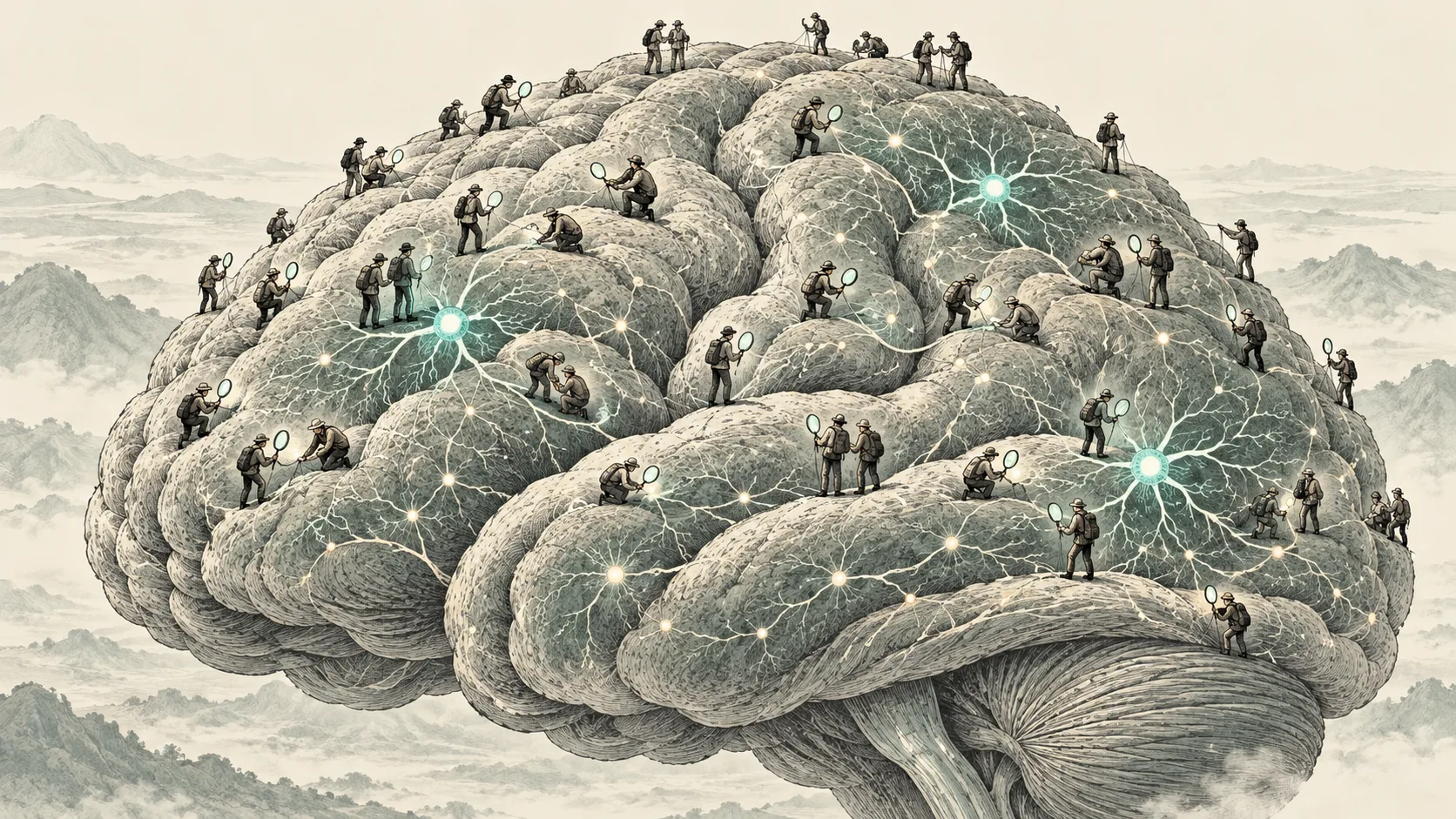
OpenAI, PerturbAI and Scripps Research used thousands of GPT-Rosalind AI agents to analyze experimental data from millions of mouse brain cells in 32 minutes, identifying biological connections that may help scientists study Alzheimer’s and Parkinson’s. The agents linked gene-disruption effects to scientific literature and proposed research leads. The researchers say comparable human analysis, conducted one perturbation at a time, would take months to a year.
The team divided the work across agents examining a whole-brain CRISPR atlas, a dataset mapping how gene disruptions affect cell types across the mouse brain. Each agent investigated a disruption, analyzed cellular responses, searched scientific literature and proposed explanations. The combined reports formed a reasoning atlas linking genes, cellular effects, publications and possible biological mechanisms. The agents reproduced findings from human analyses and uncovered additional leads; blinded human experts’ assessments of novelty and scientific value aligned with the agents’ assessments.
One lead concerned Tsc1 and Tsc2, genes that work together to control mTOR, a regulator of cell growth, metabolism and aging. Disrupting either gene had similar effects in several neuron groups, but in the cerebellum, Tsc2 disruption changed the activity of dozens of genes involved in neuronal communication, while Tsc1 disruption produced little change. The article says cerebellar abnormalities in people with tuberous sclerosis are strongly linked to TSC2 mutations. Medicines that reduce mTOR activity can treat some brain tumors and seizures, while associated learning and behavioral difficulties remain challenging to address. Researchers identified specific neurons and cellular changes to investigate in future experiments.
In a comparison using the same model and resources, a single agent cited 11 references at the largest workload, while distributed agents cited more than 700. Human experts preferred distributed-agent interpretations. In blinded comparisons, they preferred distributed-agent reports over single-agent reports 75% of the time. The team also identified a lead involving DCTN1, a gene whose mutations cause Perry syndrome, a neurodegenerative disease with Parkinson-like symptoms. Disrupting Dctn1 increased expression of genes involved in cholesterol production; the agents connected this to research suggesting impaired cholesterol transport can prompt cells to make more cholesterol. Researchers proposed testing whether DCTN1 disruption changes cholesterol distribution in neurons and contributes to neurodegeneration. The reasoning atlas is available for scientists to explore related genes, responses and research leads. OpenAI says scientists remain central to choosing ideas, designing experiments and interpreting results.