Hanwha Ocean Ecoutch Builds AI Production System
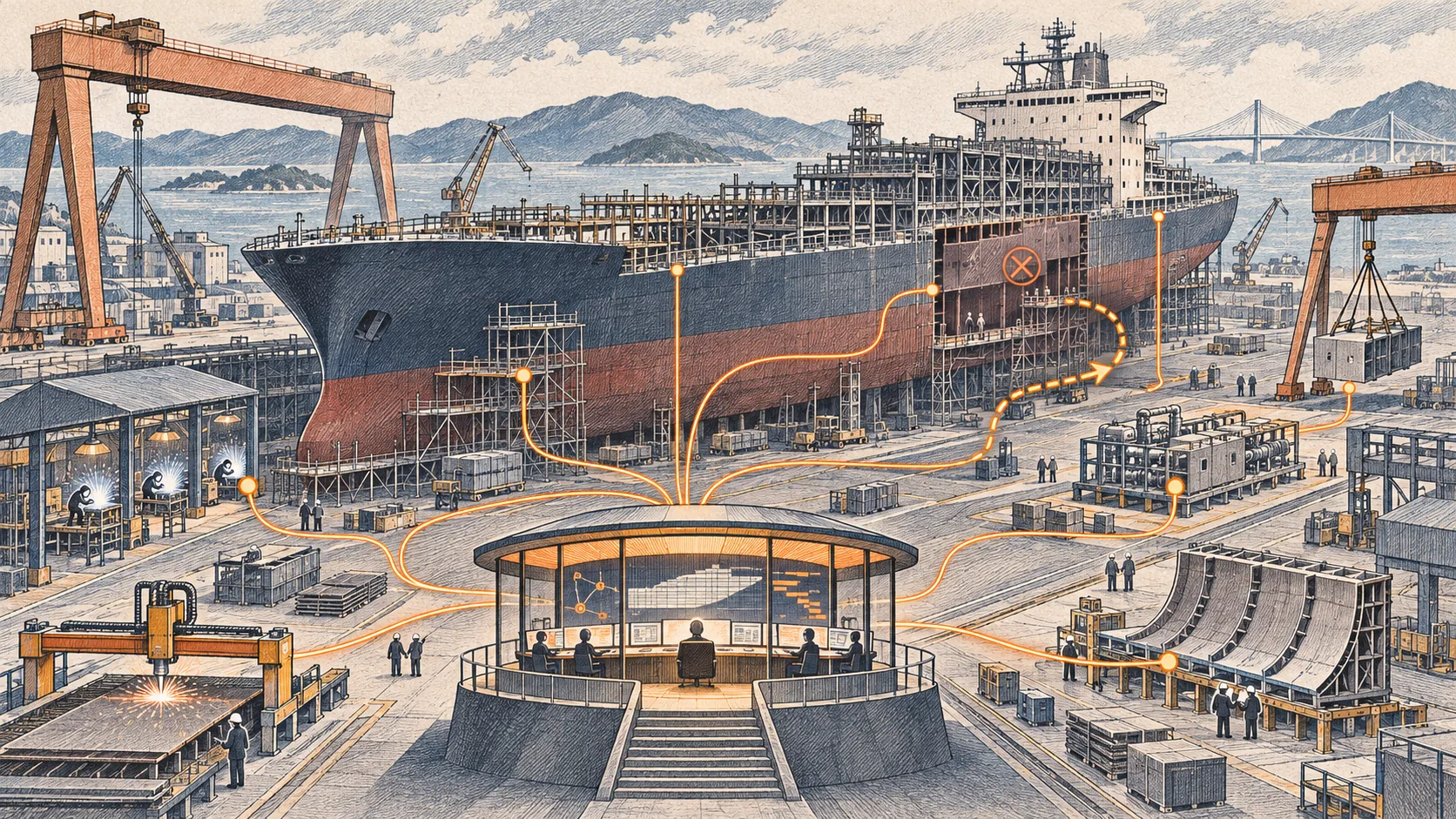
- •Hanwha Ocean Ecoutch is building an AI production management system at its Gwangyang site in South Jeolla Province.
- •More than 10 key projects include LLM agents that analyze causes of production delays and recommend responses.
- •Initial operation is planned for December, with system integration and stabilization by June 2027, followed by validation for expansion to domestic and overseas sites.
Hanwha Ocean subsidiary Hanwha Ocean Ecoutch said on November 2 that it is building an AI-based smart production management system at its Gwangyang site in South Jeolla Province. The company plans to shift production from reliance on workers’ experience and handwritten records to data-based management, integrating production, products, logistics, safety, and equipment. Since the project began, it has analyzed requirements and reviewed scenarios for connecting large language models (LLMs) and operating models; systems for each area are now in development.
Shipbuilding involves large vessels and offshore structures and complex processes, making production plans and process management tailored to site conditions important. The company plans to collect production information as data for AI analysis, improve the efficiency of production planning and operations, and develop a smart manufacturing model for use across shipyards. Core technologies include a digital twin (virtual representation of a physical site) and LLM-based AI agents. The system will combine structured and unstructured data, including meeting minutes and work standards, and visualize key performance indicators (KPIs) for each area. Using integrated data, AI agents will analyze the likelihood and causes of production delays and suggest responses. The company has identified more than 10 key projects and is implementing production-efficiency measures in stages.
The production planning system is being developed to create plans that reflect site constraints, production capacity, and information on workers, materials, and drawings. It will connect 3D worksite layouts, preliminary checks, and a simulation engine to manage plans, execution, and results across processes. The company plans to use it to assess site conditions in advance and reduce gaps between plans and actual work. For logistics, it will introduce a standardized address system for site locations and zones, using tablets and GPS to track the locations and movements of blocks, materials, and transport equipment in real time. In safety, video AI will be linked with gas, wind direction, and wind speed sensors. An integrated control system will detect fire, fallen workers, missing protective equipment, and risks from approaching heavy machinery for preventive action.
For equipment, the system will monitor flow, pressure, and electricity consumption across factories to identify early signs of failure and inefficient energy use. Hanwha Ocean Ecoutch plans to connect data from production planning through logistics, safety, and equipment operations to improve visibility into site operations and strengthen productivity, safety, and cost competitiveness. The smart production management system is scheduled to begin initial operations in December, with system integration and stabilization planned by June 2027. After validating its on-site applicability and operational effects in Gwangyang, the company plans to extend the results to domestic and overseas production sites, including its Geoje and Philly shipyards. A Hanwha Ocean Ecoutch official said the company aims to improve production volumes, reduce costs, and meet delivery deadlines to strengthen productivity, safety, and cost competitiveness.