Hitachi Begins Selling Wooden Data Centers
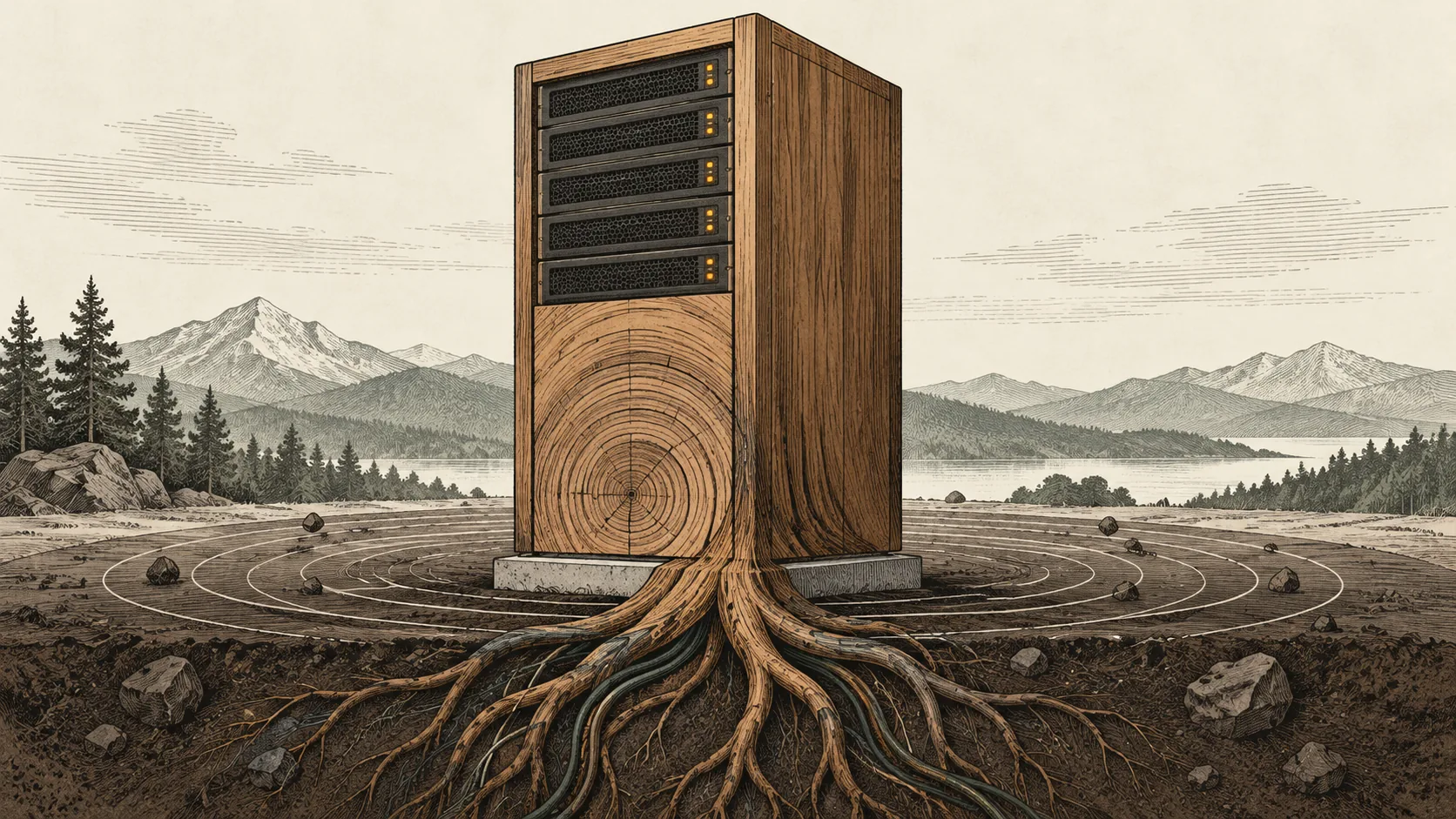
- •Hitachi begins selling a wooden model of its compact data center
- •Company estimates about 20 tons of emissions avoided and carbon stored through wood use
- •Design can meet Class I seismic safety standards and is intended to last more than 30 years
Hitachi began selling a wooden version of its compact “Flexible Design Container” data center on October 14. The model uses timber for main structural parts such as columns and beams, and Hitachi says it can be built at low cost in a short time. Demand for data centers is growing as AI and cloud services expand, while large facilities face challenges including construction time, securing power and communications infrastructure, site selection, and gaining nearby residents’ understanding.
The product is a new model in Hitachi’s compact data center line, which the company has sold since 2012. Available formats include units transportable at roughly the size of freight containers and units whose scale can be adjusted flexibly. Its design improves the operating efficiency of racks holding IT equipment and air-conditioning systems. Modular components help reduce installation costs and time. Hitachi says the facilities can be built faster than conventional building-type data centers and expanded in stages as demand changes. Their compact size allows installation on unused factory land, without the need to secure large-scale power supplies. The company has about 50 installations, including in the public sector.
Hitachi says wood is lighter than steel or concrete, easier to transport, and easier to process on site. It also suits prefabrication, in which columns and wall panels are made at a factory and assembled at the site, helping make on-site work more efficient. Trees absorb carbon dioxide as they grow and store it in their material, a process called carbon storage. Reducing the amount of steel and concrete used can also curb emissions. Hitachi estimates that, depending on facility size, the design can avoid about 20 tons of carbon dioxide emissions and store carbon. The company aims to make the facilities fit the surrounding landscape by using wood on exterior walls and adding greenery at installation sites, with the goal of building local agreement and social acceptance.
The wooden structure can meet Class I seismic safety standards, the highest level required for data centers, under which the building can remain in use after a major earthquake without repairs. Hitachi says preservation treatments on the exterior will help the structure withstand more than 30 years of use. The facilities can also include gas fire-suppression systems, intrusion prevention, and access control using electronic locks and cameras. Hitachi plans to tailor installations to customer requirements and local conditions, and expects customers may combine them with HMAX Data Center, its operations service for integrated management of power, IT infrastructure, and cooling equipment. The wooden model retains the quick deployment, staged expansion, and compact installation of Hitachi’s container-style data centers, while adding wood’s workability and attention to landscape.
Hitachi announced the start of sales and cited environmental considerations, carbon storage, seismic safety, and durability as product features. The report did not state the selling price or when specific facilities would be installed. Hitachi’s estimate of about 20 tons of emissions avoided and carbon stored varies with facility size; the company says it will provide the product according to individual requirements and local characteristics.