Hyundai and Rainbow Urge State-Led Robot Ecosystem
- •Hyundai Motor and Rainbow Robotics called for a government-led AI robotics ecosystem at a National Assembly forum.
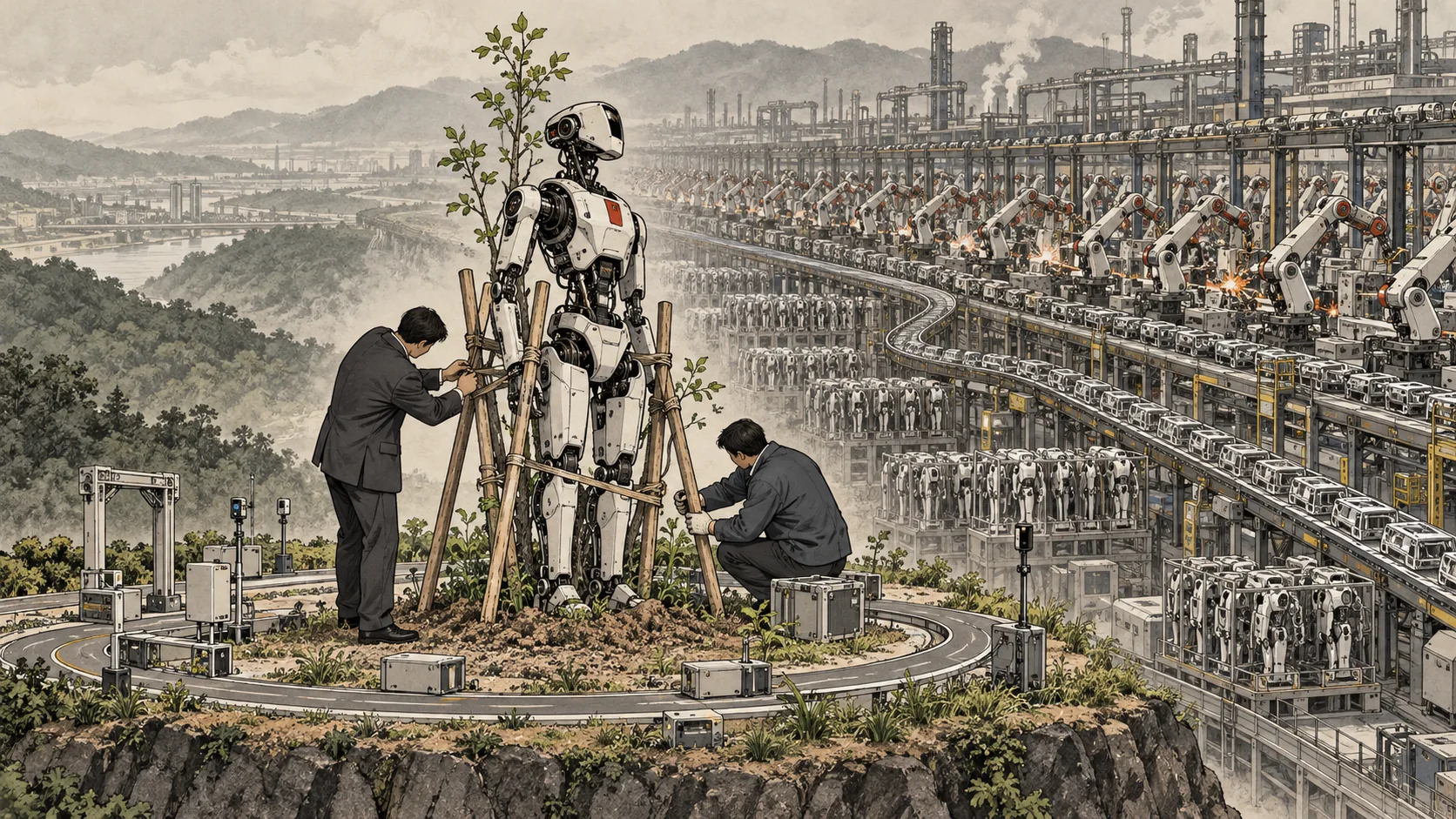
- •China has rapidly built its robotics supply chain, mass production and field trials, while South Korea remains at the R&D and small-scale trial stage.
- •Speakers proposed public-sector robot demand, purchase subsidies, investment in field-trial data and broader cooperation with large companies.
Hyundai Motor and Rainbow Robotics urged the government to build an industry ecosystem at the “AI and Robotics Industry Ecosystem Strategy” forum held at the National Assembly Members’ Office Building on the 21st. They warned about the growth of China’s robotics industry and the possibility that it could encroach on South Korea’s domestic market. The forum was co-hosted by Democratic Party lawmaker Lee Eon-ju, her party’s Future Economic Growth Strategy Committee and the National Strategy Forum in a Time of Changing International Order, and organized by the Korea AI and Robotics Industry Association.
In her opening remarks, Lee said South Korea has an industrial base for physical AI, including semiconductors, batteries and automobiles, but relies heavily on overseas suppliers for key components. She called for support for foundational technology development and early demand. Bae Seok-tae, the association’s executive vice chairman, said public-sector robot adoption could help complete the domestic ecosystem.
Park Il-woo, a program director at the Korea Evaluation Institute of Industrial Technology, outlined progress on the AI Robot M.AX Alliance. He said plans for next year include expanding the Robot Data Factory, localizing key components and launching collaboration projects between large and small businesses. Hyundai executive Song Ho-deuk said China had rapidly built its supply chain, mass production and field trials with government support, while South Korea remained at the R&D and small-scale trial stage. He warned that Chinese companies could penetrate South Korea’s market faster than they did in robot vacuums, drones and electric vehicles.
Song proposed that the government serve as the industry ecosystem’s control tower and pursue investment in field-trial data, robot purchase subsidies, large-scale trials and expanded public-sector demand. Lee Jeong-ho, CEO of Rainbow Robotics, called for expanding robot use from manufacturing into services and developing platforms suited to different environments. He also cited safety, social acceptance and institutional responsibility as challenges as robots gain autonomy.
Lee warned that when customers seek control over data used to train and operate AI, the ecosystem could favor large companies able to integrate manufacturing, AI platforms and systems integration (SI) vertically. He said the government should use research institutions, universities and public service facilities to drive industry development. At the forum, Neuromeka CEO Park Jong-hoon emphasized applying physical AI on factory floors and securing data; SBB Tech CEO Ryu Jae-wan called for joint development by finished-product and component companies and stable demand. Kang Deok-hyeon, co-chair of the Robot Parts Companies Council, asked large companies to share development plans and component needs in advance and build cooperative relationships.