Infineon Unveils AI Data Center Power Technology
- •Infineon revealed a power delivery architecture and ultra-thin module roadmap for AI data centers.
- •The plans address GPU power of 3,000–4,000 W and projected rack demand of up to 1 MW.
- •Infineon is pursuing power equipment and transmission projects with SoluM, LS Electric, and Hyosung Heavy Industries.
Infineon Technologies unveiled a next-generation power delivery architecture and a roadmap for ultra-thin vertical power delivery modules at a press briefing in Seoul’s Gangnam district on the 5th. Power consumption per GPU is rising from about 1,000 W to 2,000 W and then 3,000–4,000 W or more, while data center rack consumption is projected to climb from 100–150 kW today to as much as 1 MW. The company identified reducing losses and heat as power travels from the supply unit to the GPU, while raising power density in limited space, as key challenges.
Adam White, president of Infineon’s Power Systems division, described a roadmap for vertical power delivery modules less than 3 mm thick. Placing modules close to the back of GPU chips is intended to deliver high current efficiently in tight spaces. Infineon plans to raise current delivery capacity per mm² from 1 A to 2 A between 2024 and 2027, and to at least 4 A in 2028. The company said it aims to pursue the market for power delivery technology for data centers with rising power consumption.
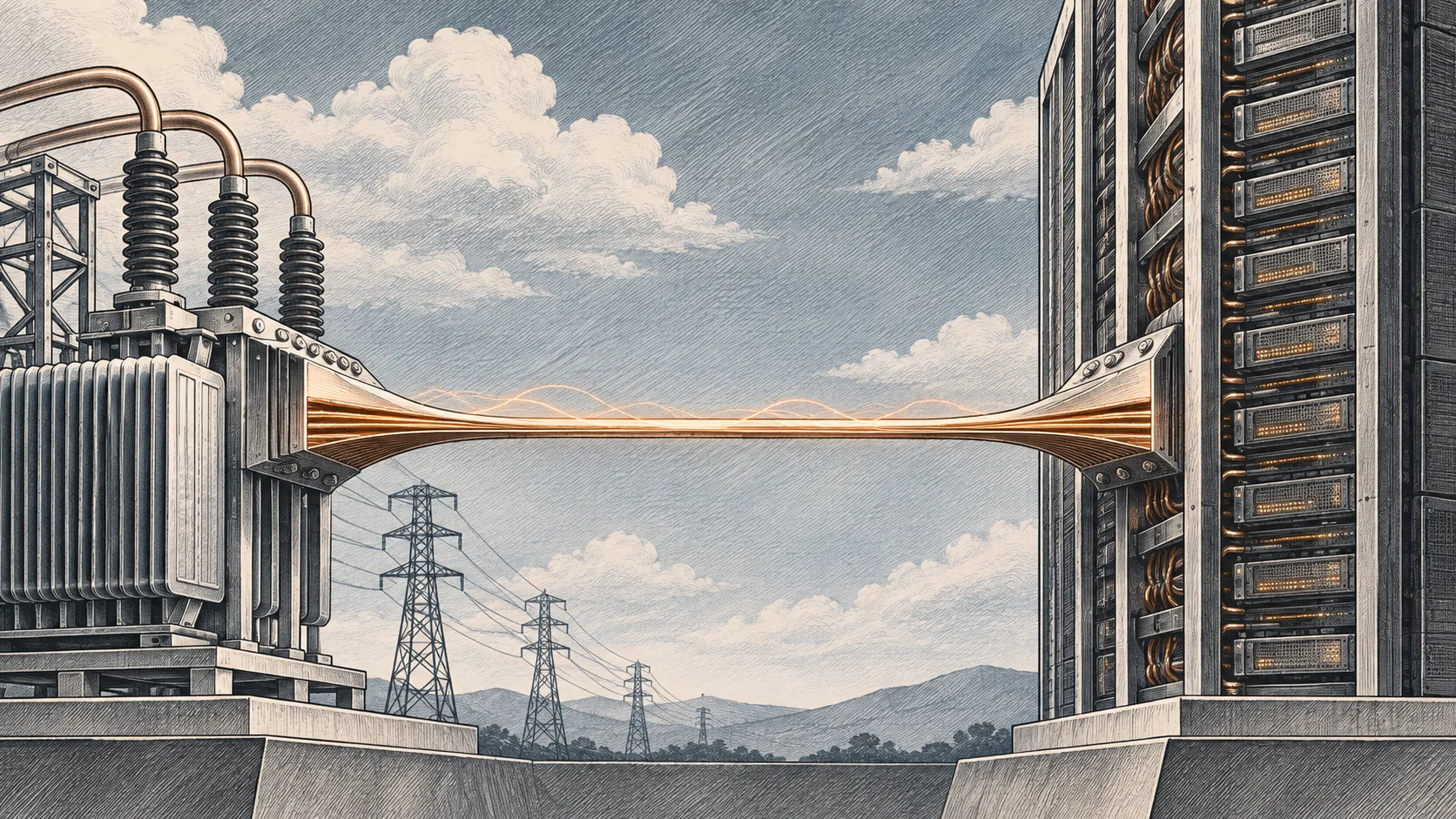
White’s “grid to core” phrase describes electricity traveling from power plants through transmission networks and data centers to chips such as GPUs and CPUs. Infineon cited its product range, from energy storage systems (ESS) and solid-state transformers (SST) to components that deliver power to chips, as a competitive strength. White said rack architectures are moving from 10–30 kW in the past to more than 600 kW today. Infineon’s first generation targets 100–150 kW per rack, its second 500–700 kW, and its third 1 MW. The second generation uses a partitioned design that separates computing and network racks from power supply sidecar racks. White said hybrid microgrids supplying more than 1 MW require a shift from the existing 48 V single-phase environment to 800 V direct current (DC) infrastructure, raising voltage and lowering current to reduce transmission losses.
Locating power supplies close to processors can reduce power losses, but concentrating high current in a small space makes heat management important. White said GPU consumption rising to 3,000–4,000 W makes power loss and heat management challenges, and losses could instead grow without solutions suited to higher current density. As demand increases, power delivery is moving toward high-frequency switching to lower voltage and raise current, he said, adding that reliability and quality are needed for stable heat management.
Infineon uses silicon (Si), silicon carbide (SiC), and gallium nitride (GaN) as power semiconductor materials. According to the company, silicon is cost competitive, silicon carbide suits high-power and high-temperature environments, and gallium nitride is advantageous for high-frequency switching. Gallium nitride enables higher switching frequencies to reduce power module size and weight. Infineon said it plans to combine digital control technology from its recent acquisition of C2I with its materials technology to improve high-frequency switching performance. It is also working with advanced packaging companies in South Korea and other key countries on packaging, inductors, and capacitors needed for stable modules.
Infineon’s domestic partnerships include a memorandum of understanding with SoluM on designs for power supply units (PSUs), intermediate bus converters (IBCs), and battery backup systems (BBUs). The collaboration aims to convert data center rack power and build backup systems that provide stable power during sharp increases in computing loads. Infineon is pursuing solid-state transformer (SST) and solid-state circuit breaker (SSCB) projects with LS Electric, aiming to replace existing mechanical equipment weighing about 20 tons with semiconductor-based equipment that reduces size and weight and improves energy efficiency. With Hyosung Heavy Industries, it is working on high-voltage direct current (HVDC) transmission to improve power grid transmission efficiency. White said Infineon has begun mass production and shipments with South Korean companies in several areas.