Intel Korea Highlights CPUs in Agentic AI
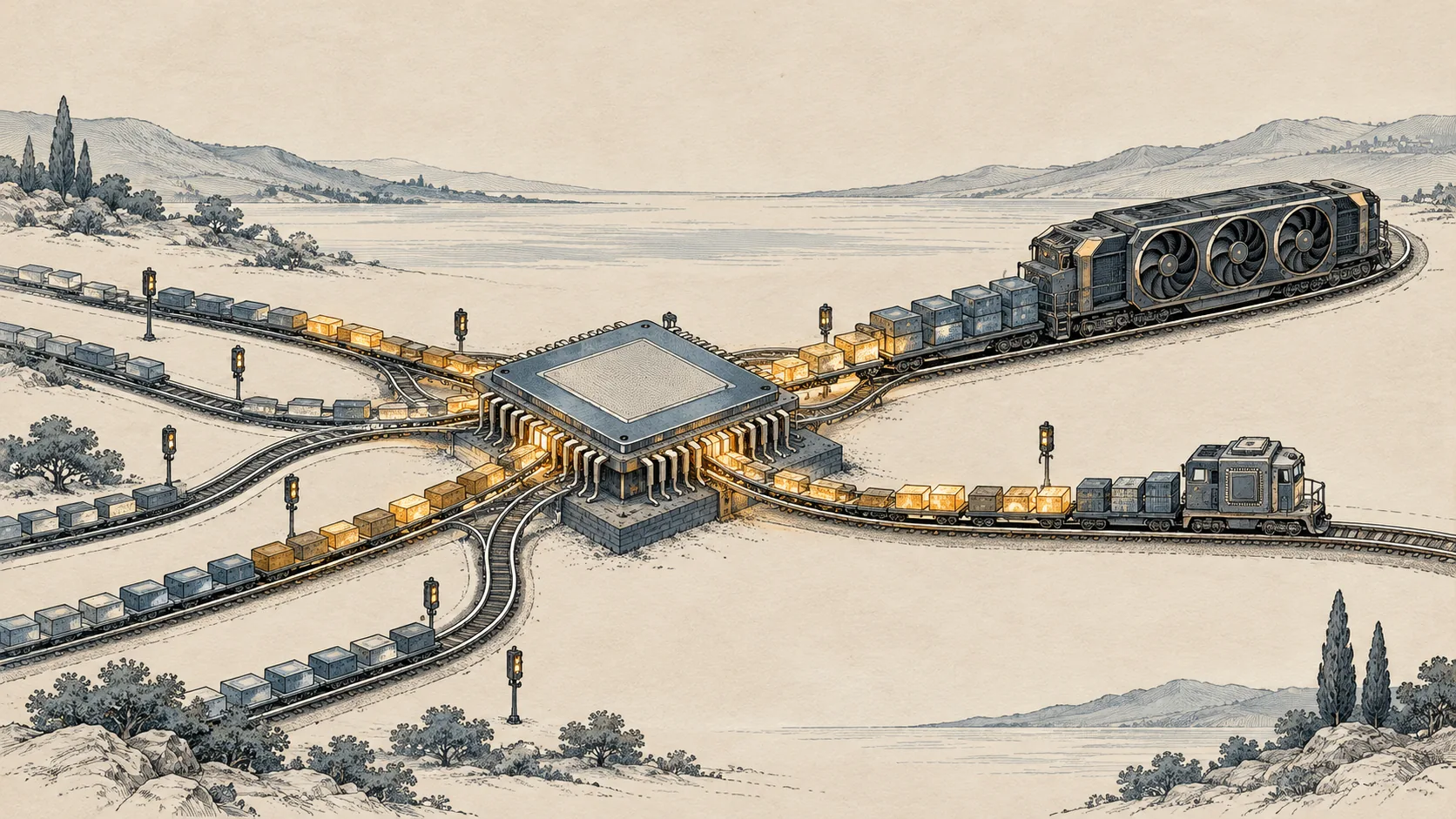
- •At Tech Summit 2026, Intel Korea said CPUs will play a larger role as agentic AI expands.
- •Intel said CPU tasks may account for 40–88% of execution time in representative workloads.
- •Intel proposed combining CPUs and GPUs and assigning resources by task to balance performance and cost.
The Electronic Times Tech Summit 2026 was held on the 28th at Conrad Seoul in Yeouido, Seoul. Jo Min-seong, senior director of technology at Intel Korea, spoke on “Why CPUs Matter Again in the Agentic AI Era” and identified CPUs as a potential next growth driver for the AI market. He said CPUs could take on a larger role as the industry moves from infrastructure centered on graphics processing units (GPUs), which have powered generative AI, to agentic AI that carries out tasks directly.
Jo said businesses now rely on two to three AI systems for their work and described the spread of agentic AI across organizations as unavoidable. Agentic AI sets goals, makes plans and performs tasks based on user instructions. Unlike conventional chatbots, which focus on answering questions, it repeatedly plans, acts and checks results to pursue a goal. This process requires multiple computations, including reasoning by large language models, AI systems that understand and generate text.
Intel said CPUs coordinate task sequences, manage system state and run external tools to control the overall process. It argued that service performance should be judged not only by tokens processed per unit of time, but also by how quickly and efficiently a system completes real tasks. Intel said CPU-led activities such as search, tool execution and data processing may account for 40–88% of total execution time in agentic AI workloads, or practical task-processing flows.
Intel said agentic AI may repeat reasoning and tool calls many times to finish a task, while coding work can use far more tokens than a typical chatbot conversation. It said operators should therefore consider CPU execution costs and resource utilization alongside processing costs per token.
Intel proposed heterogeneous computing, in which different processors work together, as a way to balance performance and cost. Under this approach, CPUs handle suitable tasks, while GPUs and other accelerators handle high-performance inference. Intel forecast that the balance between CPUs and GPUs may gradually shift as AI develops from model training toward inference, retrieval-augmented generation and agentic AI. It said software could eventually select CPUs or accelerators based on each task’s characteristics. Jo said Intel would use a consistent AI software stack to speed the development and execution of varied agentic AI systems.