IRIS Model Maps Cell Signaling Histories
- •MIT and Whitehead researchers developed IRIS to reconstruct cell signaling histories across different cell types.
- •Trained on thousands of human stem cells and six pathways, IRIS predicted signals in mouse embryo cells.
- •Mouse embryo experiments confirmed IRIS’s prediction for a pathway that encourages lung-specific cell development.
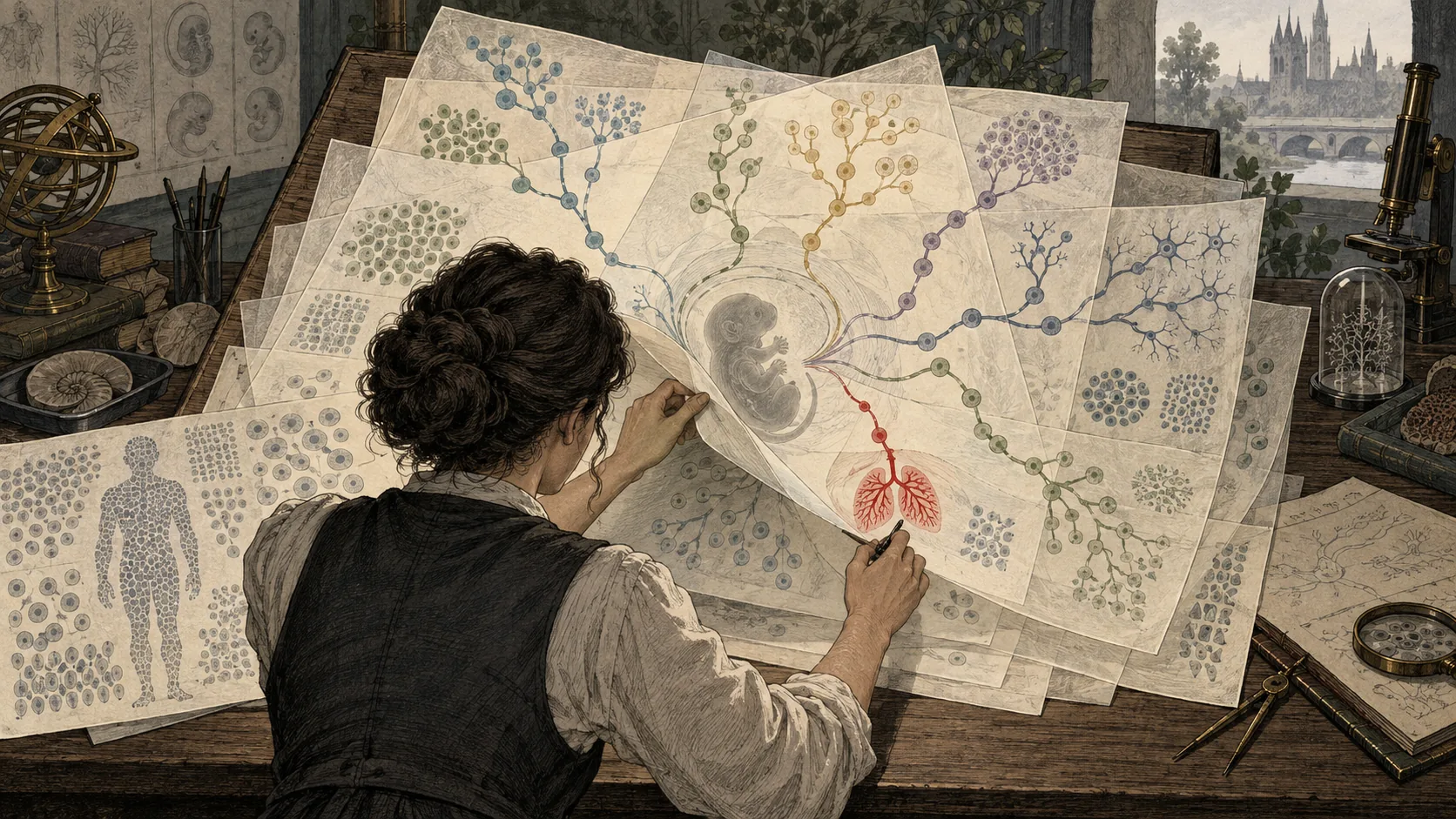
MIT and Whitehead Institute researchers led by biology assistant professor Pulin Li and graduate student Nicholas Hutchins developed IRIS, a machine learning model that identifies the chemical signals cells received during development. The study found that each signaling pathway leaves a distinctive gene activity pattern, or fingerprint, and that the pattern is consistent across different cell types. Researchers can therefore use those fingerprints to reconstruct signaling histories across cell types, rather than mapping every pathway separately in each cell type.
IRIS detects these patterns in a cell’s overall gene activity and estimates which signaling pathways were active at particular stages. The team trained it on experimental measurements from thousands of human embryonic stem cells exposed to dozens of combinations of six major signaling pathways at multiple development stages. That dataset formed an atlas of how signal combinations affect cell behavior. The researchers then tested IRIS on individual cells from mouse embryos during gastrulation, when cells rapidly develop into different types. It predicted when and where pathways activated in cells destined to form heart, gut, muscle and spinal cord tissue, including cell types it had not encountered during training.
The team also used IRIS to identify signals involved in producing a cell type important to lung development. The model predicted that activating a specific pathway would encourage lung-specific development, and experiments in mouse embryos confirmed that prediction. Researchers say identifying the precise signal combinations could help them generate more reliable lab-grown lung tissue models. Those models could support studies of asthma, lung cancer and pulmonary fibrosis, and allow researchers to test potential therapies; the team also says the findings could inform regenerative treatments for damaged tissue.
The open-access study, “Reconstructing signaling histories of single cells via perturbation screens and transfer learning,” was published in Nature Methods on September 8. Li compared IRIS’s transfer learning (applying knowledge learned from one task to another) to voice recognition systems trained mainly in English and then used to recognize other languages. The researchers say the approach may make it possible to map signaling histories across cells in mouse or human embryos at a scale that would be impractical with experiments testing every pathway in every cell type.