JDSC Launches AI Logistics Planning Service
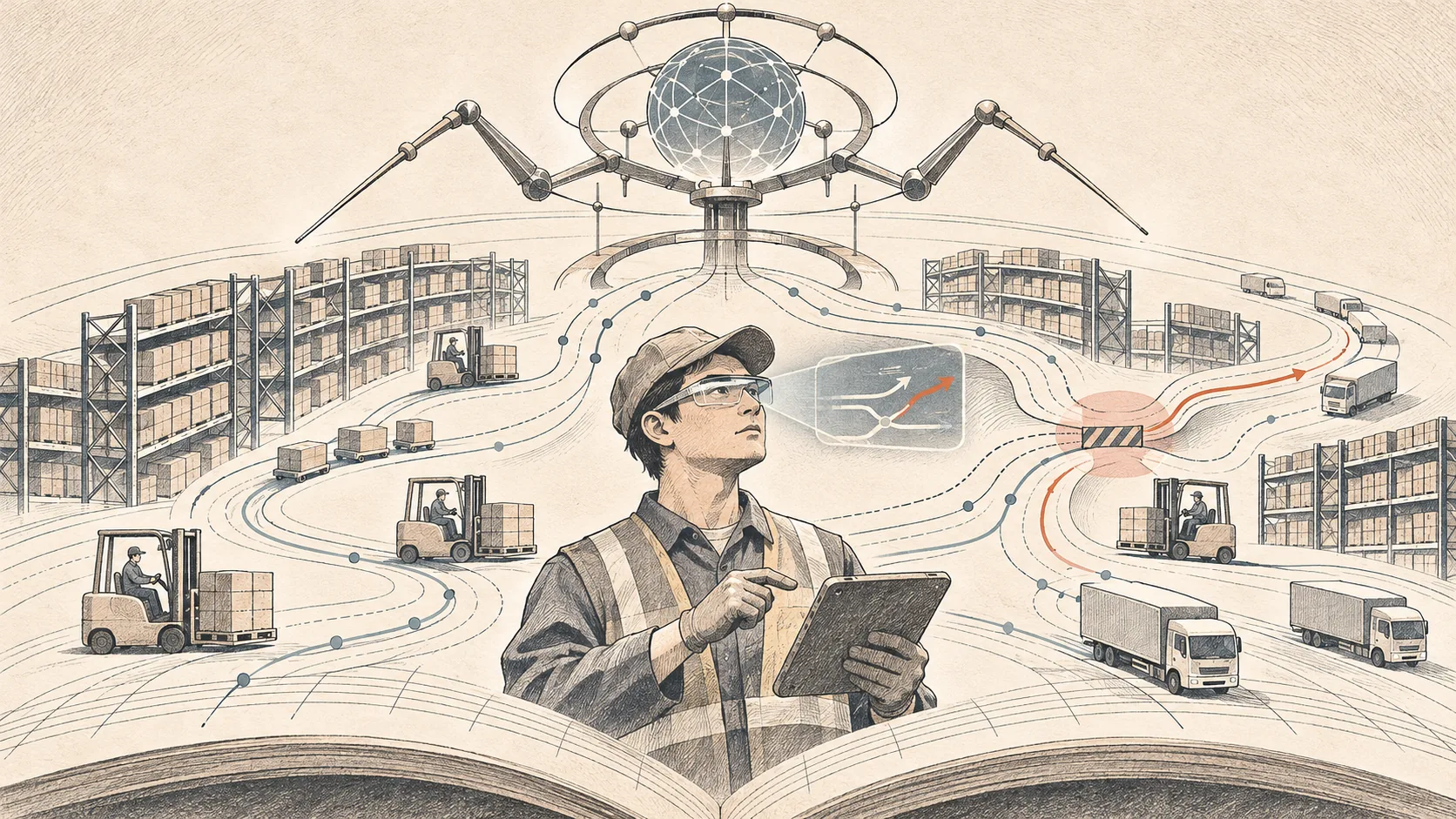
- •JDSC launched Logi-one Engine, a service where multiple AI agents coordinate logistics planning.
- •The service uses WMS and TMS data to plan cargo handling, storage, and transport, then revises plans when delays or demand change.
- •Work instructions reach staff through notifications, voice, and smart glasses, with planned expansion to administrative and on-site tasks.
JDSC began offering Logi-one Engine on November 5, 2026, announcing the service that day. Multiple AI agents coordinate warehouse and transport work plans and decisions. The service draws data from logistics systems to create daily plans for cargo handling, storage, and transportation. JDSC says it optimizes work across logistics functions and turns those plans into instructions for on-site staff.
The service uses data from warehouse management systems (WMS) and transportation management systems (TMS). When trucks are delayed or arrive early, or weather changes demand, AI agents work together to revise plans on the spot. Optimized instructions are sent to staff through smartphone app notifications, voice, and smart glasses. The system is designed to let workers receive instructions without stopping while handling cargo with both hands. Staff can also report by voice, with spoken content automatically entered directly into daily work reports, JDSC says.
The service combines multiple AI agents in a hierarchy. Agents responsible for individual tasks sit at the lower level, while a logistics operations orchestrator coordinates them at the upper level through APIs. JDSC says this structure supports decisions that account for the balance among revenue, quality, and cost.
JDSC plans to extend the service to administrative work, including invoice entry and matching transactions against records. The company says this could limit human review to exceptional cases. It also envisions standardizing processes that differ by site and managing operations with shared KPIs. In the future, it plans to expand into automating on-site work through coordination with physical AI.
Logistics companies face pressure to improve productivity amid limits on drivers’ overtime and labor shortages. On-site labor management and work planning often depend on the experience of site managers and skilled staff. This can lead to differences in work quality among employees, while shifts in truck arrival times or staffing shortages and surpluses require people to rebuild plans manually. Traditional WMS and TMS tools are suited to managing individual areas of work, but people have handled decisions spanning multiple areas such as warehouses and transportation.
The fastest, most reliable AI news, straight to your inbox