JR Kyushu Builds Work Apps with Gemini
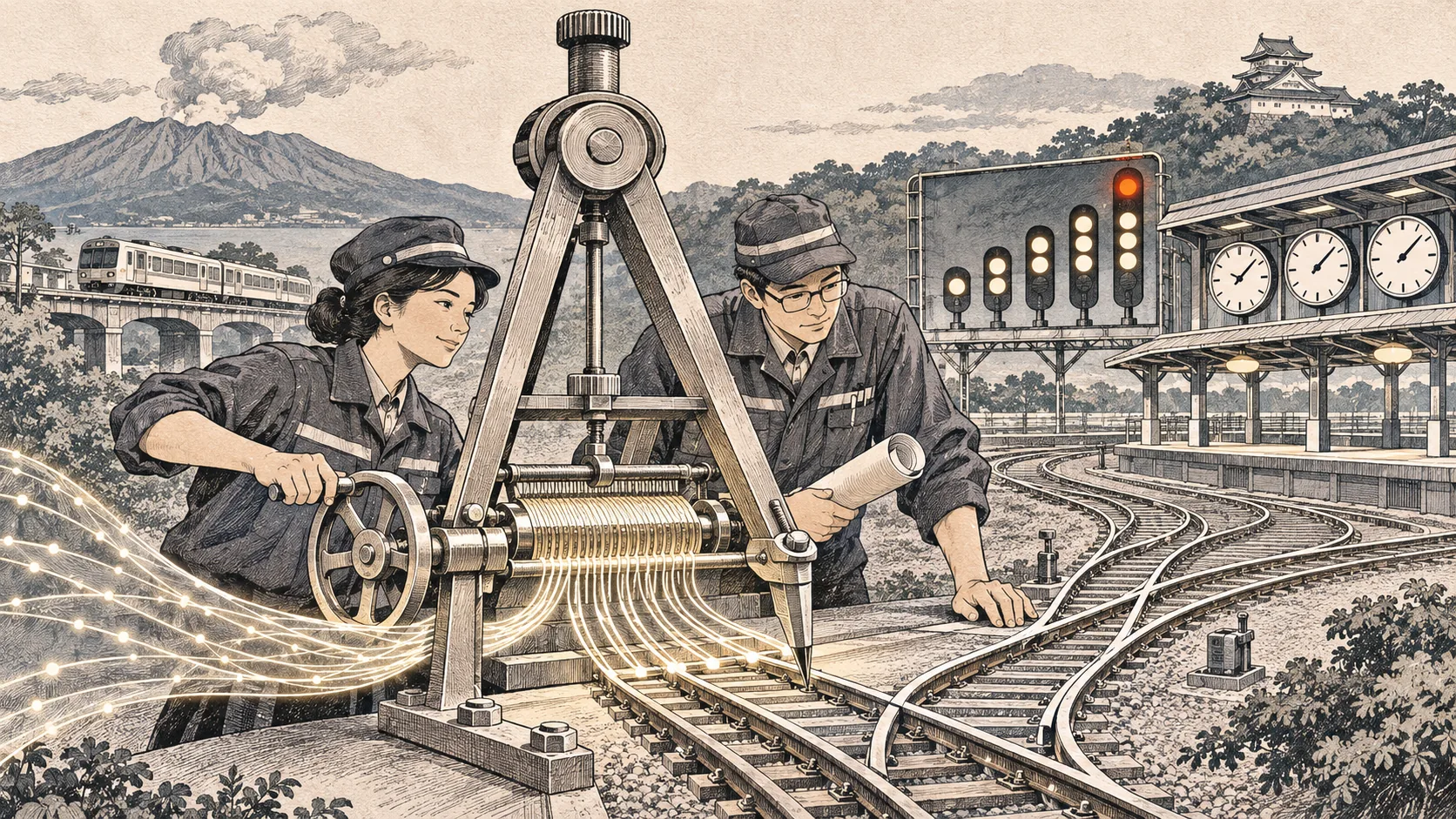
- •JR Kyushu employees without coding experience built two internal work apps using Gemini.
- •Gemini generated more than 90% of the code; the apps took 2–3 months to complete.
- •The apps visualize train data and generate staff shifts, while Gemini also supports booking-page improvements.
JR Kyushu employees with no programming experience used Gemini to build an app that visualizes train data and another that automatically generates staff schedules, Google Cloud Japan said in a blog post published October 30, 2026. Gemini generated more than 90% of the code, and the two apps were completed in 2–3 months.
JR Kyushu operates railways as well as station shopping centers, real estate, hotels, retail and restaurants. In September 2025, it began a proof of concept, a trial before full deployment, of Google Workspace with Gemini. About 30 employees from frontline departments took part. The company later moved the service into regular use across about 400 accounts. Since the rollout, employees without engineering backgrounds have used Gemini to build and improve work apps and web pages.
In the Transportation Department’s planning section, an employee built both apps with Streamlit, a Python tool for creating web apps. The employee described requirements in natural language, checked the code Gemini produced, and repeatedly asked it to make revisions. The first app analyzes and visualizes data from trains in service in real time. Previously, inspections could only be conducted at set intervals, and accumulated data was not being used much.
The second app automatically creates employee work schedules. Railway shifts must account for night work, holiday duty and individual skills, among other conditions. Instead of simply filling open shifts, the app can assign work based on each employee’s workload and skills. Changing the conditions allows the app to be adapted for other departments.
The Sales Department has brought web-page production in-house and asks Gemini to draft landing pages. Previously, employees spent time sketching page layouts by hand; now, they can describe what they want and receive several sample designs. The department also changed the path to booking: it added a search box to route-specific pages created with Gemini. Users can enter a date and time and proceed to the actual booking process.
Employees are using Gemini-generated code that they check and refine to handle train-data analysis, shift creation and web-page production in-house. The two work apps took about 2–3 months to complete; about 30 people joined the proof of concept, followed by operation across about 400 accounts.