K-water Integrates AI Across Water Management
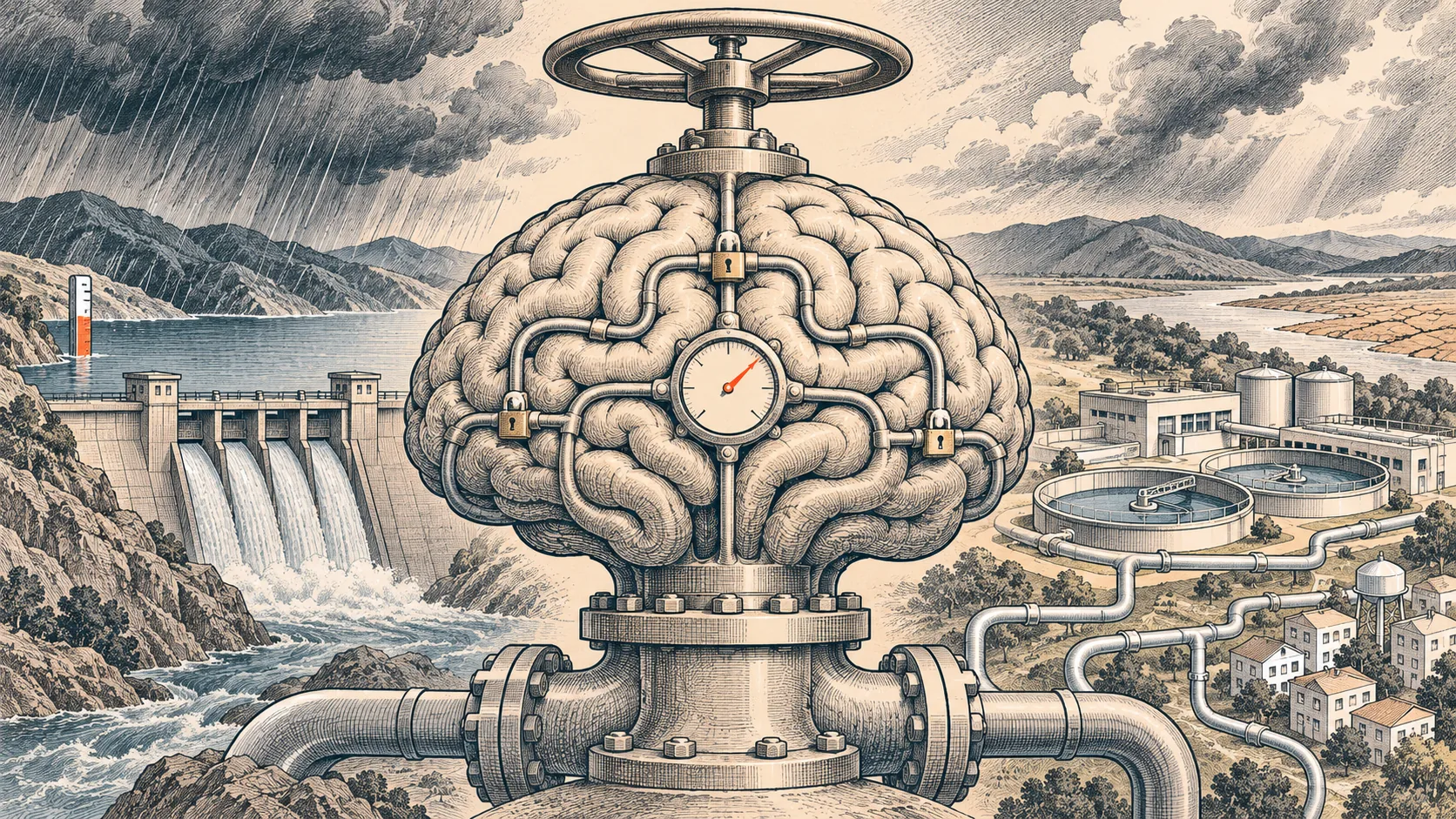
- •K-water is integrating AI across dams, treatment plants and water distribution as climate extremes challenge established forecasting methods.
- •Flood damage in 2020 spurred adoption; the utility formed an AI Division in late 2025 and plans a Sejong data center by 2030.
- •K-water introduced secured external AI services for employees, limits individual usage to manage costs and is connecting services to its work network.
K-water, South Korea’s water utility, is bringing AI into dam operations, water treatment and distribution as climate change makes rainfall and drought harder to predict using historical patterns and operating experience. Flood damage downstream of dams in 2020 prompted the company to adopt AI and digital twin technology in earnest. In late 2025, it formed an AI Division of specialists in IT, administration, civil, mechanical and electrical engineering, environmental engineering, and telecommunications. The division aims to combine separate projects, including digital twins for water management, AI-powered treatment plants and smart distribution networks, in a framework covering water from dams to users.
K-water’s data work began with monitoring dam levels, rainfall and water quality, then expanded to forecasting demand and planning production and supply. ERP projects also helped establish metadata and data standards, though the data was not initially collected for AI. Vice President Ha-Dong Jung says AI use requires defining what each data item means and how different data points relate. To connect, for example, upstream rainfall with downstream water quality, treatment output and supply, K-water is investing in an ontology (a structured map of data concepts and relationships) and combining it with RAG (a method for retrieving relevant information for AI systems).
Extracting large volumes of data for analysis sometimes stopped existing equipment, which was designed for its original tasks. K-water is improving its collection infrastructure and adding multiple data acquisition routes. It has secured a site in Sejong for an AI data center that it aims to build by 2030.
K-water also provides employee AI tools. It first developed K-water GPT using Meta’s Llama models, replacing the underlying models over time, but Jung says in-house development alone could not keep pace with ChatGPT, Gemini and Claude. The public enterprise then introduced external services that let employees choose among major models in an environment with enhanced security. Because work and internet networks are separate, it has also been working to make external generative AI services available from the internal work network, so employees can use internal documents with AI. After initially allowing broad access to encourage use, K-water now sets individual usage limits to manage costs.
Jung says a typical IT project takes six months to a year to prepare, about a year to implement and roughly six months to close, while AI models and capabilities continue to change during that time. He says K-water may need to let employees respond directly to changes over time instead of relying entirely on outside contractors. Building internal capability takes time because staffing, project reviews and budget assessments require substantial work, while adapting public-sector procedures to the pace of technology remains a challenge.
K-water’s accumulated operational data and earlier technology projects have supported later AI efforts, Jung says, and the company’s AI use remains in its early stages. OpenAI has highlighted K-water as an example of AI use in disaster response. The AI Division’s stated goal is to help establish K-water as a global water company leading the response to climate change. Jung says his role is to help employees take on challenges, remove obstacles he can address and listen when problems are beyond his authority.
The fastest, most reliable AI news, straight to your inbox