LangChain Outlines Five Company Agent Components
- •LangChain outlines five components for company agents: workplace channels, identity, memory, sandboxed code and scheduled runs.
- •Its GTM Agent, OpenSWE and Content Studio handle sales, engineering and marketing tasks across Slack and custom interfaces.
- •Managed Deep Agents supplies channels, schedules, sandboxes, memory and identity for LangChain's three internal agents.
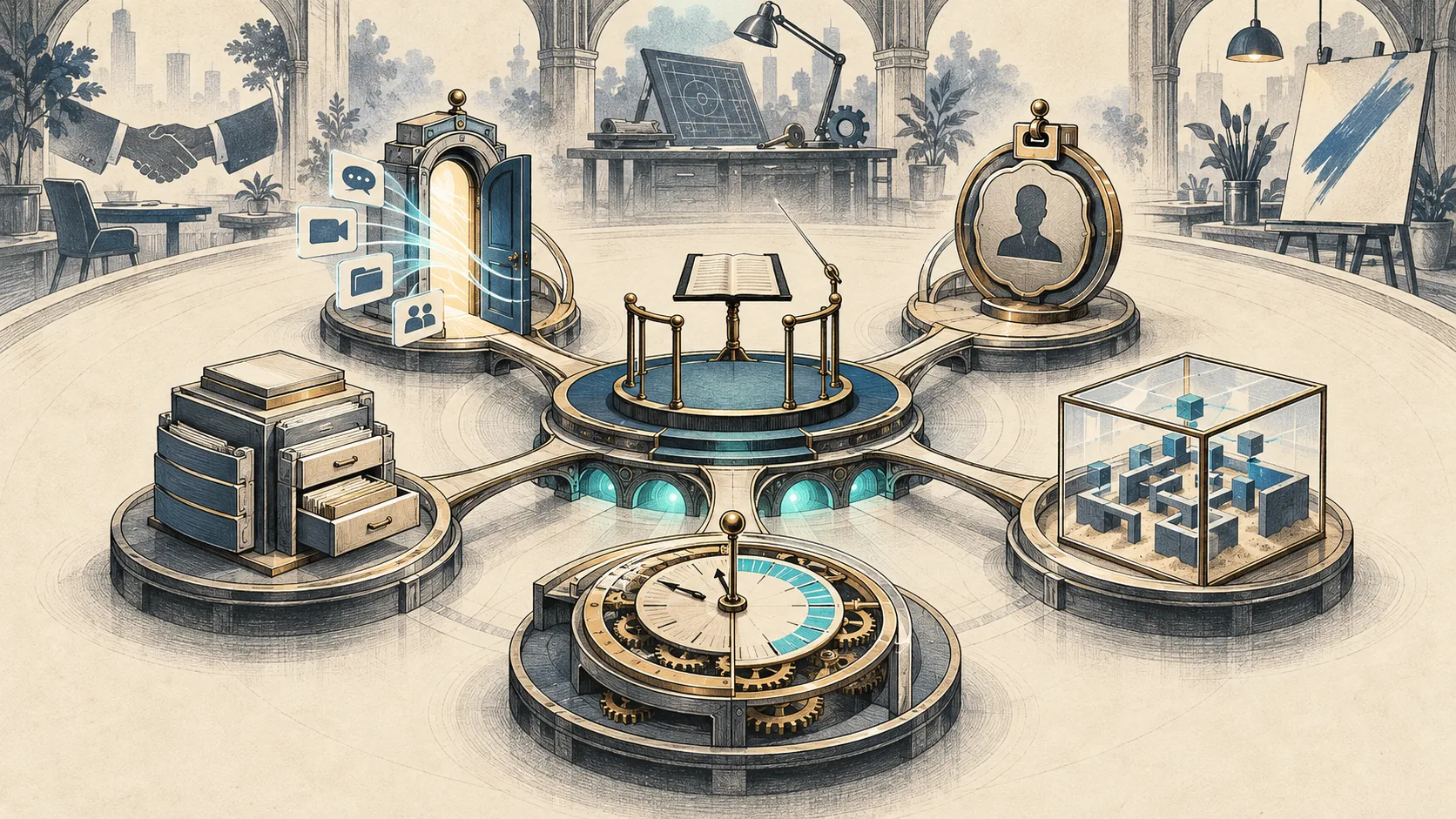
LangChain says its teams use internal agents for marketing, sales and engineering, and identifies five components for building a company harness: agents work in tools employees already use, recognize whose identity to act under, keep global or user-specific memory, execute code in sandboxes with authenticated service access, and run on schedules or background events. The company says these agents changed how the teams work, but took substantial effort to build.
LangChain describes three internal agents. Its GTM Agent monitors and responds to email, follows up on qualified leads, sends daily briefs, answers account questions and runs outbound activities. OpenSWE drafts pull requests and reviews all pull requests. Content Studio creates blogs, images, PowerPoints and videos using the company's style and positioning. The agents are available in Slack as separate apps that people can message directly or tag in channels. A breakout feature moves an agent conversation into its own channel thread so it does not interrupt a human discussion. LangChain built a separate interface for reviewing a large backlog of emails, which it says is difficult to track through Slack messages.
Identity determines whether an agent acts for the user who invoked it or uses fixed credentials, such as a service account. OpenSWE uses the user's GitHub identity when messaged, but its own GitHub app identity for background code reviews. GTM Agent uses a fixed identity for some Salesforce tools and the invoking user's identity for email; email tools are available only in direct messages, not shared channels. Content Studio uses the user's identity for some Notion tools and company credentials for its Twitter account. Only whitelisted users can perform certain Twitter actions, such as posting; others may only read or draft.
Each agent has global memory, which applies to all users, and user memory, which applies only to a specific user. LangChain says agents choose which level stores each fact and calls memory its least explored area, with more work planned. The agents run code outside a sandbox but connect to it to execute code; each uses a base image with different dependencies. OpenSWE selects its base image based on the channel or user. LangChain says its secret proxy in LangSmith Sandboxes lets agents connect to authenticated services from inside the sandbox.
Some runs start from schedules or events rather than direct user requests. OpenSWE automatically reviews newly created pull requests, while a user can ask GTM Agent to create a cron schedule for a daily brief. LangChain says all three agents use Managed Deep Agents, which builds on the open source Deep Agents harness and provides channels, scheduled jobs, sandboxes, memory and identity, while allowing developers to customize agent behavior. LangSmith, its agent engineering platform, supports debugging agent decisions, evaluating changes and one-click deployment.