LangSmith BYOC Expands to Three Clouds
- •LangChain made LangSmith BYOC available on AWS, Azure, and Google Cloud, with AWS generally available and the other two in beta.
- •BYOC keeps traces, prompts, datasets, experiments, and deployments in customer accounts while LangChain operates the platform data plane.
- •Migration tooling transfers workspace resources; trace migration is available on AWS, and the LLM Gateway supports 11 providers.
LangChain made LangSmith Bring Your Own Cloud (BYOC) available on AWS, Azure, and Google Cloud on November 3, 2026. AWS support is generally available, while Azure and Google Cloud support are in beta. BYOC keeps traces, evaluations, datasets, prompts, and agent deployments in a customer’s cloud account, while LangChain manages the data plane, including orchestration, scaling, and platform updates.
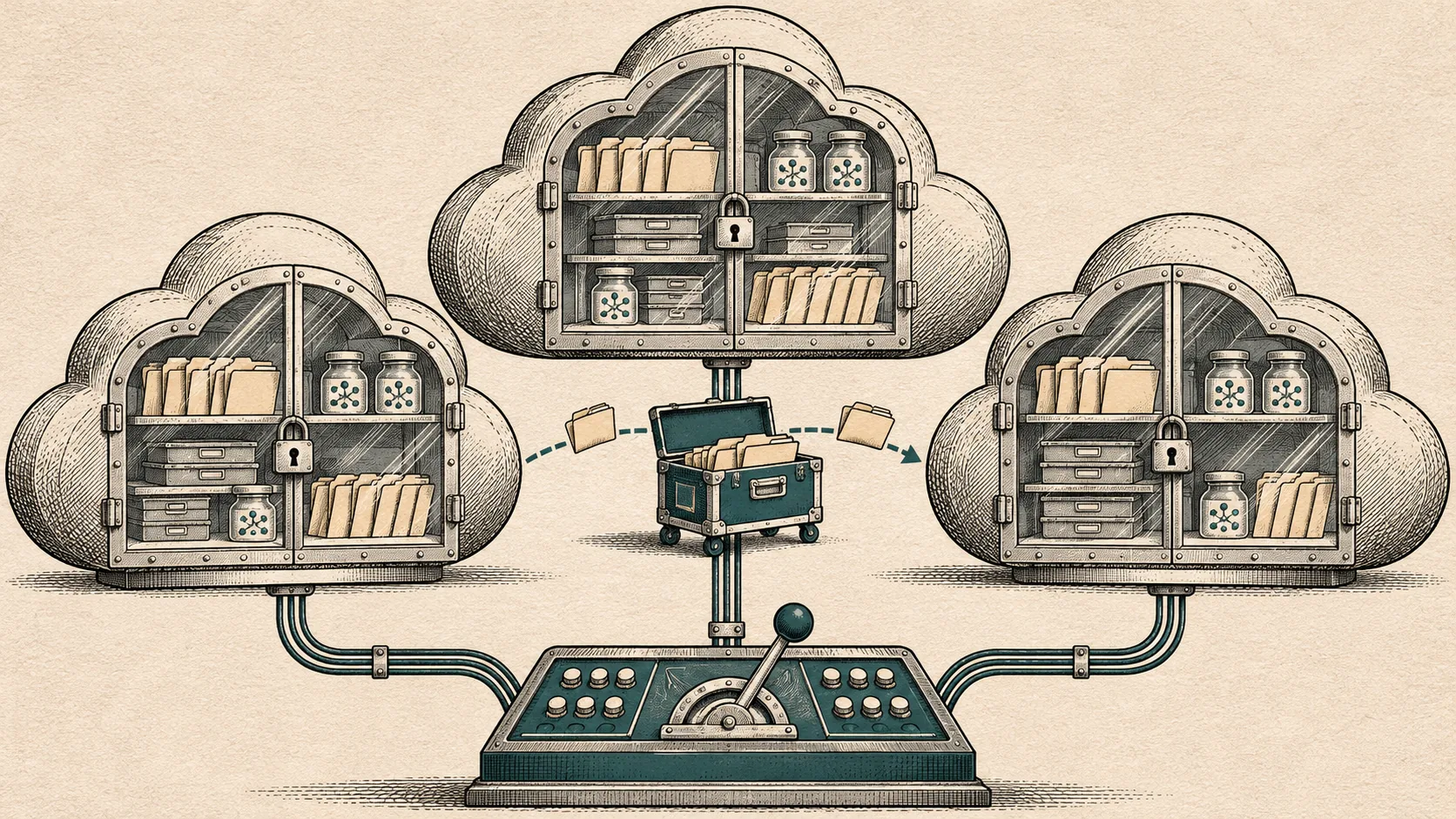
BYOC separates LangSmith into a control plane, run by LangChain, and a data plane, owned by the customer. The control plane holds authentication, organization and workspace settings, billing metadata, hashed API keys, and static user-interface assets. The data plane holds traces, prompts, datasets, experiments, agent deployments, and workspace secrets. An organization can use multiple data planes in different accounts and regions, divided by region, environment, or business unit. For example, production and staging can run in separate AWS accounts while another business unit operates its own deployment on Azure.
Before BYOC, teams with strict compliance boundaries used self-hosted LangSmith and maintained it themselves, including patching services, configuring databases, and running schema migrations. BYOC provisions LangSmith inside a customer’s virtual network; the data stays in its virtual private cloud (a customer-controlled cloud network) while LangChain handles scaling, schema updates, and runtime dependencies. LangChain says teams no longer need to schedule maintenance windows or manage Helm upgrades, and that BYOC data planes receive features soon after they arrive on LangSmith Cloud. Services scale with usage. LangChain said demand from AWS customers after the August launch prompted it to bring BYOC to Azure and Google Cloud.
Cloud deployments use each provider’s network and security components, and all three support Managed Deep Agents endpoints. Azure uses a dedicated virtual network, a private AKS API endpoint, Istio and KEDA with Helm for routing and event-driven scaling, and Azure Monitor for system telemetry; support for LangSmith Sandboxes is planned. Google Cloud deployments can run in any region and are managed from LangSmith’s US control plane, with namespace-scoped resource names. On AWS, BYOC runs in the customer’s existing VPC, with the database in chosen subnets and customer security groups available for each application role.
Customers can move existing self-hosted data. LangChain’s open-source migration tool transfers users and roles, datasets, experiments, prompts, annotation queue settings, automation rules, dashboards, and Fleet resources, while leaving the self-hosted instance live during the move. LangChain separately migrates traces, runs, and feedback using internal tools; trace migration is currently available on AWS. LangChain also published the Terraform modules and migration tool. The data-plane LLM Gateway supports models from 11 providers by default, plus any OpenAI- or Anthropic-compatible endpoint. Customers can contact sales to provision a data plane on any of the three clouds.