KIST Researcher Wins November Science Award
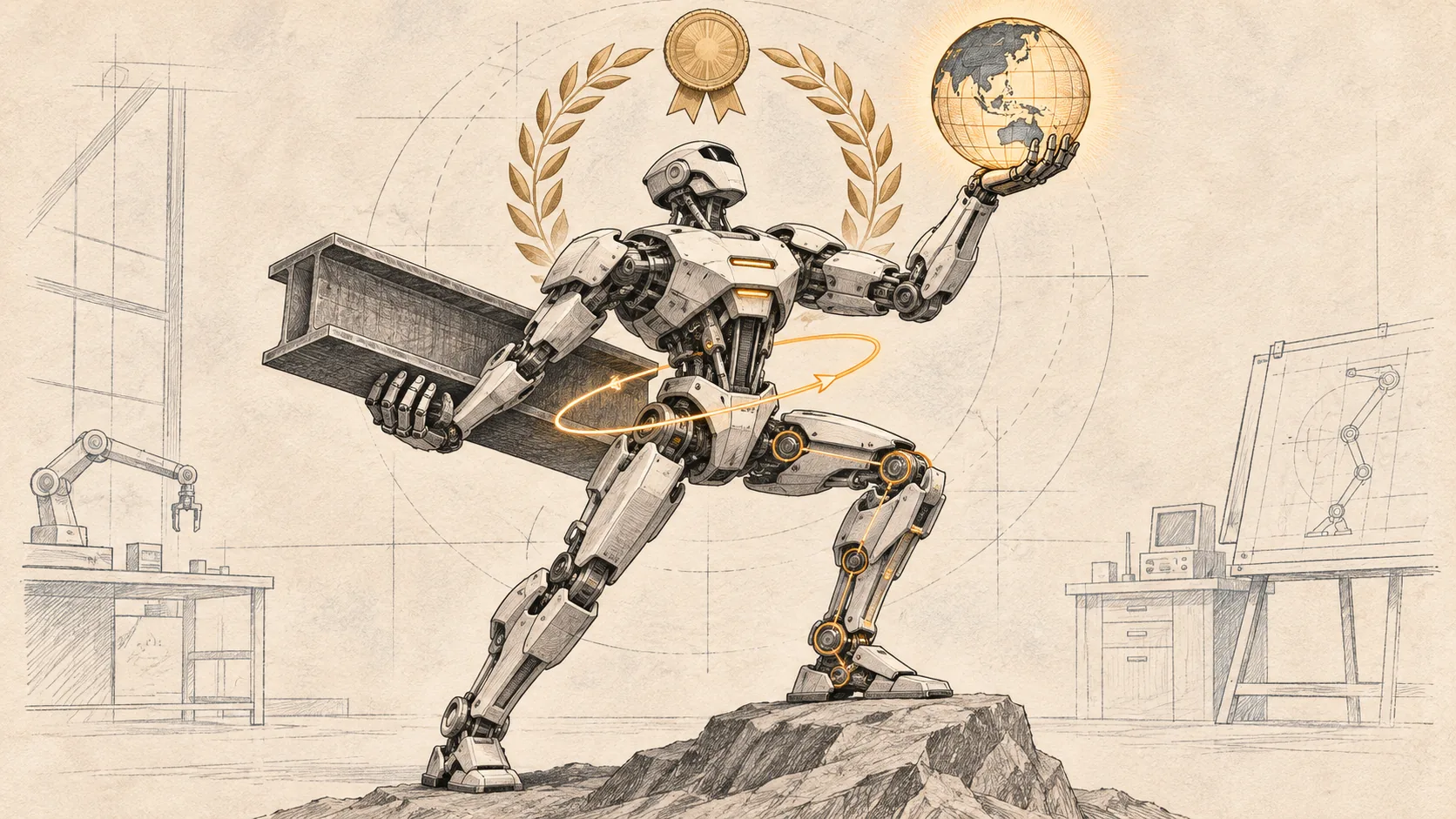
- •KIST humanoid research head Lee Jong-won wins November science award for developing a domestically built AI humanoid.
- •KAPEX can carry loads over 20 kg using actuators rated up to 300 Nm and seven-degree-of-freedom leg joints.
- •The robot’s whole-body energy efficiency improved more than 2x; key technology was transferred to LG Electronics in September last year.
Lee Jong-won, head of the Korea Institute of Science and Technology (KIST) Humanoid Research Group, was selected for the November Science and Technology Award after developing a domestically built humanoid robot that can walk while carrying more than 20 kg. The Ministry of Science and ICT and the National Research Foundation of Korea announced on the 4th that they had chosen him for his work developing a Korean AI humanoid platform.
The award is given monthly to one scientist or engineer whose research has produced outstanding results over the previous three years. The recipient receives the Ministry of Science and ICT deputy prime minister’s award and 10 million won.
Lee’s team developed in Korea the actuators (components that produce movement), mechanical structures serving as bones and joints, sensors, and AI that controls movement, and incorporated them into the KAPEX humanoid platform. KAPEX uses compact actuators producing up to 300 Nm of torque and joints modeled on the human musculoskeletal system. Nm is a unit measuring rotational force.
The team also developed leg joints with seven degrees of freedom, allowing precise control of toe and ankle movements. Degrees of freedom count the independent directions or motions in which a robot joint can move. KAPEX was designed to stay balanced while moving with loads over 20 kg. Improvements to its actuators, joints, and control technology raised the humanoid’s whole-body energy efficiency to more than 2x its previous level.
The team is pursuing industrial applications for the technology. It transferred key technology to LG Electronics in September last year and is collaborating with LG AI Research and LG Energy Solution. The researchers plan to test whether robots can work for extended periods in real-world settings such as hospitals and public facilities. Lee said the research established a foundation for Korea’s robotics industry ecosystem and that public-private collaboration would help secure global competitiveness for AI humanoid technology that assists people in manufacturing, logistics, and caregiving.