LG Electronics Sets “Care” as AI Home’s Next Standard
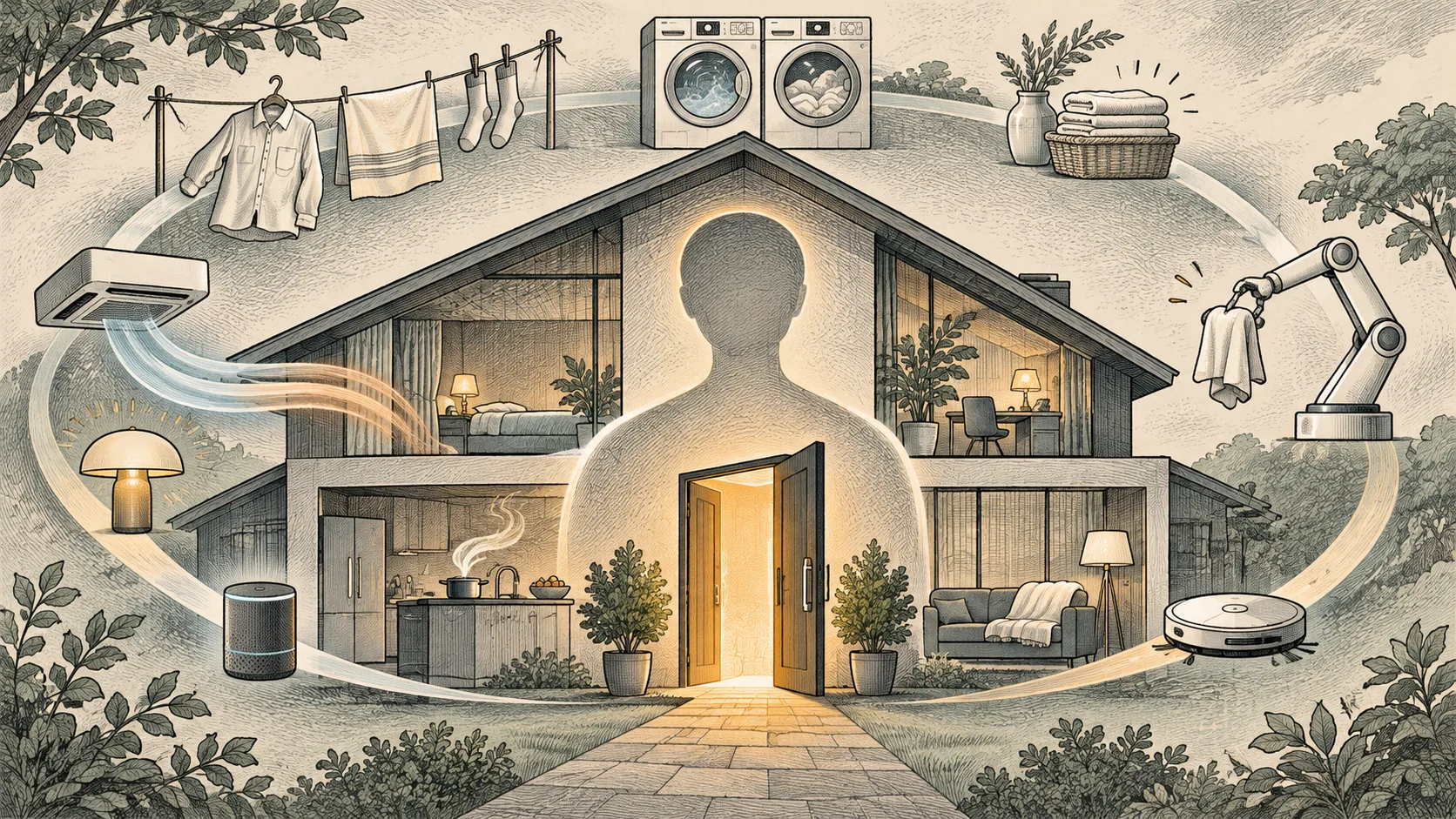
- •LG Electronics CEO Jae-cheol Ryu proposes care that reduces household work and appliance-management burdens as AI home’s next standard.
- •He envisions coordinating laundry and drying schedules, and adjusting heating, cooling, and lighting to match residents’ return times.
- •LG plans joint smart-home device development with Apple and aims to expand AI home technology into robotics.
LG Electronics CEO Jae-cheol Ryu said in a LinkedIn post on the 2nd that “care” should be the next standard for AI homes, easing household work and the burden of managing devices. He said appliances should work around customers’ schedules while leaving final decisions to them. The company plans to expand partnerships with global businesses and apply related technology to robotics.
Ryu said Wi-Fi appliances and smartphone apps ushered in an era of remote control in the early 2010s, but the growing number of connected devices also brought more apps, settings, and alerts to manage. In his view, AI homes should move beyond adding AI features to individual appliances, with devices working together to meet customers’ needs. For example, they could recommend laundry and drying settings to meet a requested completion time and coordinate the process, or adjust heating, cooling, and lighting based on when residents are expected home. This aligns with LG’s “Zero Labor Home” vision of reducing repetitive household chores as well as the time and effort spent managing appliances.
Ryu stressed that even as automation expands, customers must be able to check device status, change or stop operations, and decide whether to approve AI tasks. Convenience, he said, should not come at the expense of control or trust. The Zero Labor Home is not one where machines make every decision; it reduces repetitive chores and management burdens while leaving important decisions to customers. LG Electronics operates ThinQ UP, which adds features through software updates after purchase; ThinQ Care, which provides alerts about product abnormalities and guidance on responses; and LG Shield, which supports data protection and threat detection and response.
LG Electronics is pursuing partnerships because it believes one company’s technology alone cannot create a complete AI home in households using appliances, heating and cooling systems, lighting, and security products from multiple brands. It is using the open ecosystem of Homey, acquired through its purchase of smart-home platform company Athom, and has opened its ThinQ API so outside developers and partners can connect LG products to multiple platforms. LG recently co-developed cameras, video doorbells, smart door locks, and thermostats with Apple, designing the hardware, software, and user experience together from the early planning stages.
Ryu said LG plans to connect technology developed for AI homes with physical AI (AI that senses its surroundings and performs real-world tasks), and apply it in other fields, including robotics. He said AI home progress should be judged not only by technical sophistication but also by how much time and effort it saves customers.