Liquid AI Launches RIPL Inference Engine
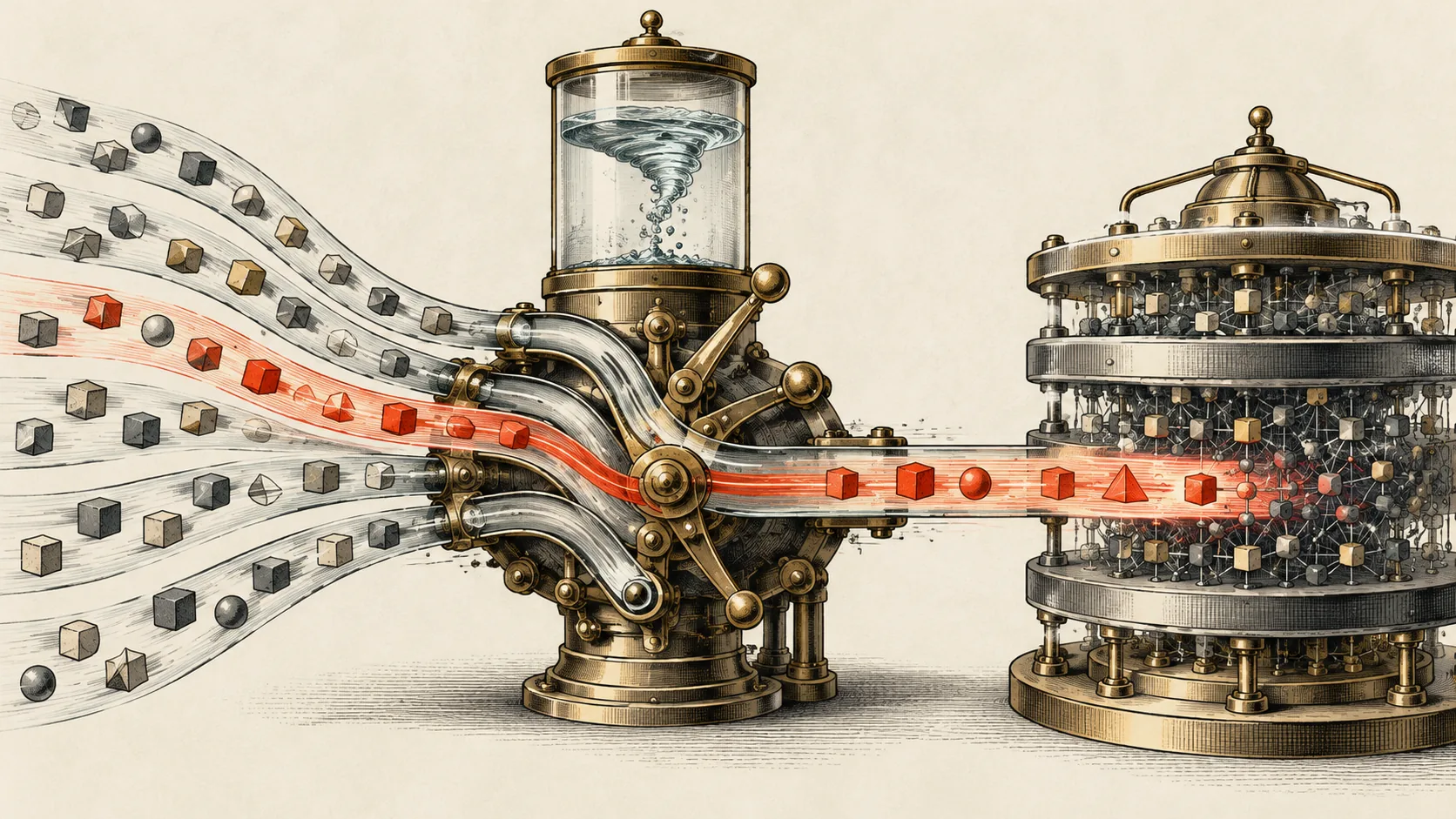
- •Liquid AI launches RIPL, a real-time inference engine for enterprise customers.
- •The engine connects LFM models to requests, targeting completion in under 50 ms.
- •In company benchmarks, RIPL cut p95 latency by up to 28.4 times.
Liquid AI said on the 22nd local time that it had launched RIPL (Real-time Inference Pipeline), a commercial inference engine designed to reduce AI response delays in real-time workflows. The product is for enterprise customers and is not open source; buyers must contact the sales team for pricing. Liquid AI says RIPL directly connects its LFM foundation models to the request-processing path and targets completion from request receipt to finished response in under 50 milliseconds (ms). The company says it was built to keep latency low even under peak traffic.
Existing inference infrastructure is often designed for large batch processing or long-running AI agent tasks, which can take several seconds per request. Search ranking, product recommendations, fraud detection, and payment approvals instead require responses in milliseconds. Liquid AI says companies have mainly used fast traditional machine-learning methods, such as gradient-boosted trees and small embedding models, for these tasks, and says RIPL aims to reduce the speed-performance tradeoff between those methods and generative AI.
Liquid AI says RIPL is designed for tasks where the output is a single token or very short compared with the input, such as query rewriting, intent classification, and fraud detection. It targets decision paths that need fast judgments rather than conversational chatbots that produce long answers. The company says it optimizes the full infrastructure and processing path from request receipt through response completion, as well as the model algorithms.
In Liquid AI's own benchmark tests on a single NVIDIA B200 GPU, using workloads with 32 input and 32 output tokens and 256 input and 128 output tokens, RIPL's LFM2.5-1.2B had 14.4 to 28.4 times lower p95 latency than Qwen3.5-0.8B running on vLLM. LFM2.5-2.6B had 5.6 to 7.7 times shorter p95 latency than Qwen3.5-2B on vLLM. These are company measurements; the results need further verification in other environments.
E-commerce platform Shopify is adopting LFM for commerce tasks where response speed matters. Liquid AI says it achieved inference times below 20 ms on live production traffic for search improvements, while using about 50% fewer parameters than an alternative model and running 2 to 10 times faster. The cited applications include ad query rewriting, search intent classification, search result reranking, payment risk assessment, credit underwriting, and image alt-text generation. RIPL is available in enterprise environments using NVIDIA H100, H200, B200, and RTX PRO 6000 GPUs, and supports the LFM2.5 family with 230 million to 2.6 billion parameters.