LLMs Automate Video Production Through Code
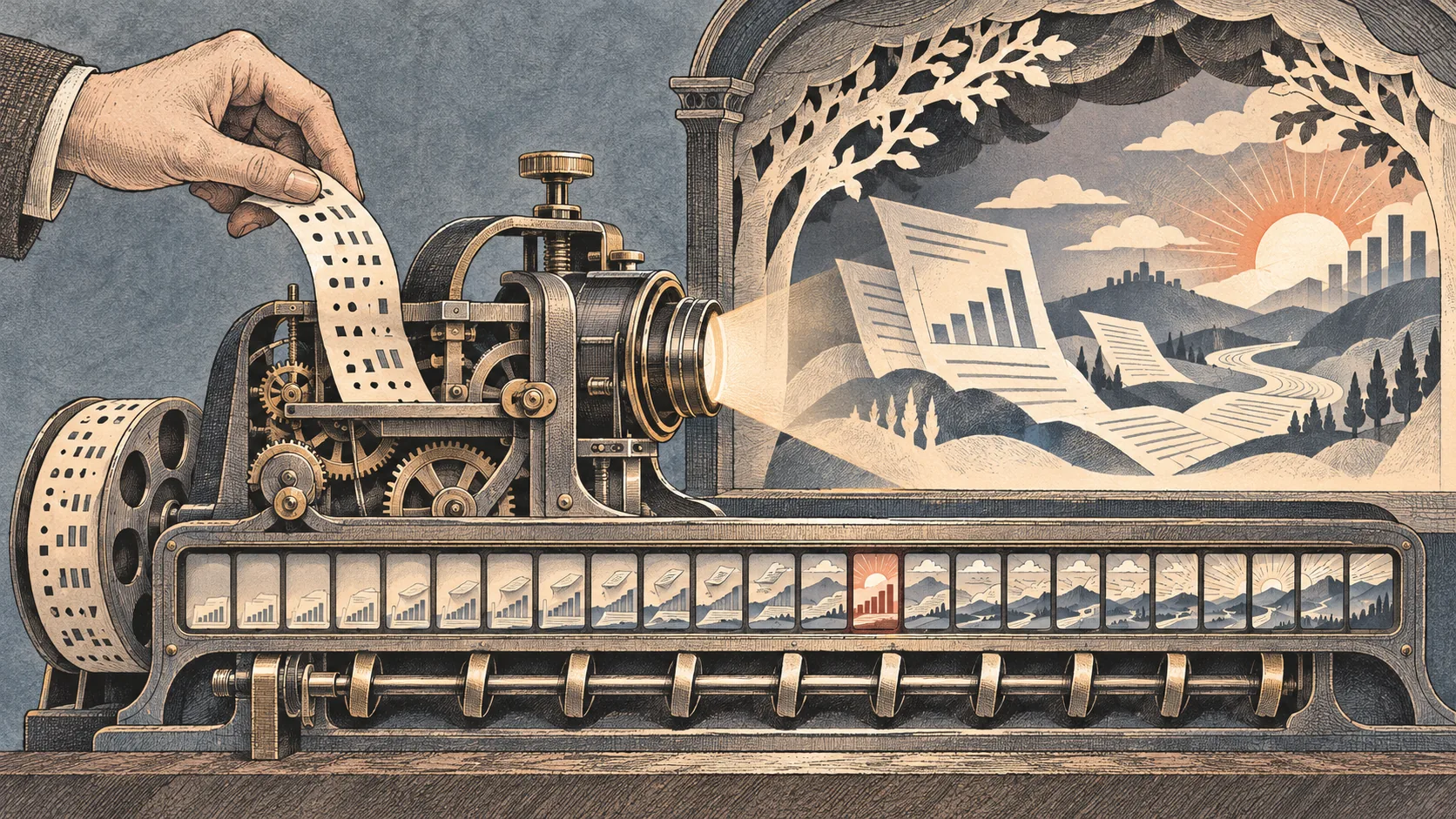
- •LLMs write code that draws frames, which a computer runs to produce video at 24fps.
- •24fps counted 4,077 works labeled as made with Claude Opus 5.5; about 10% shared their production code.
- •Anthropic opened a beta of Claude Motion for businesses to animate reports and charts.
Large language models (LLMs) are moving from developer experiments in code-based video production into business products. Instead of generating pixels directly, an LLM turns a user’s description into a program that draws images, which a computer then runs. Code can make text appear, charts grow, or cars move.
Simple 2D video can be made with JavaScript in a web browser and an HTML canvas, a browser area for drawing graphics. An LLM writes code to place text and shapes and change their position, size, or color over time; the computer joins the frames it draws in sequence into a video. With the existing tool Remotion, developers previously wrote the code themselves. AI coding agents such as Claude Code or Codex can now write code for Remotion to run. They can inspect the result, fix overlapping text or awkward movement, and run it again. Existing photos or music can also be added, so making a video with code does not mean every image and sound was created with code.
In April, developers shared a method for creating motion graphics from natural-language instructions using Claude Code and Remotion. After the September 22 release of “Claude Opus 5.5,” they published advertising-style videos, 3D scenes, educational explainers, and graphics synchronized to music. The work-collection site 24fps counted 4,077 projects whose creators said they used Claude Opus 5.5; about 10% made their production code public. The count is based on the model name reported by creators.
On October 8, Anthropic announced Claude Motion, a beta feature for businesses. Users can provide reports, charts, or product descriptions to create short animations and save them as MP4 files. They can edit text, numbers, and the timing of movement. Anthropic said Claude Motion does not use a dedicated video-generation model; Claude writes code to animate text, shapes, charts, and images. The feature is aimed at presenting reports and data as graphics, rather than making live-action films or complex videos of people.
With code-based video, changing a figure or phrase lets users adjust the chart and frames again. For example, they can change a sales growth rate from 15% to 18%, or edit the timing of a transition and the direction of movement. The article says conventional video-generation AI often requires a new generation to revise a scene. Dedicated video-generation AI has an advantage for complex human movement or realistic natural landscapes. Some widely shared animations also required detailed instructions and hours of writing, running, and revising code.
As LLMs take over much of the coding needed to make video, models such as Claude are being used to automate parts of production. The article says that revising figures and wording to remake videos could help reduce production time and cost in areas where content changes often, including news, advertising, and data visualization.