Manufacturers’ Edge Shifts to Learning Systems
- •At JIMTOF2026, Yamazaki Mazak and Junko Nishigaki discussed what gives manufacturers a competitive edge.
- •HILLTOP and Mazak emphasized learning from real machining and applying that knowledge to subsequent work.
- •Nishigaki outlined five learning-system principles; Mazak says its AI agent rollout will take about two years.
Yamazaki Mazak held a seminar with Junko Nishigaki, a specially appointed professor at the National Graduate Institute for Policy Studies, and Yosuke Sawada, the company’s senior executive officer, at JIMTOF2026, the 33rd Japan International Machine Tool Fair. The event took place at Tokyo Big Sight from October 26–31, 2026. They discussed the “secret sauce” behind manufacturing competitiveness. As manufacturers increasingly train AI on shop-floor know-how, they considered how companies can preserve their distinctive strengths if AI can reproduce skilled workers’ knowledge.
Nishigaki cited HILLTOP, based in Uji, Kyoto Prefecture, which is advancing digital transformation, including AI use. She said the company did not start with AI adoption, but with “what people find interesting”—that is, new challenges. By having machines take over tasks already performed, people can move on to new challenges; Nishigaki said incorporating AI into this cycle has accelerated the pace of challenges and broadened what the company learns.
Sawada said Yamazaki Mazak is working to bring Physical AI (AI that acts in the physical world) to manufacturing, centered on its Mazatrol programming system. He said turning implicit knowledge (know-how difficult to put into words) into explicit knowledge requires understanding what people do in their work. Mazatrol retains detailed records of what was machined and how, and machining know-how is an asset specific to each company. Sawada said a system that applies what it learns to the next machining task can create a competitive advantage.
The company plans to prepare a “Mazak Foundation Model” trained on its internal data, then tailor it with customer data at installation to create a customer-specific model. Sawada said the model would continue learning in the factory and develop into one specific to each customer’s facility. Machining conditions vary by factory, process and machine, so conditions from one factory may not work the same way in another. He said standardizing machining techniques would erode the value of those differences.
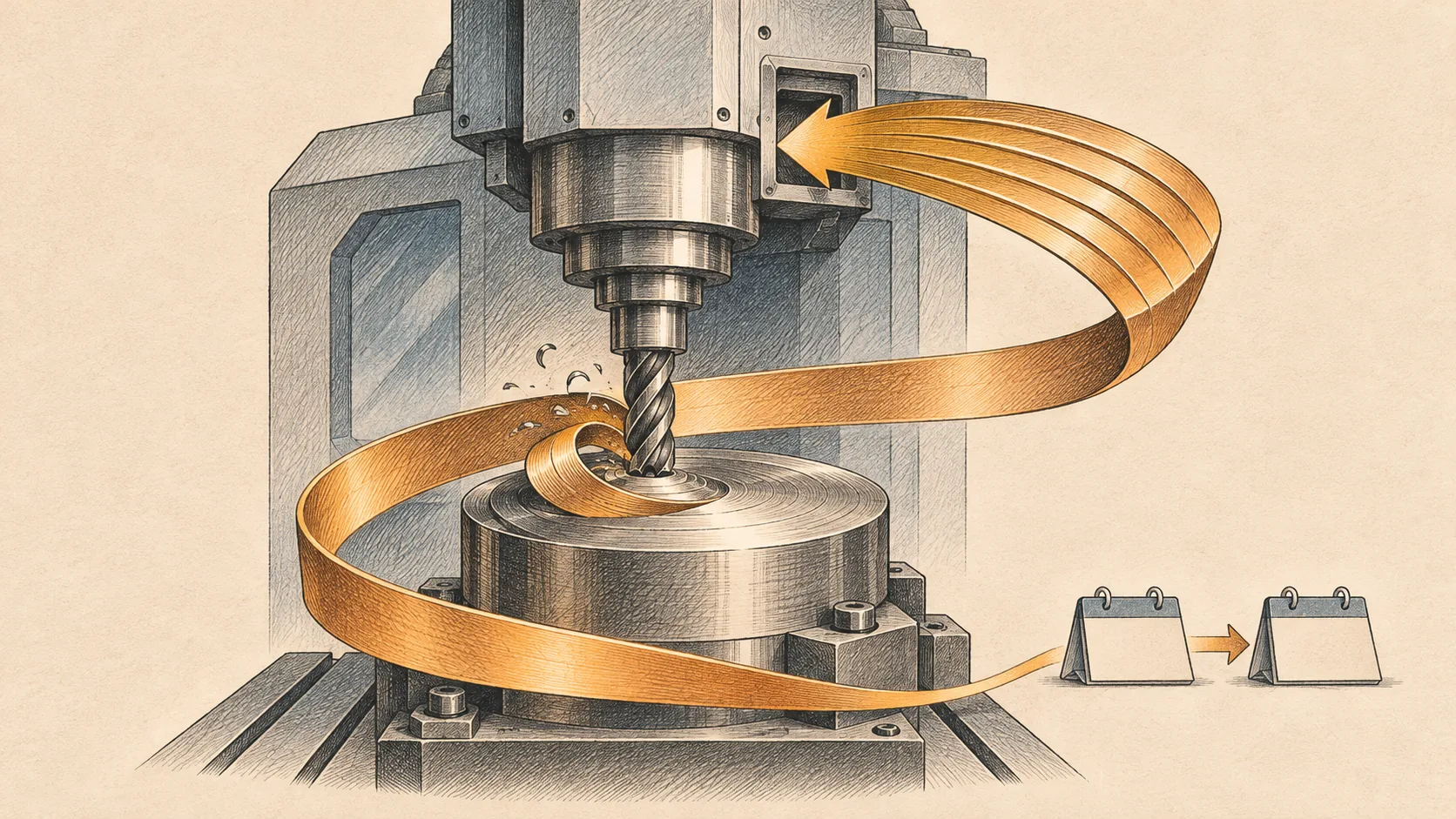
Nishigaki said HILLTOP and Yamazaki Mazak have different shop floors and foundations, but both apply knowledge gained through actual machining to later work and decisions. She said competition is shifting from individual AI models to learning systems, making the ability to keep improving after deployment important.
Nishigaki outlined five principles for building a learning system: record successes, failures, trial and error, and reasons behind decisions; cycle AI recommendations through actual machining, evaluation and retraining; connect accuracy and quality to delivery times, costs and revenue; set rules for ownership, permitted use and sharing profits from shop-floor knowledge; and make knowledge usable across different machines, CAM (computer-aided manufacturing) systems and companies. Sawada said deploying the company’s AI agents will take about two years. He said preparing the system and machining data during that period would allow customers to gain value quickly in the AI era.