Five Partners Plan 2nm Medical Imaging System
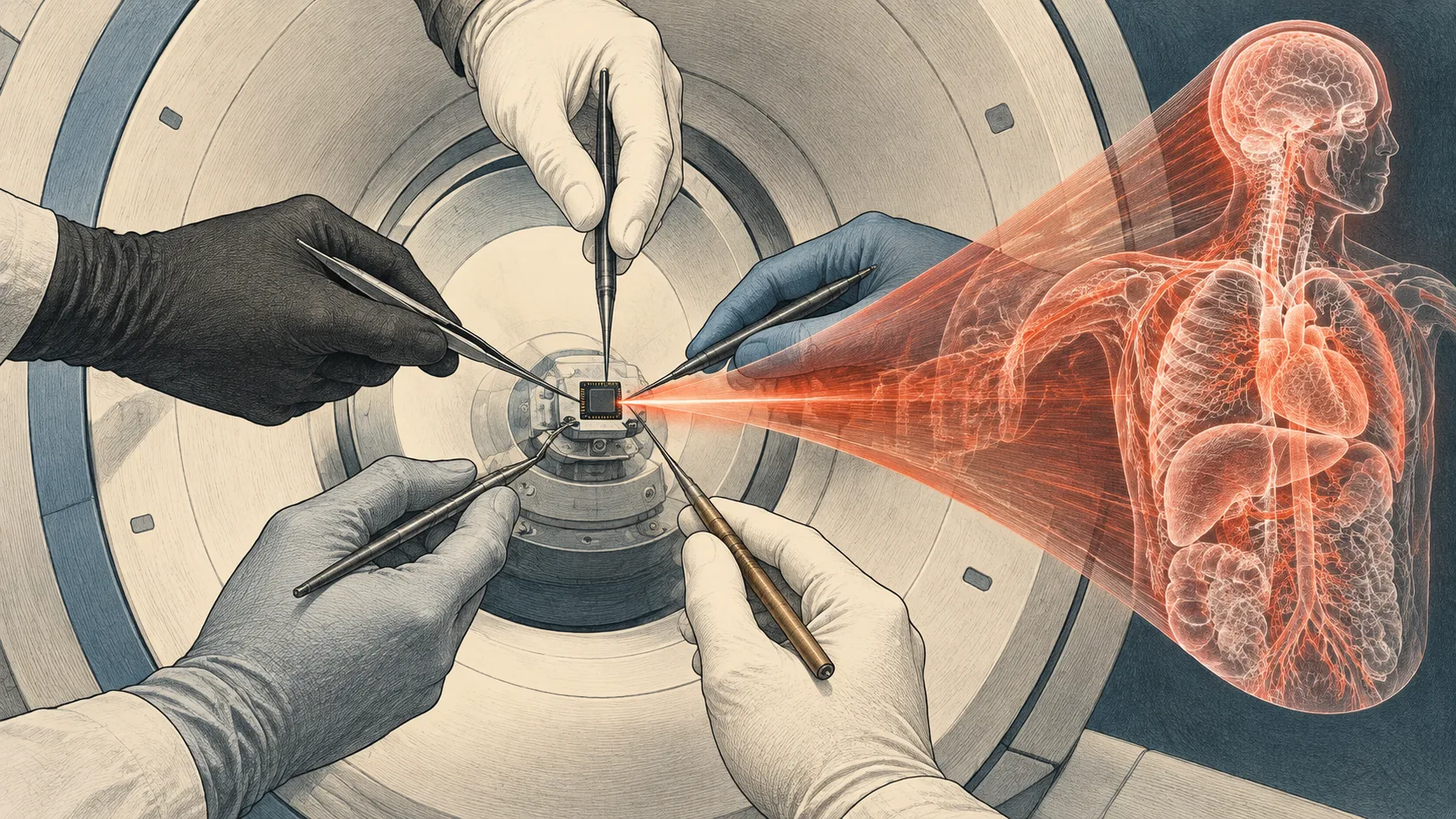
- •LSTC, Hokkaido University, Fujifilm, GE HealthCare Japan and imec outlined a joint medical imaging project using an inference-focused 2nm chip.
- •The project targets image processing at more than 5 times current GPU speed and over 10 times its energy efficiency.
- •The five-year study has a total budget of ¥10.5 billion; whether Rapidus will manufacture the chip remains undecided.
LSTC, Hokkaido University, Fujifilm, GE HealthCare Japan and imec outlined a joint project to develop a medical imaging system using an inference-focused, 2nm-generation semiconductor at a press conference in Tokyo on October 20, 2026. The project targets image processing at more than 5 times the speed of current GPUs and energy efficiency more than 10 times higher. IBM is expected to design the chip. The partners hope Rapidus will manufacture it, but the production site has not been decided.
The project was selected as part of NEDO’s research and development program for strengthening the foundations of post-5G information and communications systems and advanced semiconductor manufacturing technology, commissioned by Japan’s Ministry of Economy, Trade and Industry. The five-year research period runs from September 2026 through September 2031. A stage-gate review to assess interim targets is planned for March 2029. The budget is ¥6.2 billion through that review and ¥10.5 billion in total, including the period after it.
The goal is to develop medical equipment that can process high-resolution medical images in real time using a high-performance, low-power 2nm-generation chip. Until the stage-gate review, the team will use IBM’s AI accelerator, the IBM Spyre Accelerator, as its initial hardware; it is manufactured using Samsung Electronics’ 5nm process. The team will develop and optimize AI models on that hardware, then plans to move to an inference-focused 2nm-generation chip after the review.
The planned 2nm chip is a successor to the IBM Spyre Accelerator. Rapidus aims to produce 2nm-process semiconductors in Japan, and the project partners hope it will manufacture the chip, though no decision has been made. LSTC Chairman Tetsuro Higashi said Hokkaido University will lead coordination with Fujifilm, GE HealthCare Japan and imec, advancing AI development for medical imaging across three project areas. He said the project brings together expertise in semiconductors, AI and medical equipment to connect advanced chips with technology useful in clinical settings.