Compare AIFind AIAI NewsAI How-To
About Us
PrivacyTermsFAQContactContact
AIB Inc.Company info
© 2026 AIB Inc.

Meta AI Glasses Raise Recording Concerns
Meta AI Glasses Raise Recording Concerns

Ars Technica·Saturday, August 22, 2026
  • •Meta AI glasses face bans in schools, courts, restaurants, venues, and DEF CON 2026
  • •Detector apps scan Bluetooth signals but cannot determine whether smart glasses are actively recording
  • •Zuckoff launched free on iPhone in early August and is seeking 12 Android testers
  • •Meta AI glasses face bans in schools, courts, restaurants, venues, and DEF CON 2026
  • •Detector apps scan Bluetooth signals but cannot determine whether smart glasses are actively recording
  • •Zuckoff launched free on iPhone in early August and is seeking 12 Android testers
  • •Meta AI glasses face bans in schools, courts, restaurants, venues, and DEF CON 2026
  • •Detector apps scan Bluetooth signals but cannot determine whether smart glasses are actively recording
  • •Zuckoff launched free on iPhone in early August and is seeking 12 Android testers
  • •Meta AI glasses face bans in schools, courts, restaurants, venues, and DEF CON 2026
  • •Detector apps scan Bluetooth signals but cannot determine whether smart glasses are actively recording
  • •Zuckoff launched free on iPhone in early August and is seeking 12 Android testers

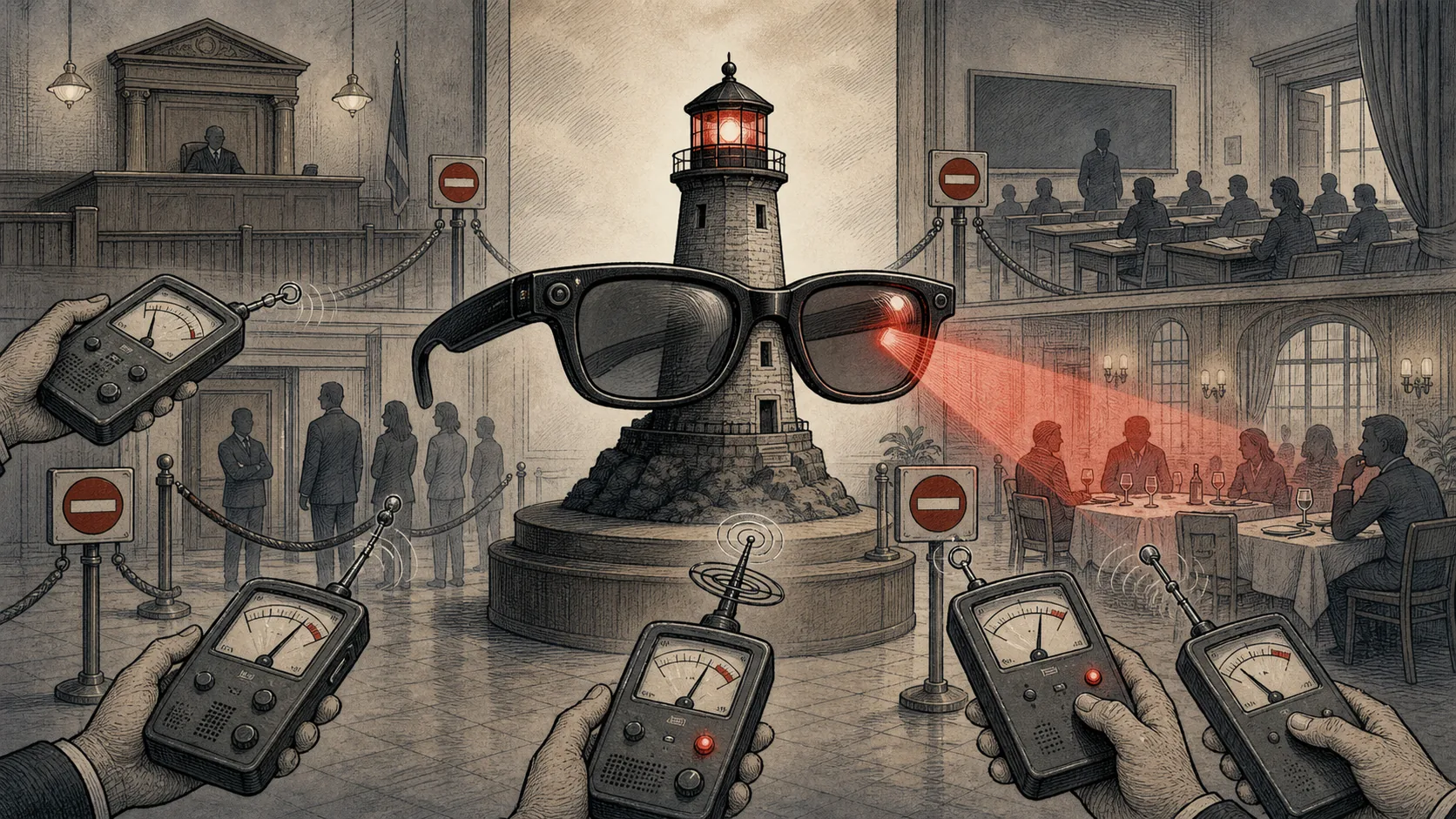
Meta AI glasses are becoming harder for bystanders to avoid as millions of people buy smart glasses each year and Meta’s AI glasses remain the most popular, according to Ars Technica’s August 21 report. Schools, courts, restaurants, entertainment venues, and DEF CON 2026 have banned smart glasses in some settings, but enforcement depends on staff recognizing the devices, users disclosing them, or observers speaking up.

Privacy advocates said bans can raise social pressure against nonconsensual recording but cannot stop it alone. Electronic Frontier Foundation staff technologist Cooper Quintin told Ars that possible features such as facial recognition could heighten risks by enabling convincing deepfakes or nonconsensual intimate imagery when people do not know cameras are active. EFF has urged lawmakers to create a private right to sue companies whose products violate biometric privacy rights and has published guidance on resisting facial recognition, recording responsibly, and blurring strangers’ faces before posting videos online.

Meta’s main visible safety feature is a tiny recording light, which Quintin called nearly “useless” because it can be covered with a sticker. Ars cited reports and online videos showing smart glasses used in immigration raids, harassment of sex workers and retail workers, pranks, bullying, and other unwanted recordings. Quintin said the LED is “better than nothing, but not by much.”

The Financial Times reported last month that Meta was testing “super sensing” AI glasses that would use cameras and audio recordings to capture a wearer’s every moment, with executives planning not to activate the LED during those features. Meta also deleted an unreleased facial recognition system from its smart-glasses app after Wired and EFF revealed it had been quietly installed on 50 million phones in June. Meta did not respond to Ars’ request for comment.

Since February, engineers have released apps that detect nearby smart glasses by scanning Bluetooth signals used to pair glasses with phones. The apps can show that glasses such as Ray-Ban Meta, Oakley Meta, or Snap Spectacles are turned on, but they cannot tell whether recording is active. Developers warn that false positives are likely, obstacles can interfere with signals, users should not assume someone is recording, and confrontations are discouraged.

Nearby Glasses, one early detector app, costs $2.99 on iOS and Android and has been downloaded more than 100,000 times from the Play Store. Antizuck Smart Glasses Scanner was near the top of iPhone charts by July and charged $3. Zuckoff launched free on iPhone in early August, is seeking 12 Android testers, and offers optional perpetual scanning for about $10 a year.

Zuckoff creator Pawel Szydlowski told Ars he built the app in one week after 10 years of iPhone developer experience. Zuckoff uses manufacturer identifiers and advertised device names to label nearby smart-glasses models, estimates distance from signal strength, and displays confidence levels such as within arm’s length, close, near, and far. Ars tested the app on Ray-Bans, and it detected “one possible pair” within minutes and correctly labeled the model.

Szydlowski said background scanning was difficult because Apple permits only a fixed list of Bluetooth service identifiers in that mode, so cautious users should open the app to see a fuller device list. He said Android may allow faster background detection because apps can be exempted from battery optimization. He wants rules requiring companies such as Meta to advertise a specific Bluetooth service identifier while recording, saying awareness matters before smart glasses become a major problem like AirTags after their 2021 release.

Meta AI glasses are becoming harder for bystanders to avoid as millions of people buy smart glasses each year and Meta’s AI glasses remain the most popular, according to Ars Technica’s August 21 report. Schools, courts, restaurants, entertainment venues, and DEF CON 2026 have banned smart glasses in some settings, but enforcement depends on staff recognizing the devices, users disclosing them, or observers speaking up.

Privacy advocates said bans can raise social pressure against nonconsensual recording but cannot stop it alone. Electronic Frontier Foundation staff technologist Cooper Quintin told Ars that possible features such as facial recognition could heighten risks by enabling convincing deepfakes or nonconsensual intimate imagery when people do not know cameras are active. EFF has urged lawmakers to create a private right to sue companies whose products violate biometric privacy rights and has published guidance on resisting facial recognition, recording responsibly, and blurring strangers’ faces before posting videos online.

Meta’s main visible safety feature is a tiny recording light, which Quintin called nearly “useless” because it can be covered with a sticker. Ars cited reports and online videos showing smart glasses used in immigration raids, harassment of sex workers and retail workers, pranks, bullying, and other unwanted recordings. Quintin said the LED is “better than nothing, but not by much.”

The Financial Times reported last month that Meta was testing “super sensing” AI glasses that would use cameras and audio recordings to capture a wearer’s every moment, with executives planning not to activate the LED during those features. Meta also deleted an unreleased facial recognition system from its smart-glasses app after Wired and EFF revealed it had been quietly installed on 50 million phones in June. Meta did not respond to Ars’ request for comment.

Since February, engineers have released apps that detect nearby smart glasses by scanning Bluetooth signals used to pair glasses with phones. The apps can show that glasses such as Ray-Ban Meta, Oakley Meta, or Snap Spectacles are turned on, but they cannot tell whether recording is active. Developers warn that false positives are likely, obstacles can interfere with signals, users should not assume someone is recording, and confrontations are discouraged.

Nearby Glasses, one early detector app, costs $2.99 on iOS and Android and has been downloaded more than 100,000 times from the Play Store. Antizuck Smart Glasses Scanner was near the top of iPhone charts by July and charged $3. Zuckoff launched free on iPhone in early August, is seeking 12 Android testers, and offers optional perpetual scanning for about $10 a year.

Zuckoff creator Pawel Szydlowski told Ars he built the app in one week after 10 years of iPhone developer experience. Zuckoff uses manufacturer identifiers and advertised device names to label nearby smart-glasses models, estimates distance from signal strength, and displays confidence levels such as within arm’s length, close, near, and far. Ars tested the app on Ray-Bans, and it detected “one possible pair” within minutes and correctly labeled the model.

Szydlowski said background scanning was difficult because Apple permits only a fixed list of Bluetooth service identifiers in that mode, so cautious users should open the app to see a fuller device list. He said Android may allow faster background detection because apps can be exempted from battery optimization. He wants rules requiring companies such as Meta to advertise a specific Bluetooth service identifier while recording, saying awareness matters before smart glasses become a major problem like AirTags after their 2021 release.

Read original (English)·Aug 21, 2026
Safety & Ethics#meta ai glasses#ray ban meta#smart glasses#facial recognition#bluetooth le#zuckoff#nearby glasses#privacy#recording#airtag