Minneapolis Committee Recommends Data Center Rules
- •Minneapolis committee recommends data center limits; full City Council vote is scheduled for Thursday
- •Proposal caps downtown server space at 150,000 square feet and sets distance, disclosure and noise-plan requirements
- •City has eight data centers; moratorium expires Nov. 21 amid debate over taxes, jobs, water and electricity
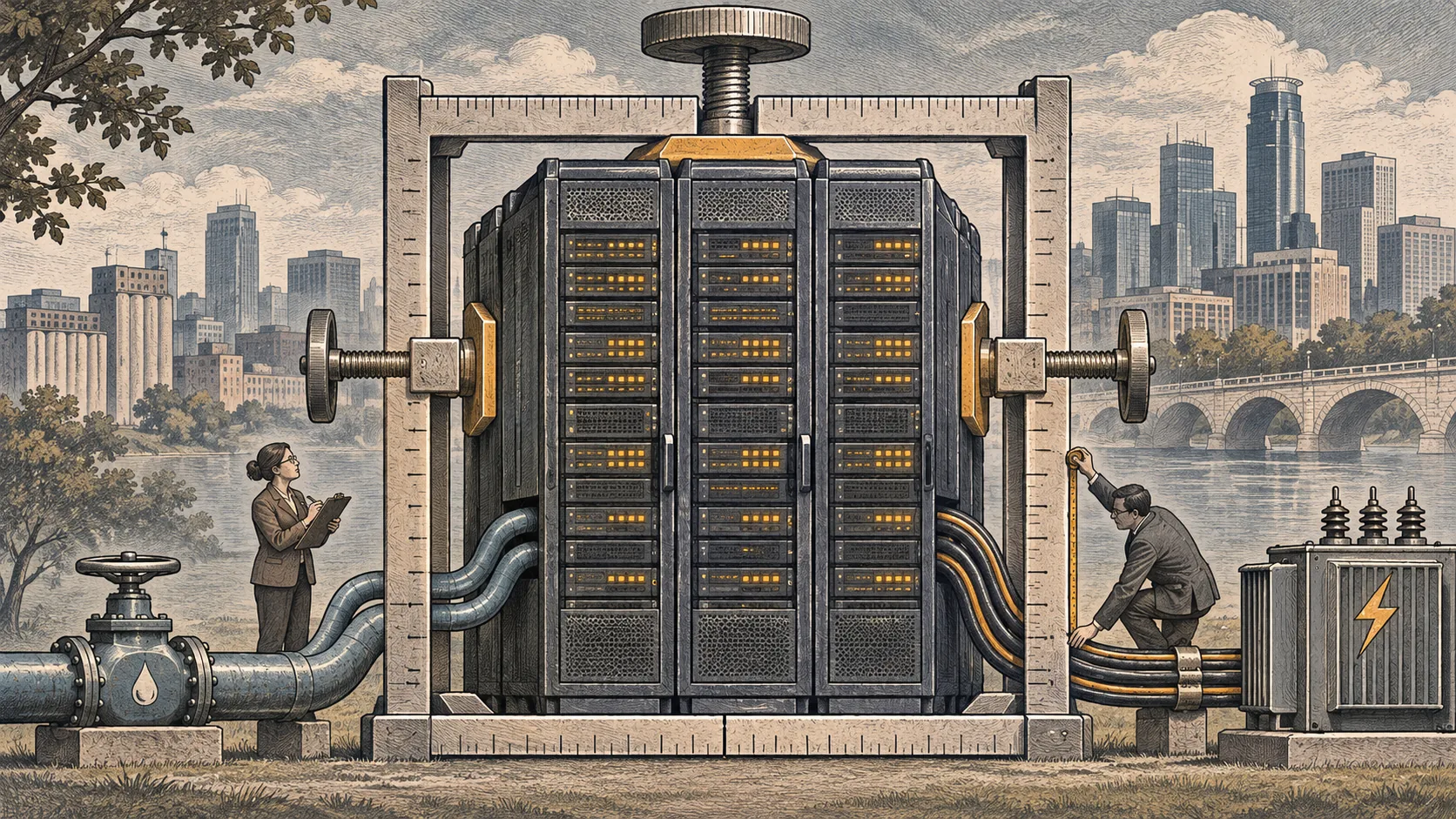
A Minneapolis City Council committee unanimously recommended an ordinance Monday to limit data centers’ size and placement, with the full council scheduled to vote Thursday. The proposal would allow centers inside existing buildings in two downtown zoning districts, cap the server and computing area, known as white space, at 150,000 square feet, and require servers to sit at least 20 feet from exterior walls and 100 feet from homes. Data centers could not be the property’s only use. Owners would have to disclose projected water, electricity and backup-generator use and submit a plan to limit noise.
Minneapolis has eight data centers, and its zoning code currently allows them by permit in 10 of 15 primary zoning districts without specific size limits or standards. In March, the council enacted a six-month moratorium on new centers. About 50 people testified at an October Planning Commission hearing, and the city has received more than 1,600 comments on the regulations, the vast majority opposing data centers. A committee deadlocked 6-6 on a total ban.
The Planning Commission proposed stricter rules: limiting centers to two downtown zones, capping server rooms at 50,000 square feet and requiring council approval for each center. Council Member Aurin Chowdhury said Mayor Jacob Frey told her he would veto rules that strict. A spokesperson said Frey supports Monday’s proposal. The full council is due to vote Thursday, and Council Member Jason Chavez said he may offer amendments.
Council moderates say permitting some data centers could help revive downtown property values, where vacancy is 30%, and ease pressure on homeowners paying property taxes. They cited the sale of Sleep Number’s downtown building, which contains an 180,000-square-foot data center, for $235 million—eight times its previous assessed value. Council Member Elizabeth Shaffer said the new owner’s city tax bill would rise to $2 million from $250,000. Chavez argued data centers provide few permanent jobs while using large amounts of electricity and water and relying on noisy diesel generators and cooling equipment that pollute the air. He cited a KSTP report that Minnesota had granted more than $1 billion in data center tax breaks over the past decade.
City planning manager Jason Wittenberg said Minneapolis can draw 100 million gallons of water per day from the Mississippi River and uses about 55 million gallons daily. He said the city can serve data centers at the proposed scale. The Sleep Number center averages 3 million gallons of water use per month, making it one of the city’s largest water users. The current moratorium expires Nov. 21; without an agreement between the council and mayor by then, data centers would remain allowed in much of the city. Council Member Aisha Chughtai has indicated she may propose another moratorium.