South Korea Reviews Naver’s Medical AI Infrastructure
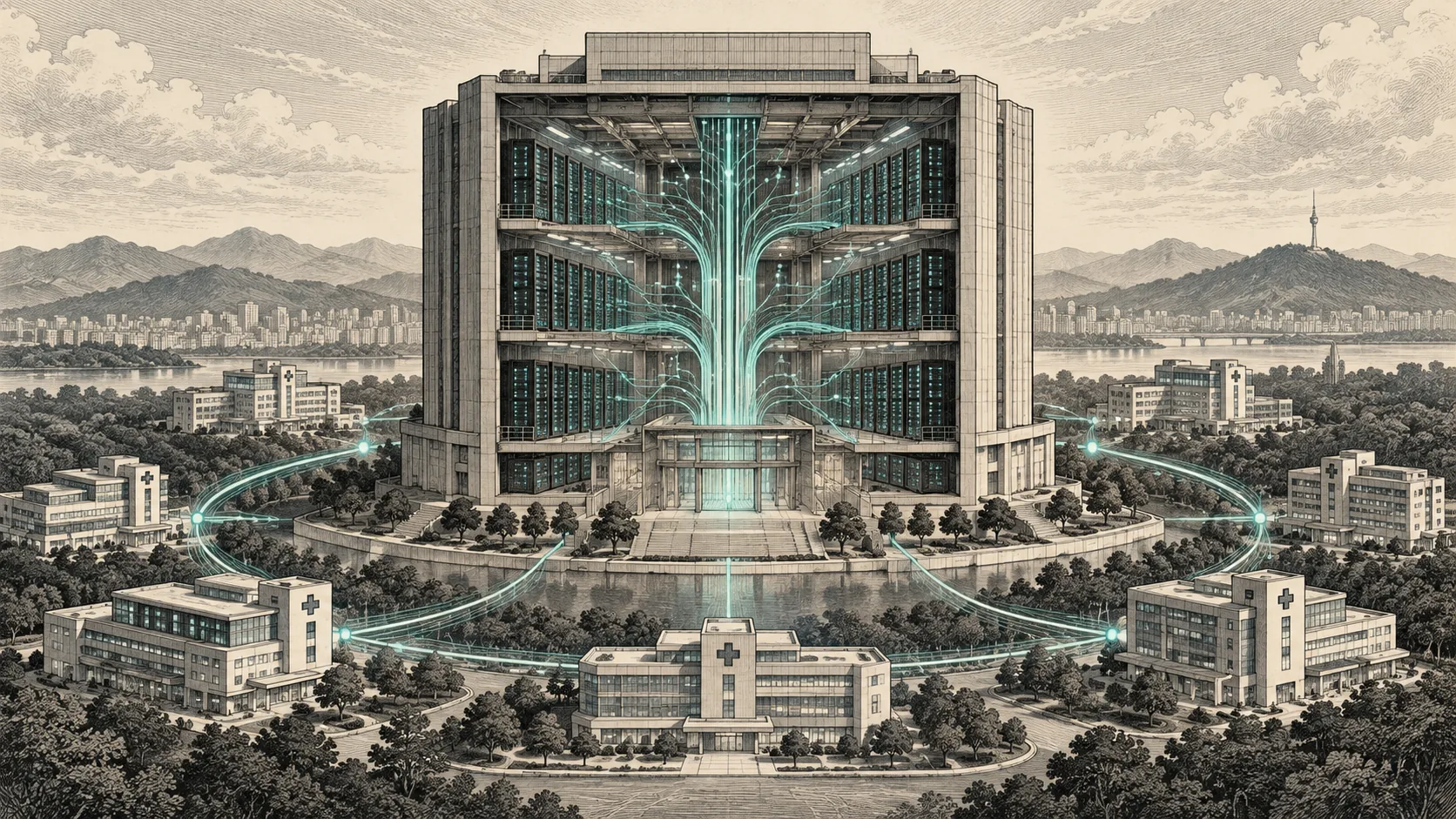
- •Vice Health Minister Lee Hyung-hoon inspected medical AI infrastructure and security at Naver’s Gak Sejong data center.
- •The public medical AI network is planned to expand from 9 hospitals in the second half of this year to 72 by 2029.
- •South Korea plans to begin developing Korean medical AI in 2027; Gak Sejong is designed to house up to 600,000 server units.
South Korea’s Ministry of Health and Welfare is assessing data center conditions to secure computing infrastructure for medical AI policy. On the 19th, Second Vice Minister Lee Hyung-hoon visited Naver’s Gak Sejong data center in Sejong City to inspect AI infrastructure operations and security systems. The visit was intended to assess conditions for building data centers needed to carry out the government’s AI Basic Healthcare Strategy.
The government finalized the strategy last August to address gaps in regional, essential and public healthcare. It includes 3 strategic pillars and 12 priority tasks. Its central Public Healthcare AI Expressway plan would connect 72 public hospitals nationwide to a national GPU-based AI platform. The network is scheduled to start with 9 regional responsible medical institutions in the second half of this year, expand to 30 next year and reach 72 in 2029. It will support public hospitals in using AI for medical image interpretation, clinical documentation and patient monitoring.
The government also plans to advance medical AI research and development centered on national university hospitals and support AI adoption at regional medical institutions. It plans to build an intelligent hospital system using AI from patient arrival through treatment and discharge, and to establish AI-specialized hospitals in each region to spread technology to local providers. A national health data hub is also planned. Development of Korean medical AI using domestic medical data and homegrown technology is set to begin in 2027, while national bio big data will be opened in stages for drug development and precision medicine research.
The government said large-scale medical data training and analysis require GPUs and reliable computing environments. It also said that greater data use among medical institutions makes personal information protection, data center security, and access to power and cooling equipment important. Gak Sejong occupies a 294,000-square-meter site and is designed for a power supply of up to 270 MW. Once all 6 buildings are complete, it will be able to house up to 600,000 server units. Lee inspected the facilities, operating methods and security systems. Ministry officials, including the directors of its medical AI and data policy division and pharmaceutical and bio industry division, attended alongside Naver Tech Business CEO Choi In-hyuk and Healthcare Research Institute Director Na Gun-ho. Lee said the visit confirmed the need for government data center development in preparation for growing demand for health data, and that the government would establish a safe foundation for AI use.