National Museum to Digitize 2.53 Million Artifacts
- •National Museum of Korea selected for K-Science project to digitize about 2.53 million artifacts
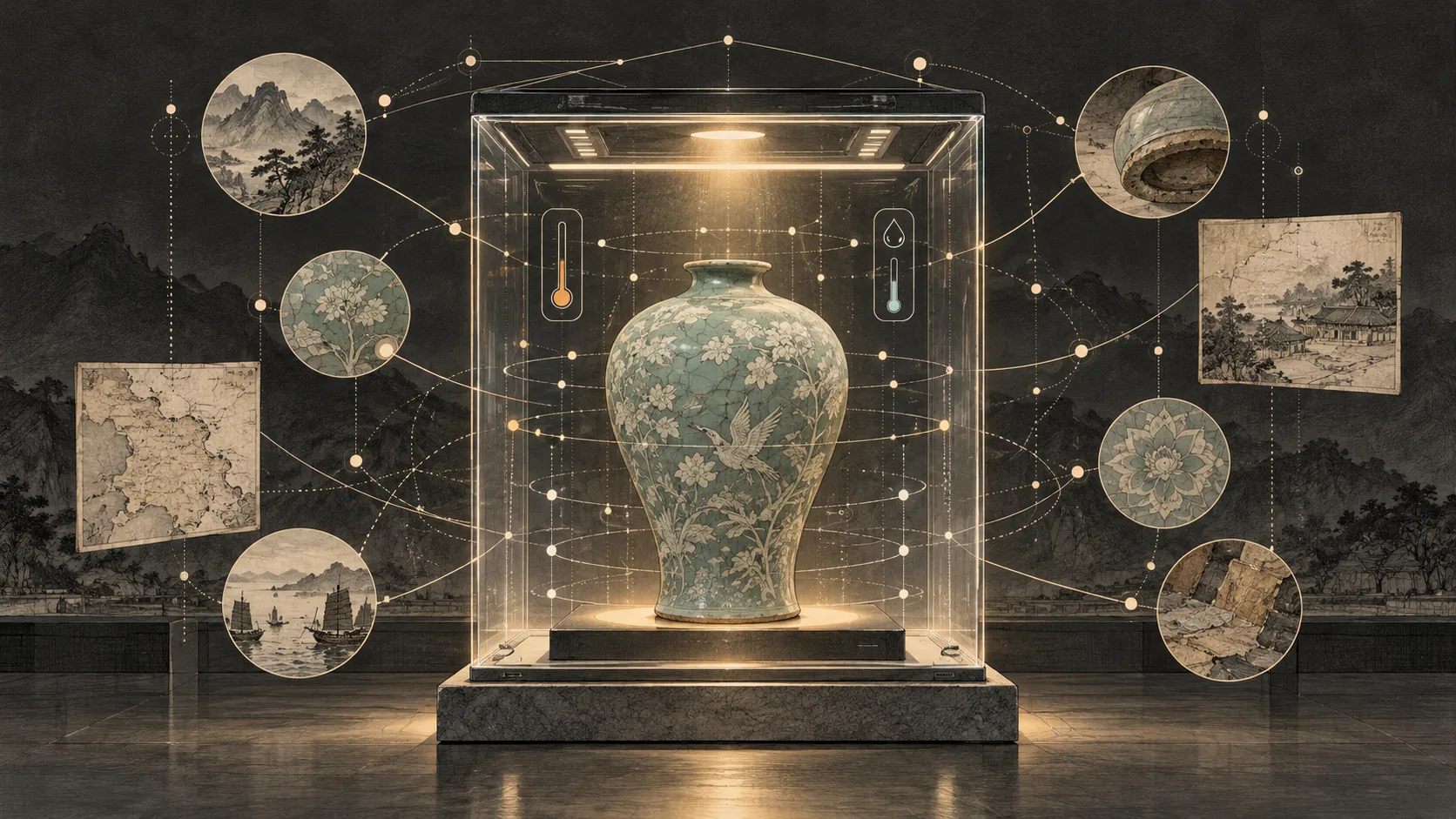
- •Museum plans data project from 2027, including AI control of storage-room temperature, humidity and lighting
- •Director Choi Seong-ae calls for artifact databases that preserve historical context and sources
The National Museum of Korea has been selected for the government-led K-Science project to turn about 2.53 million artifacts into digital heritage and develop technology that increases the industrial value of K-culture. The museum plans to begin a structured data project in 2027. The cross-ministry research and development program aims to create economic, social and cultural value by applying advanced science and technology to Korea’s historical, cultural and environmental assets.
The museum’s Digital Museum Division uses technology to expand the preservation and use of physical artifacts. A team responsible for digital strategy and content was formed in 2019, and the Museum Information Division took its current name in December 2020. Over the past five years or so, the museum has developed AI guide robots, smart kiosks, multilingual and sign-language services, and immersive content that recreates artifacts through large-scale video and sound.
Last year, marking the 80th anniversary of Korea’s liberation, the museum displayed a 130-year-old national flag—the oldest known Korean flag—once kept by Owen N. Denny, a late Joseon-era diplomatic adviser, on a large media screen outside a department store in central Seoul. The approximately 1-meter flag was precisely scanned and rebuilt as a 2-meter-format, 10.8-billion-pixel, ultra-high-resolution digital image, capturing fine details on both sides. Enlarging existing photographs had caused pixelation on large screens, making them difficult to use.
K-Science aims to connect the exploration, preservation and management of cultural resources with their conversion into data and use in content. The museum plans to apply project results to overcoming technical limits in detailed surveys of ancient tombs and to automatically control storage-room temperature, humidity and lighting with AI.
Choi Seong-ae, director of the National Jeju Museum, said artifact data combines facts with multiple historical interpretations, making it difficult for AI to produce answers. When accounts from Baekje and Silla differ, for example, reducing an issue with competing perspectives to one sentence can blur or distort its context. The same bottle can carry different meanings depending on whether it held water or alcohol, why its maker produced it, and the period and purpose for which it was used. Choi said large language models (AI systems trained on large text collections) may not handle such context well and can overgeneralize or oversimplify when asked for an easy explanation.
Choi said historical information incorrectly incorporated during initial training can be difficult to correct even when users later request changes. The museum is building data that clearly identifies sources so users can check whether AI answers are based on the museum’s own materials. It is also working with outside experts to revise database structures around artifacts’ characteristics and intended uses. The updated structures will reflect artifacts’ varied meanings and relationships, connect images, 3D data, video and related documents, and improve usage metadata such as file size and format. The museum is also linking different names for the same artifact to make it easier to search.
Choi said cultural heritage cannot be standardized like manufactured goods, so accumulated records must be structured to fit each artifact and linked to one another. This would help curators, content creators, researchers and educators find materials suited to their needs.
Choi, an archaeologist who worked at the Gyeongju, Gongju and Jeju museums and the Ministry of Culture, Sports and Tourism, took office as director of the National Jeju Museum in late September. She recalled that in digital work it was difficult to judge what stage an effort had reached and how technologies that emerged later might affect it. Her understanding of artifacts and museums, she said, helped her develop ideas for using technology and assess whether new tools fit a museum’s purpose.
While working on a project to structure data on Buddhist sculptures, Choi reread Hermann Hesse’s novel Siddhartha and reflected on the line, “Knowledge can be communicated, but not wisdom.” She said that even when AI provides a great deal of information, people must absorb and make it their own. She hopes the museum’s curatorial and digital work will help visitors think and discover insights for themselves.